What animals live on Koh Lanta, and which ones you will actually see
Koh Lanta is home to dusky langurs and crab-eating macaques, though nocturnal species like slow lorises and flying colugos are rarely spotted; all elephants on the island are captive animals, not wild wildlife.
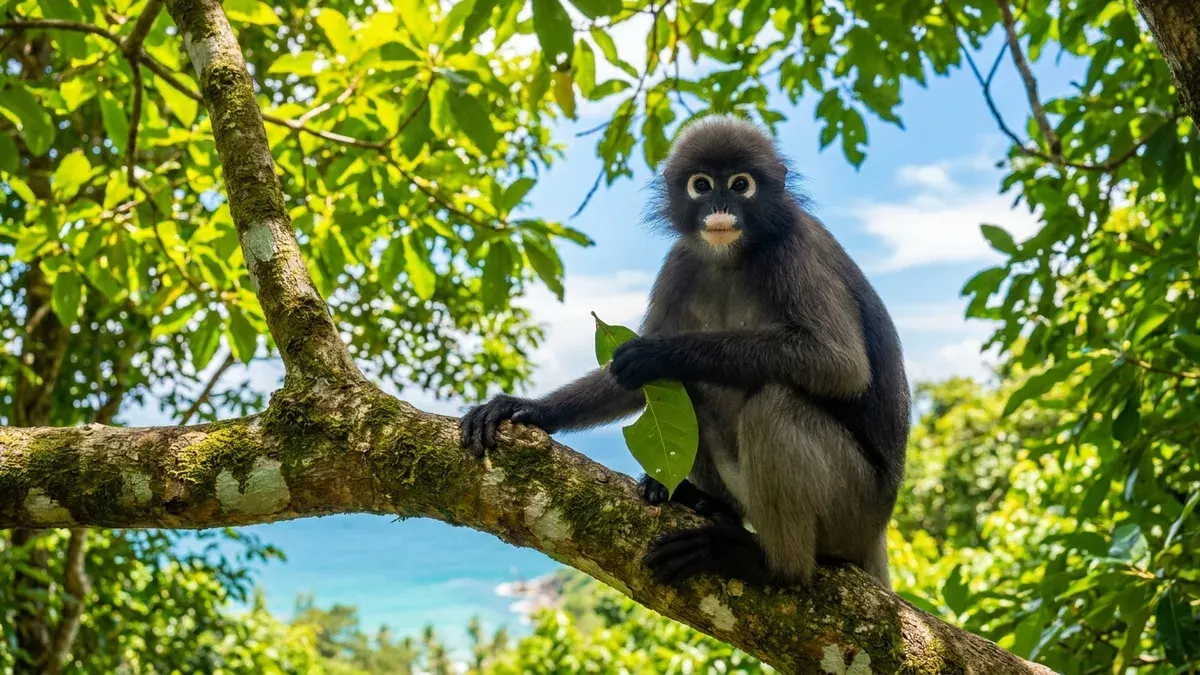
Photo: Illustration: Lanta News
It is one of the most common questions people ask before coming here, and one of the worst served online. Search for Koh Lanta's wildlife and you get the same handful of sentences copied between travel sites, usually a photograph of a monkey that does not live here.
So here is what the record actually says, where it is solid, and where it is not.
The two monkeys, which are not the same monkey
Most visitors who see a monkey on Koh Lanta see one of two species, and they are routinely confused for each other.
The dusky langur, also called the spectacled langur, is the one people remember. It is grey-black with bright white rings around the eyes that look drawn on, and it eats leaves. It is shy, lives in the canopy, and is most often seen in the forested south of the island around the national park.
The crab-eating macaque, also called the long-tailed macaque, is the other one. Browner, bolder, and far more willing to approach people, which is the problem: macaques that have learned to associate humans with food become confident, and a confident macaque near a bag of fruit is not a charming encounter. Do not feed them, and that is not a politeness rule, it is how a wild population becomes a nuisance population.
The ones almost nobody sees
Two of the island's more remarkable mammals are nocturnal and easy to miss entirely.
The Sunda slow loris is here, and Mu Ko Lanta is described by naturalists as one of the more reliable Thai national parks to look for one. It is small, slow, nocturnal, and protected.
The Sunda colugo, sometimes called a flying lemur, is neither a lemur nor capable of flight. It glides between trees on a membrane stretched between its limbs, and it is reported as seen relatively often in the park, which is more than can be said for most gliding mammals anywhere.
Also on the park's list: wild boar and leopard cat.
The elephants, and why they are not wildlife
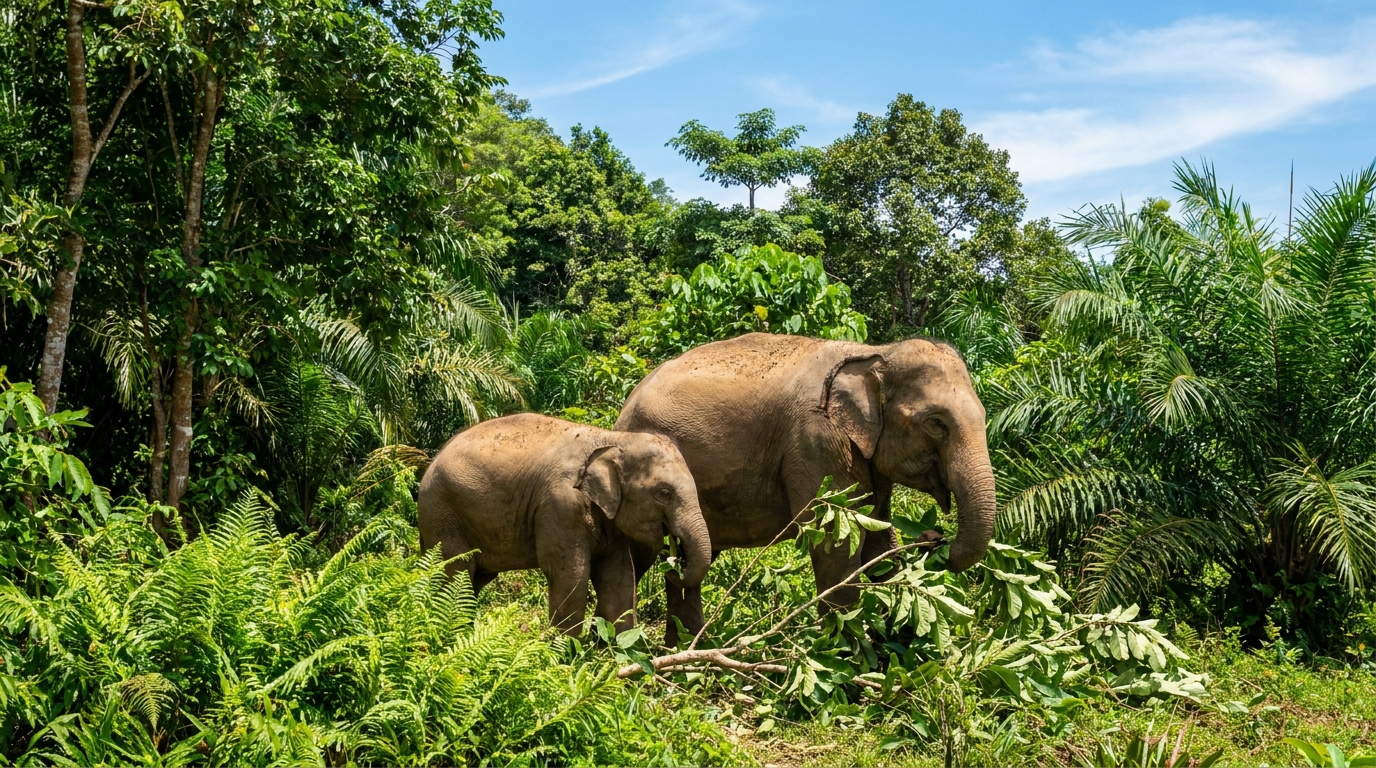
There are elephants on Koh Lanta, and this is the part most write-ups get wrong by omission: they are not wild. There is no wild elephant population on the island. Every elephant here is a captive animal, and almost all of them worked in trekking before they arrived where they are now.
That matters if you are deciding whether to visit one. Two places on the island keep elephants, and they operate on different models.
Following Giants, on forested land at the edge of Mu Ko Lanta National Park, describes itself as observation-only: it says it was formerly a riding camp, changed its model in collaboration with World Animal Protection, and now houses rescued elephants that visitors watch without touching, feeding or bathing them.
Lanta Elephant Sanctuary offers a hands-on visit, including walking with the elephants, feeding them, and bathing and mud-spa sessions.
Both describe their animals as rescued from trekking work. Which model you prefer is your call, and it is a live argument among people who care about elephants rather than a settled one. We are describing what each place says about itself, not certifying either.
Snakes
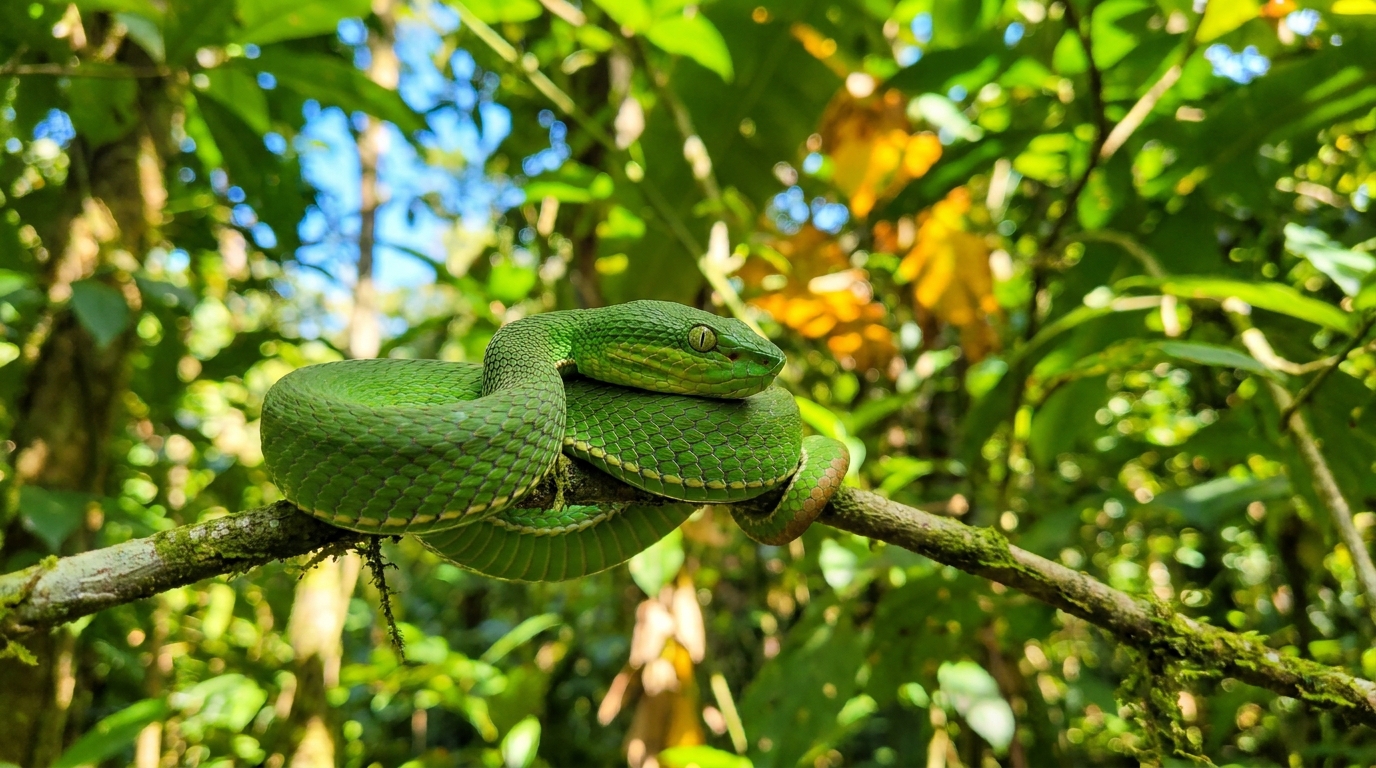
Koh Lanta has snakes, including seriously venomous ones, and pretending otherwise would not help anybody.
Species recorded on and around the island include the king cobra, monocled cobra, Malayan pit viper, Malayan krait and banded krait, and in the water the yellow-lipped sea krait. Non-venomous and mildly venomous residents include the painted bronzeback, the oriental whipsnake, the golden tree snake and the paradise flying snake, which flattens its body and glides between trees, reportedly as far as 20 metres.
The practical picture is much less alarming than the species list sounds. Across Thailand there are roughly 12,000 snakebite consultations a year, and with antivenom available fatalities stay below 0.1%. The pattern of bites is the useful part: around four in five happen when somebody tries to catch or kill the snake, and about 60% happen at night. Closed shoes and long trousers on jungle trails, a torch after dark, and leaving any snake you meet entirely alone covers almost all of the risk.
The lizard you will actually meet
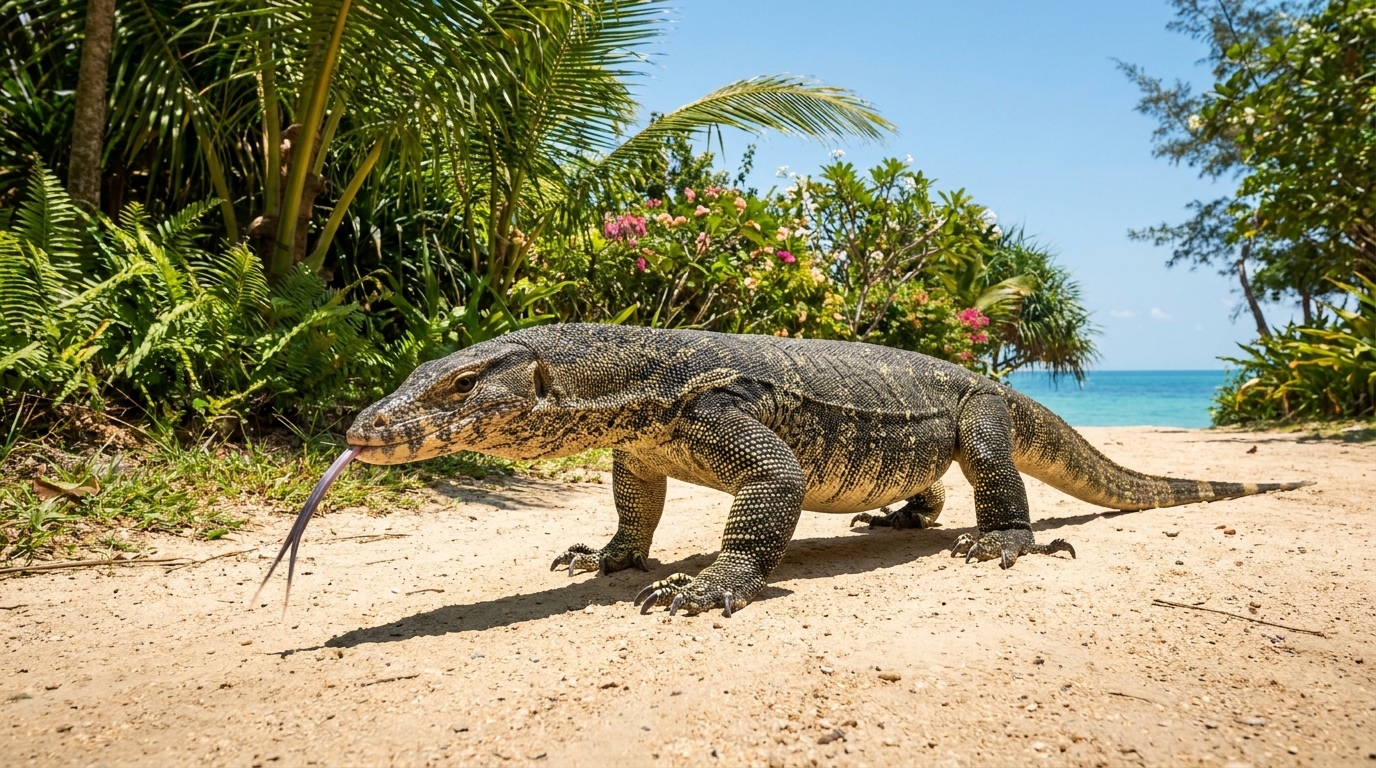
The water monitor is the animal most likely to genuinely startle you. They are large, common, entirely at home around resorts and canals, and harmless if left alone. A metre and a half of lizard walking past a pool is normal here.
The park's list also carries reticulated pythons and flying dragons, the small gliding lizards that launch between tree trunks.
Spiders
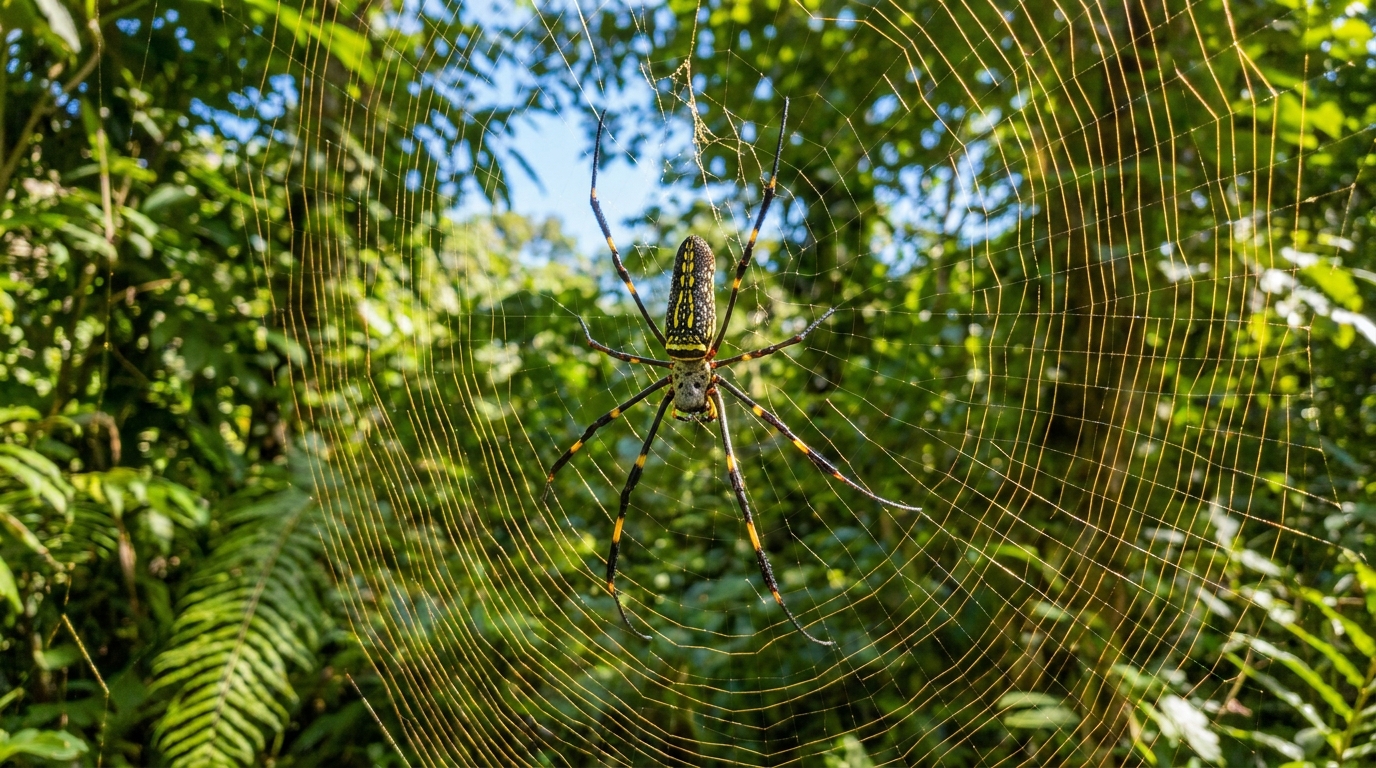
The one you will see, and probably walk into, is the golden orb weaver. The female is big, black and yellow, and strings an enormous circular web at head height across gaps in vegetation. The silk is faintly gold in sunlight and startlingly strong for its thickness. She is not dangerous to you.
Huntsman spiders are the large flat fast ones that turn up on walls and ceilings and get mistaken for tarantulas. Thailand also has genuine tarantulas, including the Thai black tarantula, generally reckoned the country's largest spider.
One honest caveat: unlike the mammal and bird records, the spider material we could find is written about Thailand generally rather than surveyed for Koh Lanta specifically. Treat it as what is common in this part of the country rather than a species list for this island.
Birds
The bird life is the part the island undersells. Overhead you are most likely to see brahminy kites, rust-coloured with a white head, and white-bellied sea eagles. Kingfishers, sunbirds and bulbuls are common in the trees. Oriental pied hornbills turn up around the island, sometimes as semi-resident pairs at particular resorts.
How many bird species the park holds is where we have to be careful. Published figures disagree: the national park species page lists 132 birds, while other compilations of the same park put the figure closer to 185. We are not going to pick one and present it as settled. The parks database itself carries a blunt warning that applies to every list of this kind, including the one you are reading: the species records are "collected from various sources and publications, it is not necessarily complete nor accurate", and may include animals long gone from the park, rare migrants recorded once, or simple misidentifications.
In the water
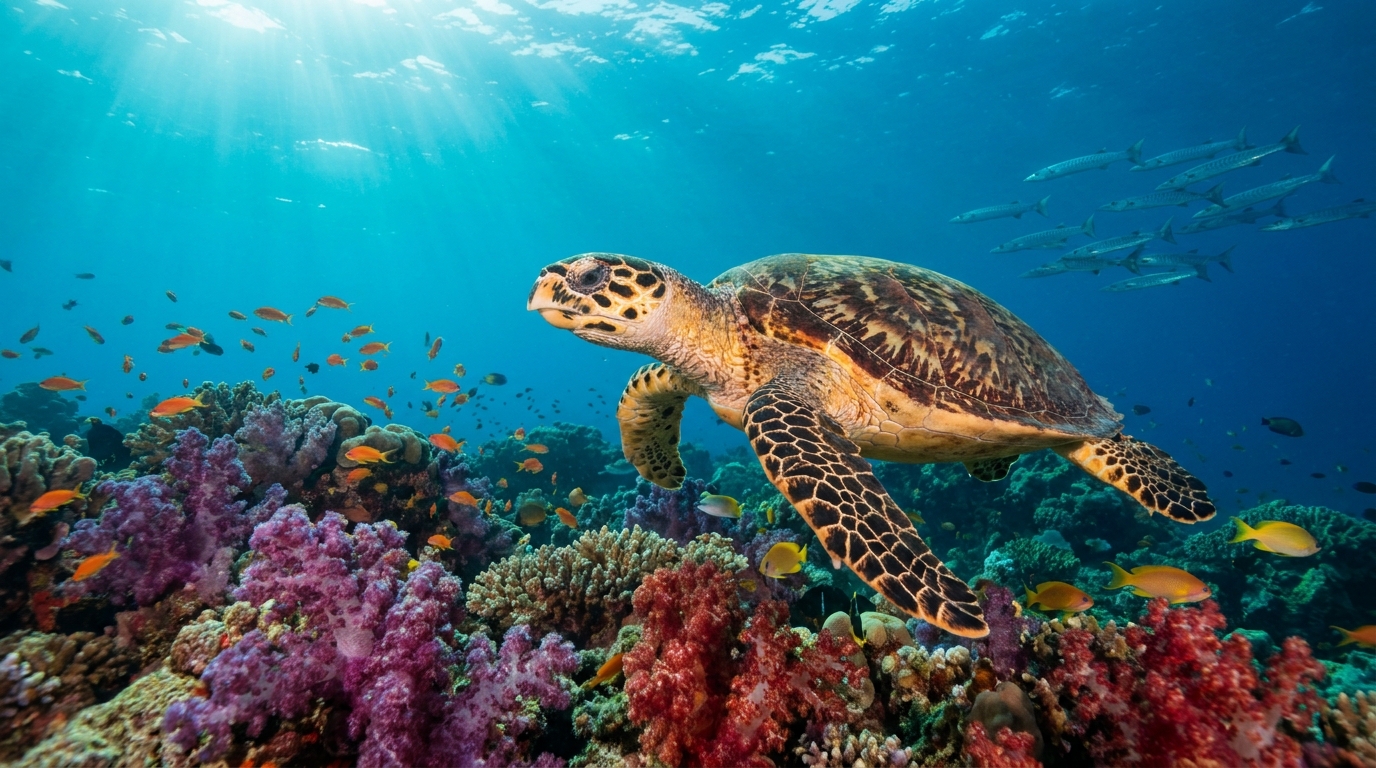
Most of what makes Koh Lanta's marine life famous is not on the island at all, it is at the dive sites reached from it.
Koh Haa, a cluster of small islands west of Lanta, is where operators report hawksbill turtles, reef rays, blacktip reef sharks, moray eels and schooling barracuda. Hin Daeng and Hin Muang, two pinnacles further out, are the ones divers travel for: walls dropping past 60 metres, soft coral in red and purple, and the chance of leopard sharks, manta rays and the occasional whale shark. Operators put the best odds for mantas and whale sharks between February and April.
Those accounts come from dive operators rather than survey data, so read them as what experienced divers see on good days, not as a guarantee.
The dugong, and the part that is not cheerful
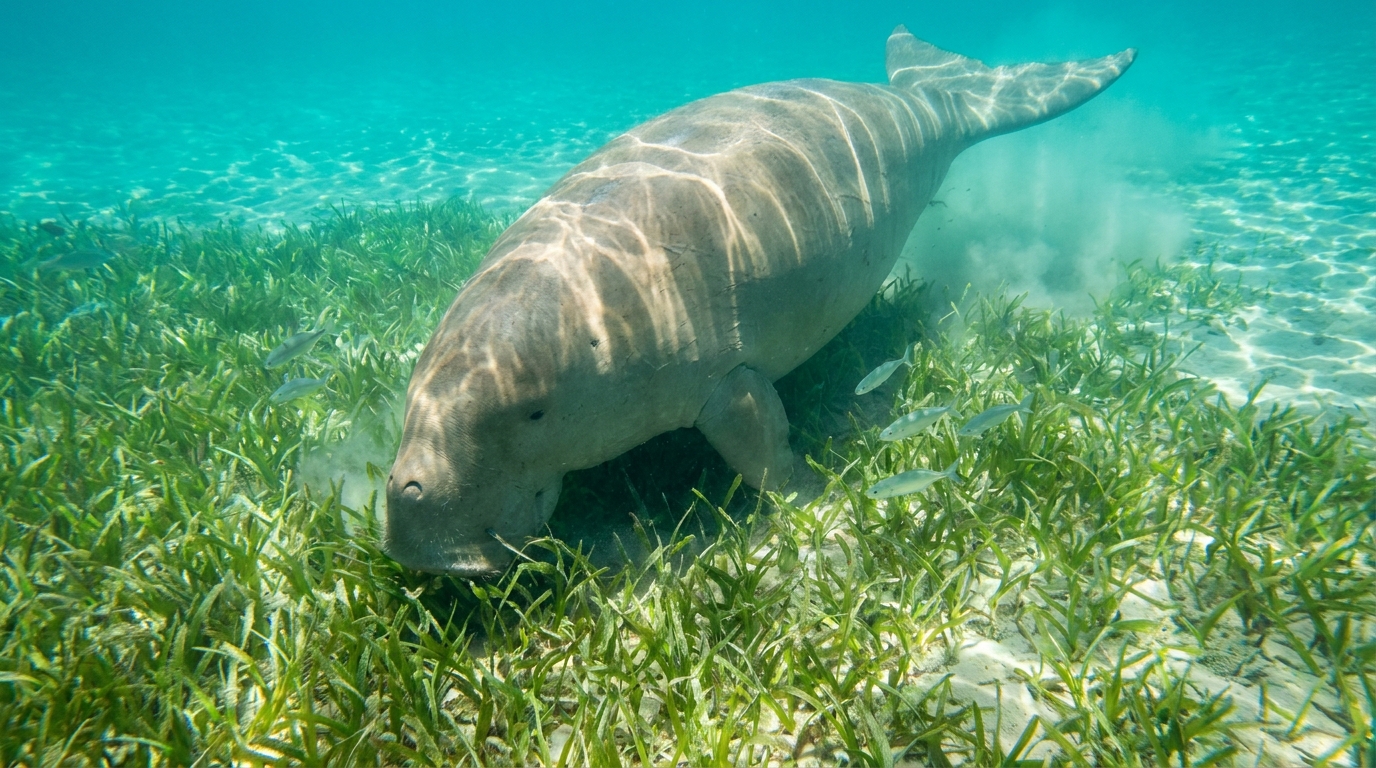
Dugongs, the seagrass-grazing marine mammals sometimes called sea cows, live along this coast, and their situation is the most serious wildlife story in the Andaman right now.
They depend on seagrass meadows, and the meadows are failing. Thailand's Department of Marine and Coastal Resources recorded seagrass cover around Koh Libong, down the coast in Trang, shrinking by up to half between 2020 and 2024, with losses across Trang, Krabi and Phuket. In one Krabi bay, Ao Nammao, coverage reportedly fell from around 60% to 1% in 2024. Post-mortem work indicated that at least 40% of dugong deaths in 2024 were likely starvation.
The population counts move alarmingly, and they are worth reading carefully rather than as a single headline. A 2022 national survey put roughly 273 dugongs in Thai waters, about 90% of them on the Andaman coast. A 2023 estimate put around 194 at Koh Libong alone. By early 2025 some estimates suggested as few as 10 might remain there. Aerial surveys in early 2026 counted 33 at Koh Libong, including mother-and-calf pairs.
Those numbers cannot all be describing the same thing in the same way, and we would be inventing certainty we do not have if we picked one. What is not in dispute is the direction of the seagrass loss and the reason it matters. Researchers attribute the decline to a combination of marine heat waves, tidal anomalies, dredging at river mouths and agricultural runoff, rather than any single cause.
Dugongs are seen off Koh Lanta only occasionally. The animals themselves are mostly further south. But the seagrass they need grows along this whole coast, including here.
The waterfall, and the forest behind the beaches
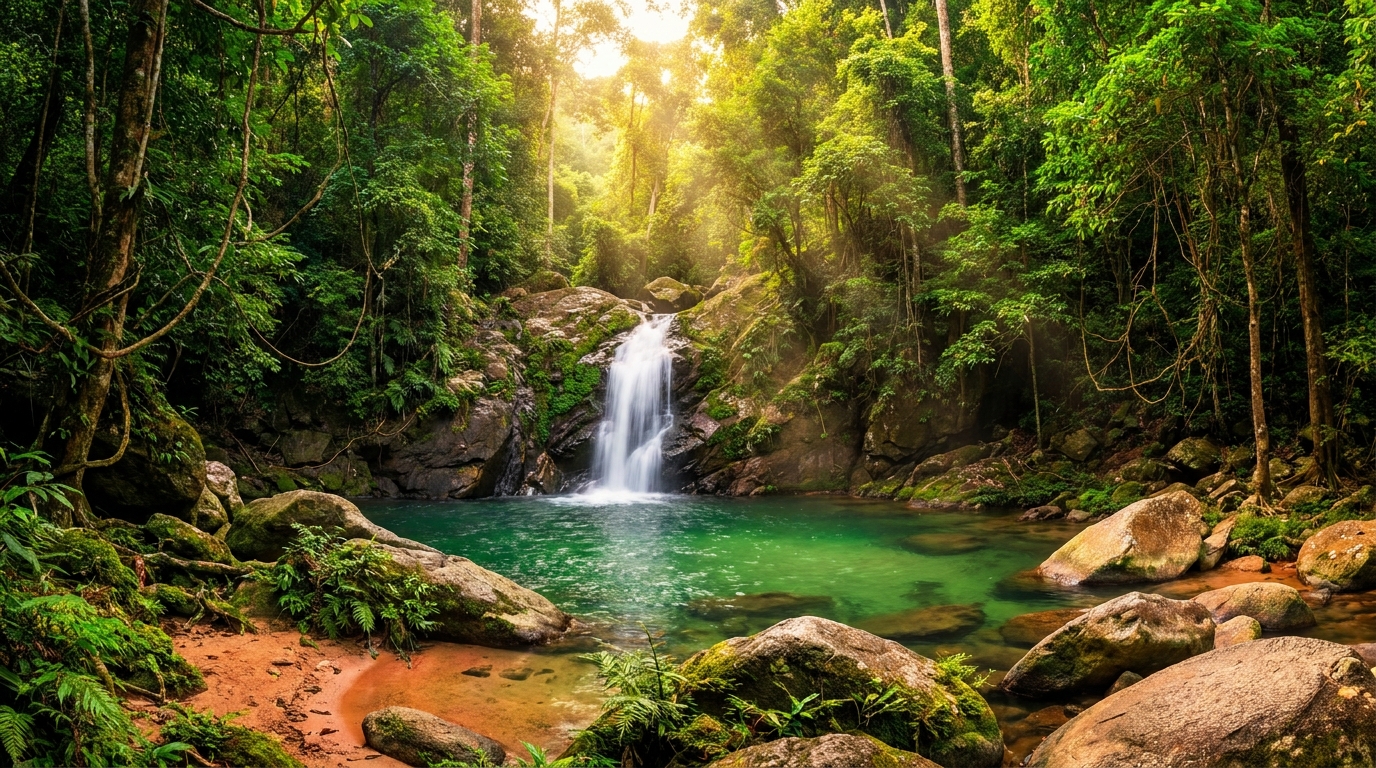
The island most visitors see is a strip of west-coast beach. The interior and the south are forest, and that is where the wildlife is.
Khlong Chak waterfall is the island's best-known freshwater walk, in the south, reached by a jungle trail of a little over a kilometre each way with a modest climb. About halfway along is a large cave with tree roots framing the entrance. Its name is not settled: travel guides generally call it Tiger Cave and mention bats inside, while OpenStreetMap maps the cave on this trail as Bat Cave and places a separate Tiger Cave about three and a half kilometres away in the mid-island interior. We have not been able to resolve which name the cave on the trail properly carries. Reported entry is around 200 baht.
The timing is genuinely awkward and worth knowing before you go: the trail is most comfortable in the drier months from November to May, but the waterfall itself has the most water in the wet season from May to October. In the driest stretch it can be a trickle over rock. Visitors going for a swimmable pool and visitors going for an easy walk want opposite halves of the year.
Where to find what
Roughly, by part of the island:
- The south, in and around Mu Ko Lanta National Park: the best forest, and the best chance of dusky langurs, hornbills and, at night, slow loris and colugo. The park headquarters and lighthouse sit at the southern tip.
- The southern interior: Khlong Chak waterfall and Tiger Cave, on the jungle trail described above.
- The edge of the national park: the elephant camps.
- West-coast beaches, resorts and gardens: water monitors, macaques, golden orb weavers, kingfishers and sea eagles overhead. Most people's actual wildlife encounters happen here, not on a trek.
- Offshore to the west: Koh Haa for turtles, reef rays and blacktip sharks. Hin Daeng and Hin Muang, further out, for the big pelagic animals.
- The shallow coastal seagrass: where dugongs feed. Sightings here are rare, and the studied population is further south around Koh Libong in Trang.
See these places on the island map
What we could not confirm
We approached Mu Ko Lanta National Park for its own account of what lives in the park. The contact address published on the Thai national parks portal does not accept mail, and a corrected version has not yet been answered. Where this piece relies on published species lists, it says so, and where those lists disagree, it says that too. The spider section, as noted, rests on national rather than local records.
If you work on the island and know this ground better than a published checklist does, we would like to hear from you, and we will correct anything here that is wrong.