Thailand Calls for Multiple Views of 1976 Massacre
For five decades now, the 6 October 1976 massacre has been a controversial and dark part of the modern political history of Thailand – arguably the darkest. On that fateful day, armed right-wing ultra-royalist groups and paramilitaries stormed Thammasat University at dawn to suppress student protesters. This ultimately led to the killing of more than […]
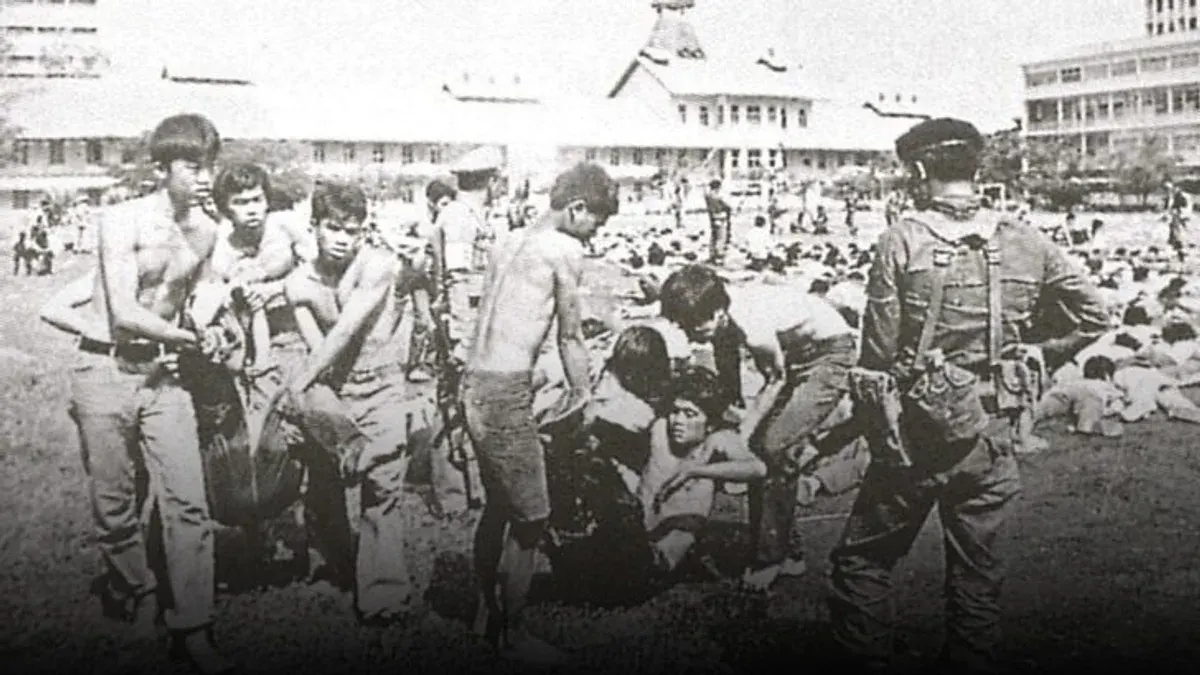
For five decades now, the 6 October 1976 massacre has been a controversial and dark part of the modern political history of Thailand – arguably the darkest. On that fateful day, armed right-wing ultra-royalist groups and paramilitaries stormed Thammasat University at dawn to suppress student protesters. This ultimately led to the killing of more than 40 people at and around the university, including the lynching of several at Sanam Luang, with some of the bodies set on fire. A military coup subsequently took place; many students were arrested, while thousands fled into the jungle to join the Communist Party of Thailand (CPT). For five decades, our understanding of what happened then, and why, has fallen into two broad versions. Two competing narratives The first is the far-right royalist version, which argues that if the Thai state and right-wing groups had not acted and cracked down decisively at the time, Thailand would have fallen to communism; many more people would have died; there would have been “boat people” fleeing communism as happened in Vietnam after the fall of Saigon in April 1975; and there might not exist a monarchy in Thailand today. Essentially, it is a narrative that it was ‘either we kill them first or they eliminate us’. The fears were real and as a boy at the time, I recalled my father, who then served the Thai Foreign Ministry, saying we should prepare for the worst – that we might have to flee Thailand. The left-wing version, which sees the students as victims of the brutality of that day, ultimately left them with little choice but to be arrested, hunted down, or to flee into the jungle to join the Communist Party of Thailand (CPT). Theirs is a narrative of right-wing inhumane barbarity—where some laughed while watching the lynching of university students at Sanam Luang, where dead bodies were mutilated, some women were raped, and perpetrators enjoyed complete impunity to this day. While conservative royalists don’t talk much about 6 October 1976, the other camp reproduces its own set of memories, at the risk of turning them into a rigid account that borders on dogmatism. Somsak challenges the prevailing account Enter exiled historian Somsak Jeamteerasakul, who has made this year’s commemoration a particularly contentious one. A former student activist during the 1976 incident, Somsak was detained in the aftermath of the killings and subsequent military coup. The former history lecturer at Thammasat has been living in exile on the outskirts of Paris since the 2014 coup. Now 68, he likely won’t be able to return to Thailand without facing prison—or a worse predicament—due to his criticism of the Thai monarchy as an institution. Over the past many months, Somsak, who has a very large following of over 897,000 on Facebook, has been arguing that crucial parts of the left-wing narrative regarding the history of 6 October 1976 have been left out, thus creating a distorted understanding of the incident and its context. Add