Wild Elephant Dies After Attack by Another Elephant in Chachoengsao
Authorities reported that the wild elephant known as 'Plai Ngabit' died after being attacked by another elephant in Chachoengsao province. The necropsy revealed the death resulted from capture myopathy, aggravating a pre‑existing leg fracture that became infected. The elephant's tusks were removed and will be handed over to the Department of National Parks.
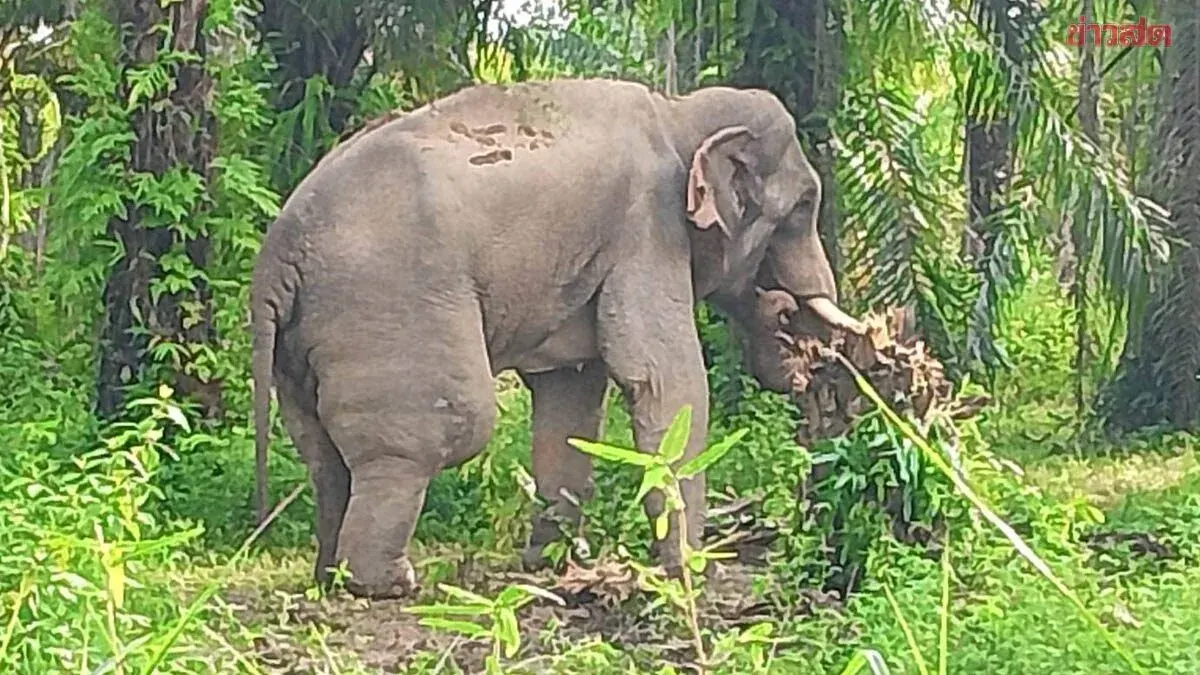
On October 15, 2026, the Department of National Parks, Wildlife and Plant Conservation, via its Region 2 Office in Si Racha, released the findings of the examination carried out on October 14. Officials were alerted by the Khao Ang Rue Nai Wildlife Sanctuary that the carcass of Plai Ngabit was found lying in the area of Ban Khao Talat, Village 15, Tha Takiat Subdistrict, Tha Takiat District, Chachoengsao Province. A veterinary team inspected the site and determined the cause of death was capture myopathy resulting from sustained attacks by another elephant. This caused the previously injured right femur to break further and become chronically inflamed, leading to immobility. The bull elephant, estimated to be at least 40 years old, stood about 2.9 metres tall and had two tusks. The carcass lay on its left side and showed signs of decomposition, indicating death had occurred at least seven days prior. Examination revealed abrasions on the right flank and tail base, and the right femur was fractured and protruding through the skin, consistent with aggressive interactions among wild elephants in the area. Staff removed and cleaned the two tusks for storage according to government protocol before transferring them to the department. Plai Ngabit had received ongoing medical treatment since March 2026 from the wildlife veterinary team, the Wildlife Rescue Center in Si Racha, and the Khao Ang Rue Nai sanctuary, including intramuscular injections, oral anti‑inflammatory painkillers, and liver supplements. Its condition improved until May, when it could walk and feed normally with the herd. However, on September 17 the elephant began limping again, prompting additional treatment on September 23. It later collapsed after being attacked again. Because the site is in a community forest where burial is not feasible, the sanctuary has placed guards around the area and restricted access to ensure safety and hygiene. The veterinary and relevant teams will proceed with the carcass disposal as soon as possible following academic standards and regulations.