Wild Elephant Dies After Trio Attack in Eastern Thailand
A wild bull elephant died after being attacked by three other elephants in the Sam Kho community forest of Chachoengsao province. Villagers witnessed the incident but did not intervene, and a foul smell spread from the decaying carcass. Authorities removed the tusks for safekeeping and are preparing to dispose of the remains following veterinary protocols.
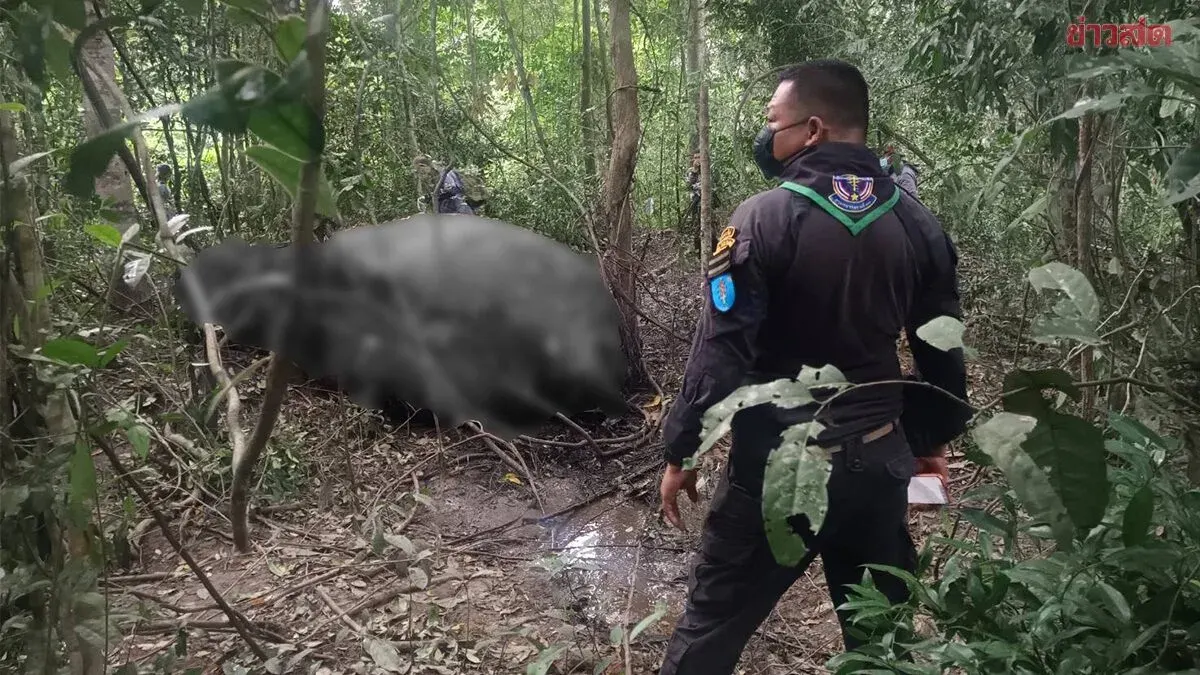
Officials mourn the death of Plai Ngabid, a wild bull elephant, after it was attacked and knocked down by three other elephants. Villagers saw the incident but did not dare intervene. A foul odor spread across the Sam Kho community forest in Tha Takiap district, Chachoengsao province, on October 15, 2026. Ekachai Saendee, chief of the Ang Rua Nai Wildlife Sanctuary, reported that Lieutenant Colonel Wisun Tribhum, commander of Ranger Company 1306, led a rapid response team to the scene after villagers reported finding a dead elephant. The carcass was found in the Sam Kho community forest, Ban He Talat, Moo 15, Tha Takiap subdistrict, Tha Takiap district, Chachoengsao, in a state of decay and emitting a strong stench. Veterinary officers and experts conducted a detailed inspection. Preliminary autopsy results indicated the elephant died from capture myopathy due to repeated attacks by other elephants, which exacerbated an old injury to its right femur, causing further fracture, inflammation, and eventual incapacitation. The bull elephant had two tusks, stood about 2.90 meters tall, and was estimated to be at least 40 years old. Its carcass lay on its left side, beginning to decompose, suggesting it had been dead for no less than seven days. Examination revealed abrasions on the right side of the body and tail base, with the right femur broken and protruding through the skin, consistent with aggressive elephant‑on‑elephant conflict in the area.
Officials removed and cleaned the two tusks for storage according to regulations before handing them over to the Department of National Parks, Wildlife and Plant Conservation. Prior to this incident, reports indicated that Plai Ngabid had been attacked by three elephants and collapsed; villagers witnessed the attack but did not intervene, and authorities had been monitoring its injuries in hopes of treatment. At around 9:00 p.m., officers had to leave the area because it is a frequent foraging zone for wild elephants and the ground conditions were unsuitable for immediate burial. The Ang Rua Nai Wildlife Sanctuary deployed personnel to monitor and restrict access to the site to ensure hygiene and safety, barring unrelated individuals from approaching. A veterinary team and relevant officials are scheduled to carry out the carcass disposal following academic protocols and standard operating procedures as soon as possible the next day.