Osotspa Targets 625,000 Tons Glass Recycling by 2030
The article is about Osotspa's glass recycling initiative. Key points: - Osotspa aims to recycle 625,000 tons of glass by 2030 - Recent beach cleanup at Laem Chabang collected 425kg trash (340kg glass) - Part of "OSP Bottle to Bottle" proje
A decade ago Chonburi generated about 2,000 tons of waste per day, but that figure has now surged to 3,300-3,400 tons daily — nearly 1.2 million tons annually — as industrial and tourism growth drives a mounting garbage crisis. The province’s 170-kilometer coastline must contend with both land and marine litter, and broken glass on beaches poses hazards to the environment, people, and wildlife. Tackling this challenge requires cooperation across all sectors, starting with waste separation at source.
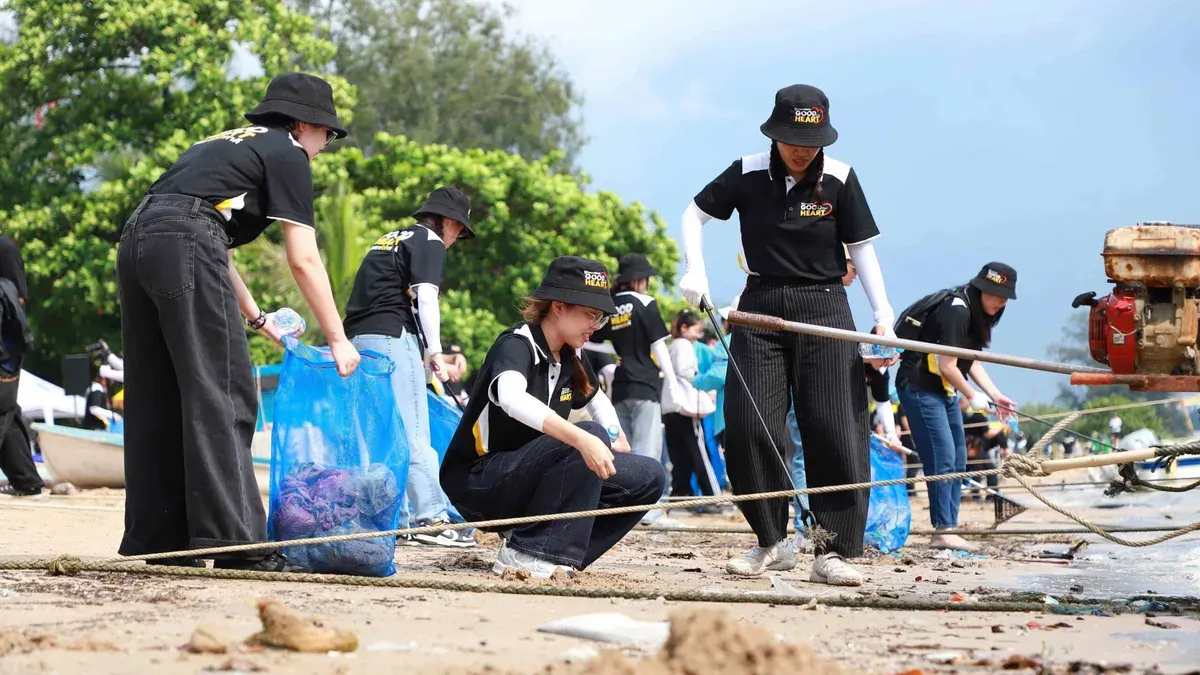
Recently at Laem Chabang Beach, more than 250 volunteers from government agencies, communities, and Osotspa staff collected 425 kilograms of trash, over 340 kilograms of which were glass bottles. That glass is now entering a recycling loop to become new bottles, marking the first step toward Osotspa’s ambitious goal of recovering 625,000 tons of glass by 2030.
Osotspa’s ‘Heart for Good’ Volunteers Clean Laem Chabang Beach, Elevating Flagship Project On October 16, 2026, Osotspa Public Company Limited joined with Chonburi provincial agencies, network partners, and ‘Osotspa Heart for Good’ employee volunteers — over 250 people in total — to collect and sort waste at Laem Chabang Beach under the ‘OSP Bottle to Bottle’ project.
The haul totaled 425 kilograms, with glass bottles accounting for 340 kilograms, roughly four-fifths of the total. These bottles will be processed into cullet for use as raw material in new bottle production, and the effort avoided an estimated 337 kilograms of carbon dioxide equivalent emissions.
Marking its 135th anniversary, Osotspa has elevated OSP Bottle to Bottle to a signature corporate social responsibility project, promoting post-consumer glass bottle collection — especially small bottles that often escape the system — for sorting and recycling into new bottles under a Closed-Loop Glass Circularity model. The target is to collect 625,000 tons of cullet by 2030, equivalent to 99% of projected M-150 sales volume between 2026 and 2030.
Current Progress 2023-2025: Collected 686,093 tons of used glass bottles back into the recycling system, exceeding the 680,000-ton target. 2026-2030 (Phase 2): Already gathered approximately 105,000 tons, about 16% of the 625,000-ton goal. Recycled content in production: Recycled cullet now makes up 75-80% of the input for new bottles, reducing virgin material use and improving resource efficiency.
For a company producing billions of bottles, boosting collection matters both environmentally and commercially: it cuts virgin material consumption, lowers production energy, and reduces the chance of glass ending up in nature. Through 2030 Osotspa plans to expand its operational areas, collection channels, and partner networks to reach more people.
When Small Bottles Hold the Same Value as Large Ones Saroj Intaphan, Osotspa’s Vice President of Government Relations and Sustainability, noted that because Osotspa manufactures both beverages and its own glass packaging, it has a duty to recover that packaging and close the loop.