Civil Service Exam Board Denies Wrongdoing, Challenges Answer Sheet Probe
The Civil Service Exam Board denies wrongdoing in a probe of answer sheet irregularities affecting nearly 438,000 applicants, claiming contracted parties—not committee members—are responsible for explaining the defects discovered during the
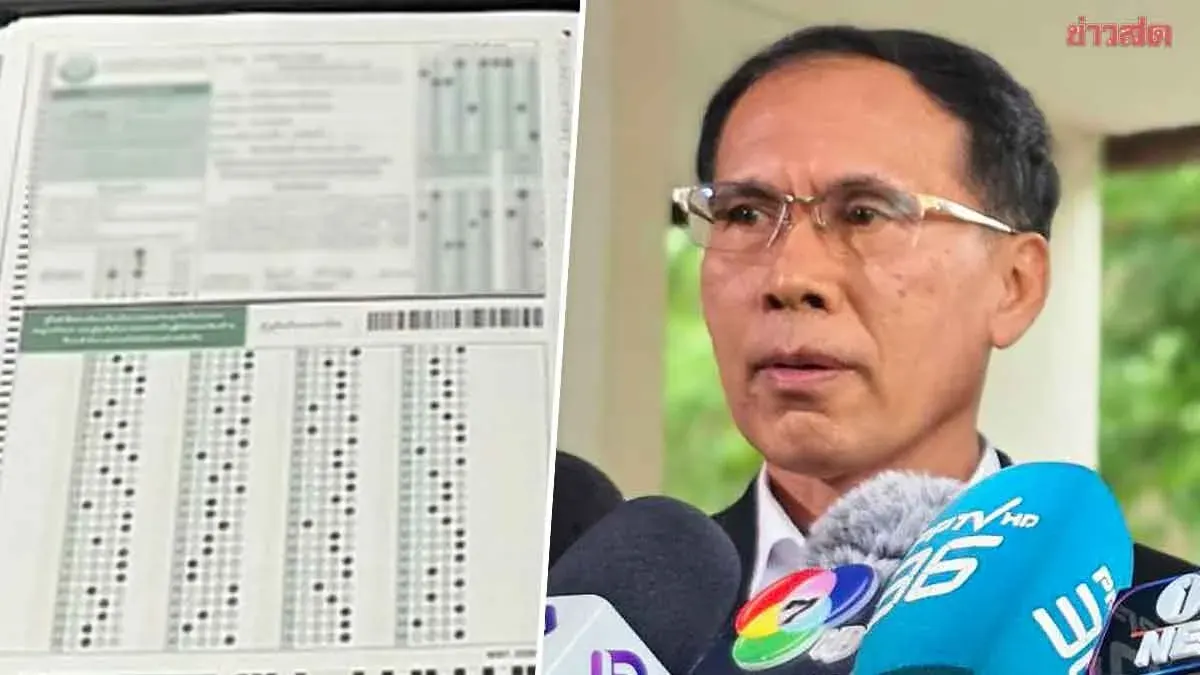
On July 15, 2026, Wanchai Chanphorn, chair of the Central Examination Committee for Local Government Personnel (CGCEP), stated that the 17-member central committee has attempted to conduct the process with utmost integrity and fairness. With 438,277 applicants, the committee held 20 meetings to ensure the exam remained free from corruption and prevented wrongdoers from entering public service. However, irregularities were discovered involving answer sheets and data alterations. Wanchai clarified that such information does not remain with the central committee but with the contracted parties, who must explain how these deficiencies occurred.
When asked if the CGCEP members themselves are under investigation by the NACC, Wanchai emphasized that the 17 committee members are not suspects but have been summoned to provide information about oversight procedures and how breaches occurred. The NACC sought details on how the committee monitored the examination process and where defects originated.
Before results were announced, the CGCEP held two meetings reviewing score accuracy and investigating fraud allegations, with one six-hour session needed to approve results. The contracted university representatives, authorized by their rectors, presented processes for all 105 nationwide positions. Wanchai noted that contracted parties must follow all contractual steps and the terms of reference, submitting documents for verification.
Flash drives sent to the committee under contract terms were classified as backup data and kept highly confidential to address problems. Initially, the committee could not access these files per contract specifications. When irregularities were discovered, an inspection committee was established, revealing approximately 5,000 problematic cases. Wanchai expressed surprise at the scale of anomalies and categorized them into three groups: approximately 3,600 cases where scores dropped but results were still announced, and cases where actual exam scores differed significantly from announced results.