Bamboo Waste Transformed into Biochar at Farmer Workshop
The user wants a short summary of the article about a bamboo biochar workshop in Thailand. Let me identify the key points: 1. Event: "Villager Technology NEXT MOVE: Agriculture Not the Same" on October 30, 2026 2. Workshop: "Producing Bioch
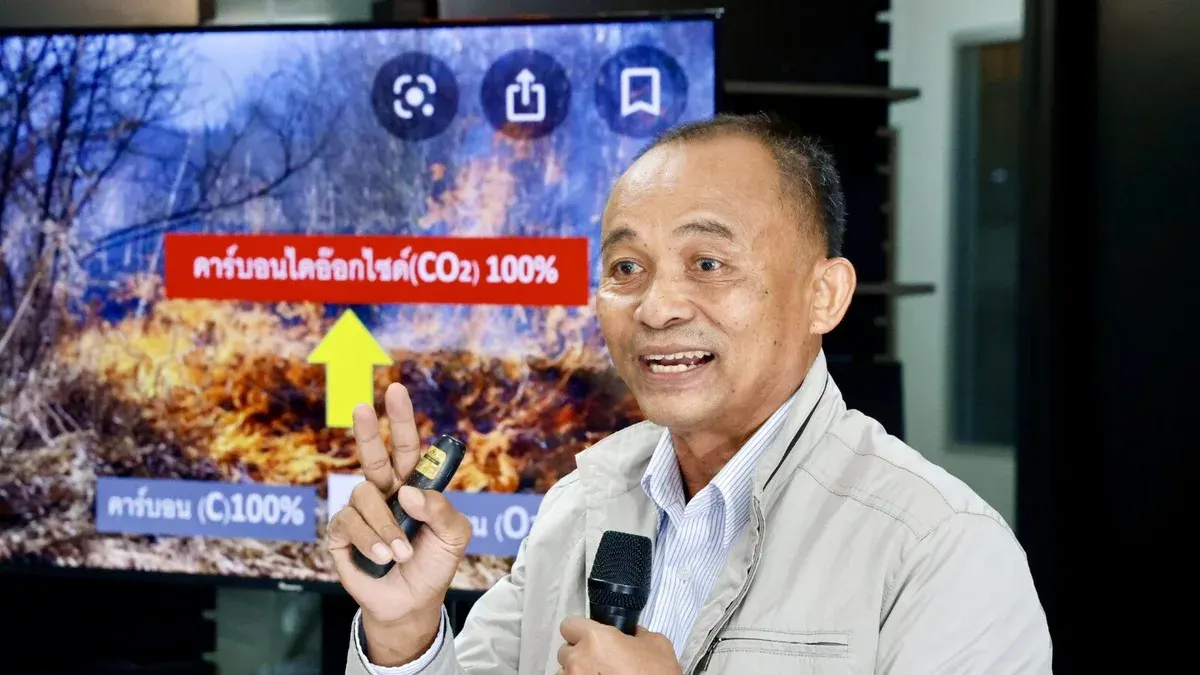
Agricultural waste such as bamboo branches, leaves, and crop residues does not have to end up discarded. If put to good use, these materials can be processed into resources that support soil management. One such resource is biochar, a carbon material produced from biomass that can improve soil conditions, offering an alternative for utilizing agricultural waste.
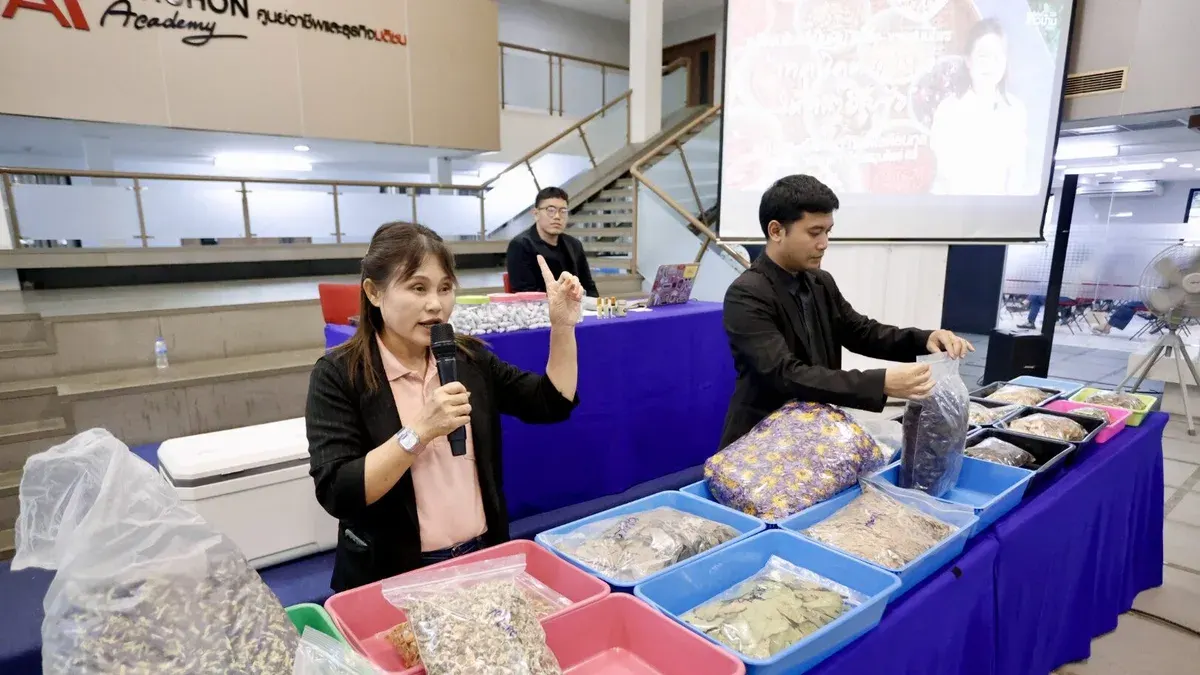
At the Villager Technology NEXT MOVE: Agriculture Not the Same event on October 30, 2026, a workshop titled "Producing Biochar from Bamboo (Managing Waste, Restoring Soil Life)" was held. Prasarn Sukasut, owner of Poi Jaem Bamboo Garden in Sa Kaeo province with over 100 rai of bamboo cultivation experience, shared knowledge from his studies and hands-on experiments, demonstrating how to turn bamboo waste into biochar for agricultural use.
From Bamboo Waste Problem to Transferable Knowledge Prasarn's journey began with a problem in his own garden. Large-scale bamboo planting generated massive amounts of branch, leaf, and other residual waste. He sought ways to make use of this material, studied biochar, then gradually built expertise through research and experimentation until he could teach others today.
Drawing from his accumulated experience, Prasarn believes biochar knowledge can be taught to the general public for practical application without requiring complex technical background. The key is understanding production principles and knowing how to select suitable available materials. This approach led to today's workshop, inviting participants to learn bamboo biochar production and understand how to adapt agricultural waste utilization to their own land.
"My version is 'villager-style' biochar — using simple, down-to-earth language so everyone can understand. Biochar isn't some mysterious, complicated thing. Some people hear about it and think it's from another world. Let's clear that worry and learn the simple principles together," Prasarn explained.
Understanding Biochar Through Hands-On Experience Prasarn explained that biochar is a carbon material obtained by heating biomass under oxygen-limited conditions. Various feedstocks can be used — wood branches, leaves, rice straw, and other crop residues. For this workshop, bamboo was chosen as the primary material, aligning with his continuous experience in bamboo gardening.
A key feature of biochar is its porous structure, which may help retain some water and nutrients while providing habitat for soil microorganisms. However, biochar properties depend on feedstock type and production process, while effects on soil and crops vary by local conditions and application methods. Selection must suit the specific soil and crops of each plot.
"We used to think only large trees could make charcoal. But actually, leaves, bamboo leaves, rice straw, even weeds like water mimosa can all make biochar. We don't need to cut whole trees — just use the soft agricultural waste left behind to make high-quality charcoal," Prasarn revealed.
Another activity letting participants learn through real experimentation was a simple electricity generation demonstration using an electrical circuit. Prasarn tested bamboo biochar and found it could light up a bulb.