Ban Na Sao Launches Community-Based Drug Recovery Program Phase 2
Ban Na Sao district in Surat Thani launched phase 2 of a community-based drug recovery program offering treatment alternatives to hospitalization, with officials emphasizing the need for coordinated government, private sector, and community
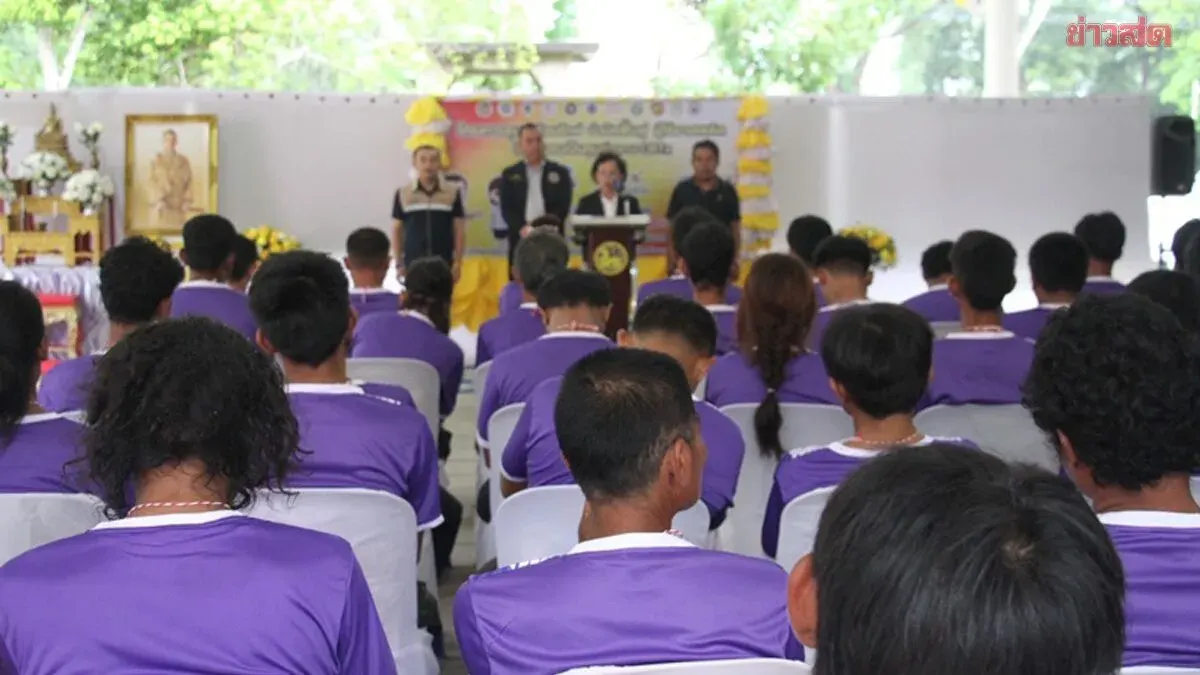
Ban Na Sao district launched the Community-Based Treatment and Care program phase 2 for drug users on August 21, 2569 at Patthanamrom Temple in Ban Na Sao district, Surat Thani province. Officials including Supha Kanchana, Surat Thani Provincial Administrative Organization president; Uthai Tueaksubarn, district chief; and Associate Professor Pharmacist Dr. Withaya Kulsomboon attended the opening alongside police, health officials, village headmen, nurses, and community representatives.
Kanchana stated that drug addiction is a serious problem affecting individuals, families, the economy, society, and the nation. To address this challenge, the program offers drug users treatment alternatives beyond hospital care through community-based recovery that is flexible and less disruptive to daily life. She emphasized the need for coordinated support from government, private sectors, and community members to prevent relapse.
Dr. Kulsomboon noted that the program represents an important step in building knowledge and skills for practitioners to provide continuous community-level care for drug users, which is central to sustainable drug problem solutions. He highlighted that drug abuse impacts security, safety, health, economics, and quality of life, requiring cooperation from all sectors—government, academia, civil society, and especially local communities.
The Public Health Ministry prioritizes drug prevention through integrated health and social approaches, focusing on risk reduction, protective factors, and continuous community care under the principle that patients deserve rehabilitation opportunities, not just punishment. The ministry's implementation strategy includes developing personnel capacity through practical learning so counselors have modern skills and understand patient context, and establishing continuous community care that links hospital services with community follow-up to reduce relapse.