Budget Panel Approves Billion-Baht Boost for Nine Agencies
Thailand's House budget committee approved redirecting 11.162 billion baht to nine agencies including the emergency reserve fund and national parks department during an August 21 session, while rejecting a proposal to boost student loan fun
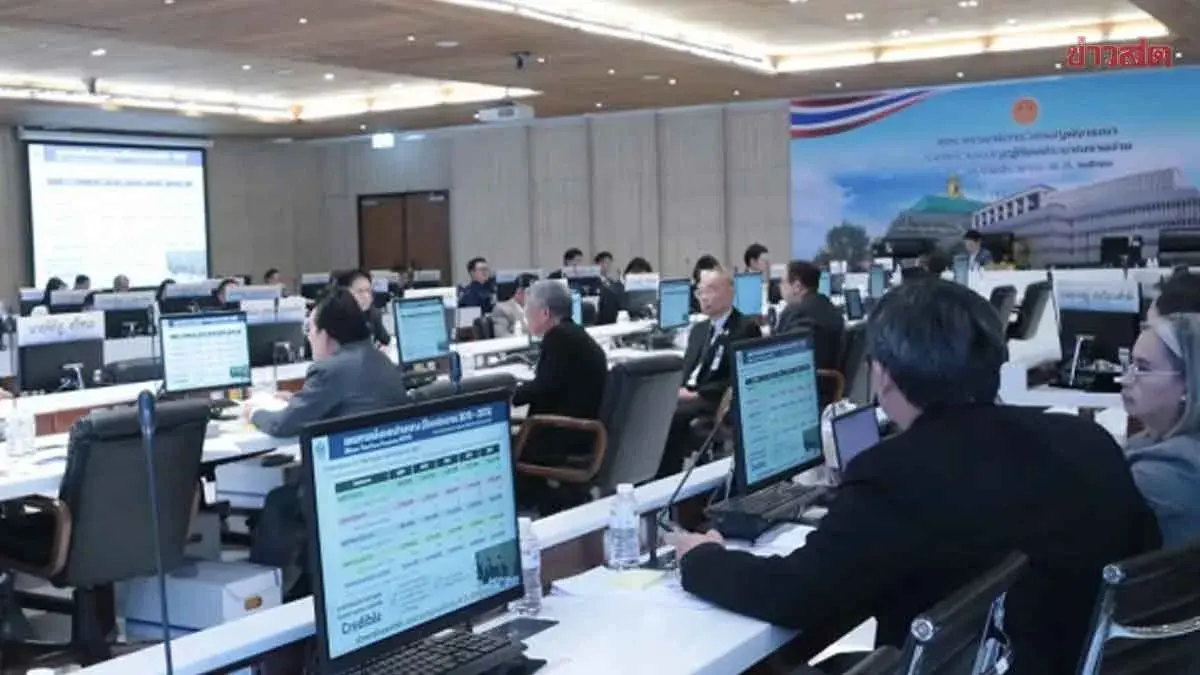
The budget committee of the House of Representatives held an extraordinary session on August 21 to review proposed budget amendments for fiscal year 2570, chaired by Deputy Minister Phrader Parisnananthakul. The committee considered 38.57 billion baht in requested budget adjustments from the cabinet approved on August 18, split into two main agendas: approval of increases and modifications from 65 budgetary units totaling 37.584 billion baht, and consideration of proposals from ten independent state agencies totaling 988 million baht.
Committee member Nanthana Songpraja proposed redirecting 11.162 billion baht that had been cut, distributing it among nine agencies including the central emergency reserve fund (6.044 billion baht), the Department of National Parks, Wildlife and Plant Conservation (148 million baht), and the Office of Vocational Education Commission (96 million baht).
Meanwhile, committee member Sirikanya Tansukul from the Pheu Thai Party proposed increasing funding for the Science, Research and Innovation Fund by 6 billion baht and the Student Loan Fund (YFPO) by 5.162 billion baht. She noted that with 706,000 current borrowers and only 9 billion baht allocated for fiscal 2570, the funding is insufficient to serve existing and new applicants, risking tens of thousands of students dropping out of the system. The fund collected only 27,000 million baht in fiscal 2568, falling short of the 33,000 million baht target for 2570.
The committee majority supported Nanthana's amendment and opposed Sirikanya's proposal to increase YFPO funding. Committee member Krueang Parisnananthakul noted that while YFPO will receive nearly 9 billion baht in 2570, the core problem remains the fund's 200 billion baht debt arrears, which blocks new funding from entering the system.