Cabinet Minister Challenges iLaw Over Personal Data Disclosure
A Cabinet minister denied allegations from iLaw that he received calls during vote counting in the 2024 election, challenging the authenticity of phone records the rights group disclosed as evidence.
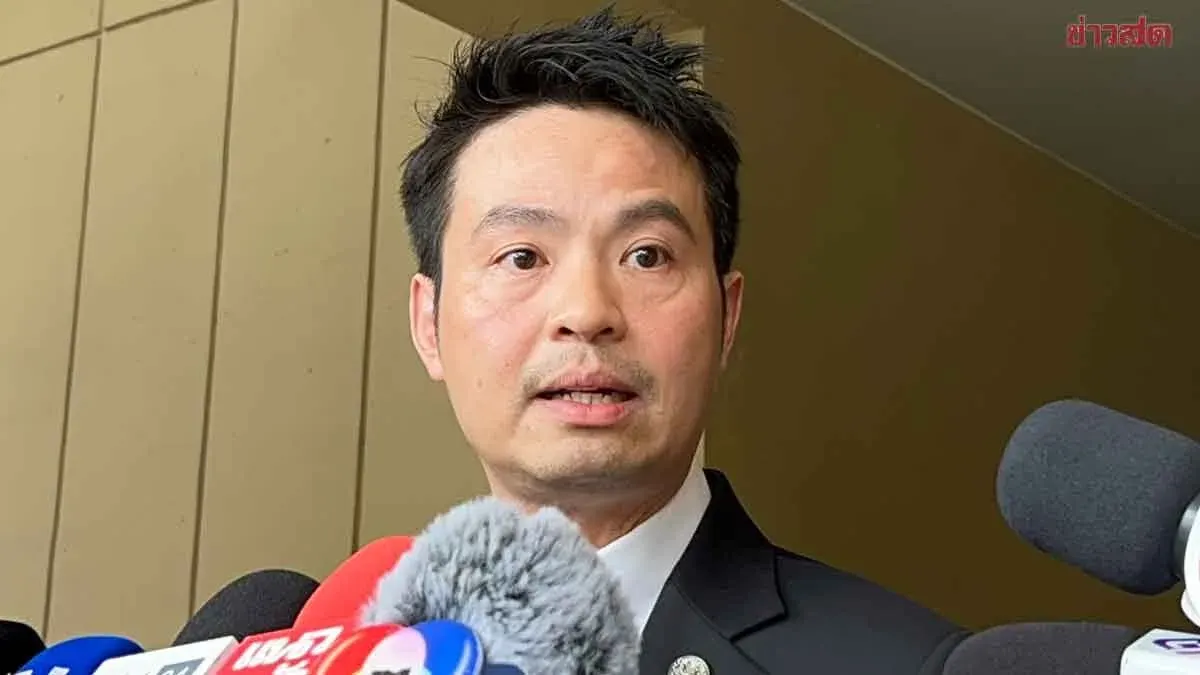
On 24 August 2025 at Government House, Paradorn Prissananantakul, minister attached to the Prime Minister's Office, addressed allegations from iLaw that an Ang Thong parliamentary candidate had called him and Ravee Prissananantakul during vote counting, which is prohibited by law. Paradorn reiterated that he, Ravee, and the Bhumjaithai Party had no involvement in obtaining the parliamentary seat won in the 2024 election.
Regarding iLaw's release of phone records showing incoming and outgoing calls as personal data to the public, Paradorn questioned how ordinary citizens could access such private information. He challenged whether the disclosed data was genuine or fabricated, noting that such information is classified private data that even he cannot access without contacting the telecommunications provider.
When asked about the source of the data, Paradorn said the organization releasing it must prove whether the evidence is real, as it is easy to create fake records today using Excel and AI. He rejected the allegations, arguing that after two years it would be impossible for him to accurately recall whether a call occurred, and that those presenting evidence bear the burden of proof.
Paradorn referenced the classic novel "The Verdict" by Nat Kob Jidit, comparing society's tendency to judge based on accusations without knowing the facts. He stated he welcomed scrutiny as a politician but insisted that allegations must be backed by verified evidence, not unconfirmed data.