Citizens Protest IMF-World Bank Meetings in Bangkok Overnight
Thai citizen groups have launched an overnight protest at Bangkok's Khlong Toei crossroads during the IMF and World Bank annual meetings, presenting seven urgent demands for economic justice. They accuse the institutions and the Thai government of advancing a neoliberal "blue regime" that enriches elites while shifting debt, environmental harm, and insecurity onto the public. The demonstrators call for reclaiming public control over energy, resources, and policy, and for ending repression of peaceful assembly.
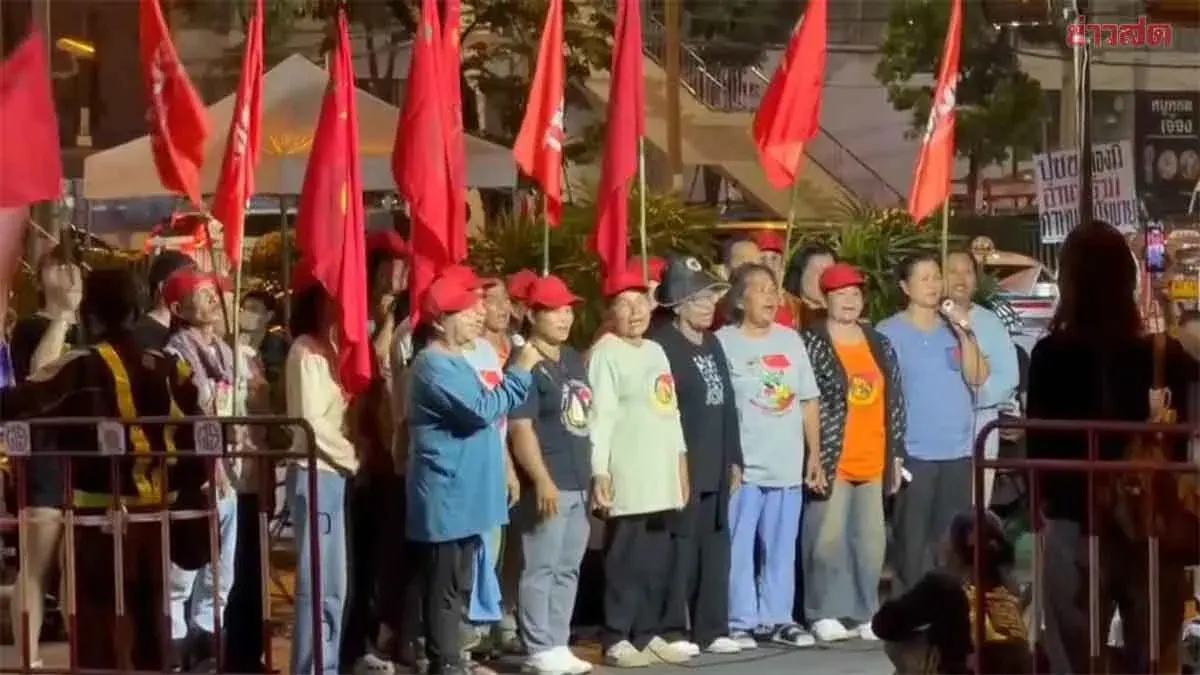
The network comprises farmers, workers, women, urban poor, ethnic groups, and environmental defenders from across the country. They have intensified their movement by staying overnight to declare civil disobedience, reclaim power to shape the nation's future, and oppose development policies that favor capital and elites. They argue that development creates wealth for capital while shifting burdens onto people, likening the meetings to a "financial Olympics" where states and capital set global economic direction at the public's expense. The statement highlights three structural crises: neoliberal capitalism and the so-called "blue regime," which links big business, powerful elites, state mechanisms, and special authority to facilitate resource exploitation by capital, using national security and image to threaten and silence citizens and human rights defenders. It criticizes growth measured by GDP and private capital mobilization of over $112 billion in fiscal year 2069, reflecting a neoliberal model subsidized by public funds where profits go to private firms while risks, debt, and environmental destruction fall on the public. It cites lessons from the Pak Mun dam, Bang Lang dam, potash mines, flooding, industrial pollution in the east, and urban poor facing evictions, asserting that the public does not owe the World Bank; rather, the Bank and the state owe justice to the people. The seven urgent demands include: returning decision‑making power to the public and ending token public consultations; making energy a public good by ending public subsidies for monopolies and transferring ownership to communities; halting public debt for capital, canceling unjust debts, disclosing all loan contracts, and stopping debt domination of economic sovereignty; guaranteeing universal welfare and fair pay for care work, both paid and unpaid; holding the World Bank, IMF, government, and capital responsible for ecological restoration and fair compensation; protecting peaceful assembly rights, ending threats against rights defenders, and preventing repeat violence like the 2022 APEC incident; dismantling the blue‑regime economic structure, revising the 14th National Development Plan to decentralize power and wealth, and restoring public control over land, water, forests, seas, and energy. The statement concludes: "We hold our ground in civil disobedience; the road is the people's parliament; peaceful direct action is love in practice that makes justice real; the future is not a gift from the state and capital but something the people must create themselves."