Commerce Ministry Rules Out US Pork With Growth Promoter
Thailand's Commerce Ministry has ruled out importing US pork containing the growth promoter ractopamine as part of ongoing ART trade negotiations with Washington. Permanent Secretary Phumpon Nainapakorn said the talks must balance export gains — Thailand's US surplus hit $52.5 billion — with protections for domestic corn and livestock farmers. The agreement still requires legal review, Cabinet and Parliamentary approval, and public consultation before taking effect.
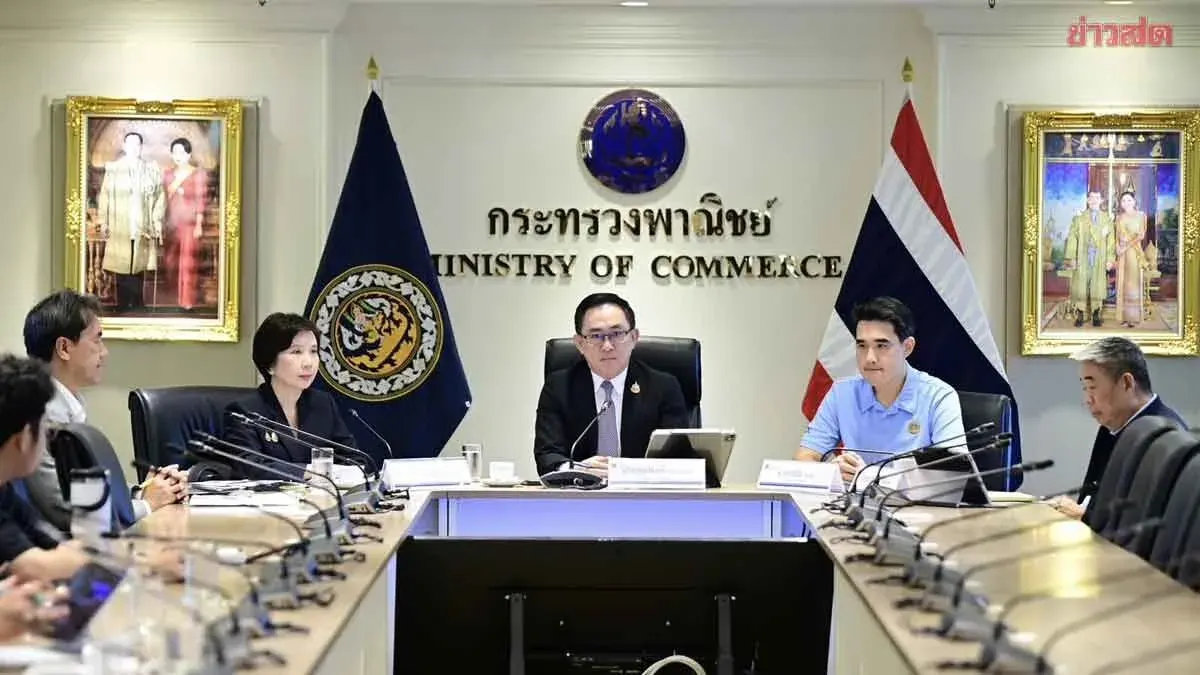
Commerce Ministry Permanent Secretary Phumpon Nainapakorn today (Nov 20) updated progress on the Thailand-US Agreement on Reciprocal Trade (ART). Following the Joint Statement signing, concerns arose over potential impacts on farmers, especially regarding US pork imports. The ministry affirmed it is not negotiating to accept products affecting public health, specifically pork raised with ractopamine, though full market-access details remain undisclosed. Phumpon emphasized no one will negotiate to bring health-harming products into Thailand.
Talks must balance export, industrial, and agricultural interests. Thailand produces about 5 million tons of feed corn yearly but needs 9 million tons. Expanded import options could lower animal-feed costs for pig, poultry, shrimp, and fish farmers, provided measures protect domestic corn growers from price drops. Phumpon noted the US market's growing importance: Thai exports to the US rose from 18.3% of total exports in 2024 to 24.6% in the first nine months of 2025, reaching $74.9 billion, up 43.57%. Imports stood at $22.4 billion, giving Thailand a $52.5 billion trade surplus and making it the fifth-largest source of the US trade deficit. Thailand must keep tariffs near competitor levels to avoid hurting orders, production, investment, and over 2 million jobs, without severely impacting domestic farmers and businesses.
The Joint Statement does not make ART effective immediately. It requires legal scrubbing, Cabinet approval, public disclosure and consultation, and Parliamentary endorsement. "If signing today means Thailand loses, or loses more, we won't sign," Phumpon said.
International Trade Negotiations Department Director-General Chotima Iamsawasdikul said agricultural market opening under ART does not mean immediate tariff cuts for all items; each product has different conditions, some with transition periods for farmers to adjust, though maximum periods remain undisclosed. While the proposed FTA fund has not materialized, support mechanisms from the Agriculture, Finance, and Industry Ministries and OSMEP are available for preparation.
Thailand has requested the US reduce Section 301 tariffs on forced-labor concerns from 12.5% to 10%, but this is not yet official pending US regulatory amendments. Thailand also awaits US action on excess-capacity tariffs. The US may address both together or separately. Thailand aims to maintain tariff parity with key competitors Malaysia, Indonesia, and Vietnam to preserve competitiveness.