Commerce Ministry Seeks Bigger Budget for 55 Trade Envoys
The Commerce Ministry has urged increased budget support for Thailand's 55 commercial attaches worldwide, calling them the front line for driving export growth. Thai exports rose 20.4% in the first ten months of 2026 to nearly 11 trillion baht, but officials say more funding is needed to open new markets and maintain competitiveness.
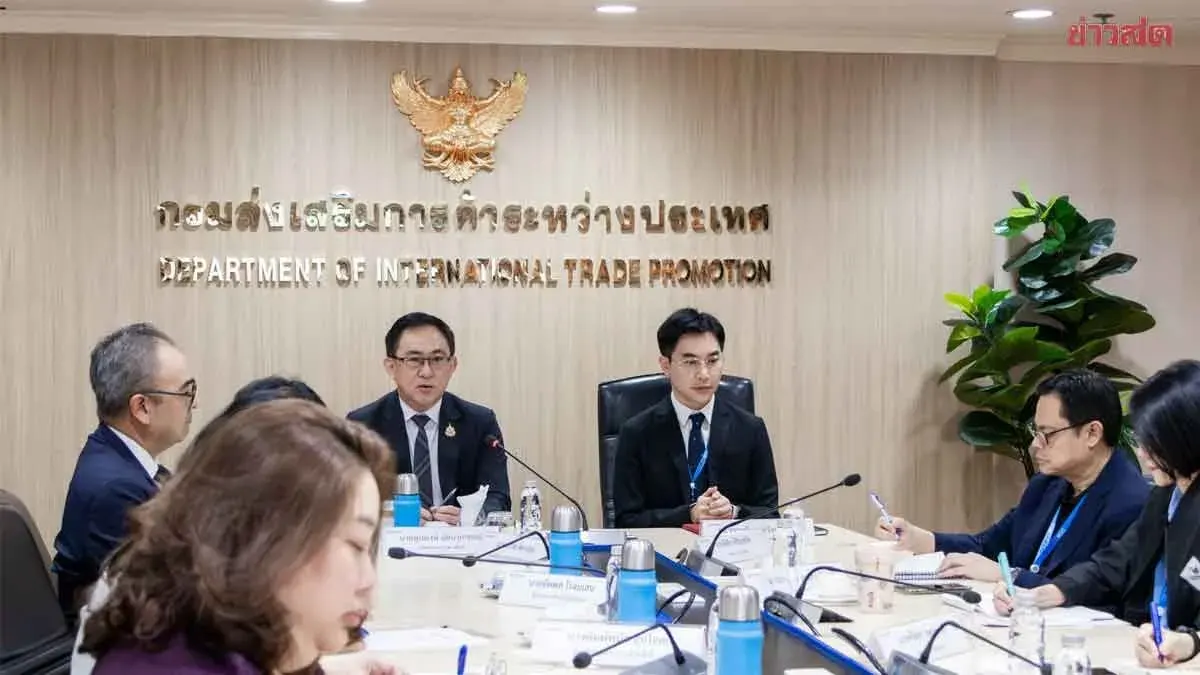
On November 27, 2026, Permanent Secretary of Commerce Poonpong Naiyanapakorn, accompanied by Director-General of the Department of International Trade Promotion Warawut Somwangprasert and senior executives, delivered policy directives to officials stationed at Thailand's 55 Offices of Commercial Affairs worldwide. Poonpong noted that Thailand's economy still relies heavily on foreign investment and tourism revenue, but securing trade opportunities for Thai entrepreneurs and products in global markets to generate sustainable income is the crucial mission of all 55 offices. However, achieving targets requires appropriate tools and resources, particularly overseas marketing budgets, which remain limited relative to the missions and trade opportunities available. Marketing budgets are not mere expenses but investments that generate revenue, build the country's image, and maintain national competitiveness. With sufficient funding, commercial attaches can proactively open new markets, expand business opportunities, and drive Thai export growth further. Thai exports expanded 20.4 percent year-on-year in the first ten months of 2026, reaching 10.98 trillion baht. Despite this performance, Thailand can push exports of many goods and services even higher, requiring enhanced competitiveness and foreign investment attraction. Investors weigh raw material sources, production costs, trade tariffs, and free trade agreements; if Thailand cannot create favorable conditions, investment decisions will be affected. Poonpong urged the attaches to perform to their full potential, take pride in their mission, grow trade value, and bring knowledge back to develop the Ministry's operations. Work priorities include aggressive marketing, partner-country cooperation, integrating Thai products into target-market supply chains, exploring new trade channels, expanding high-potential markets, and building networks with government and private agencies abroad. Efficient office management, compliance with host-country laws, and digital technology adoption for database development were also emphasized.