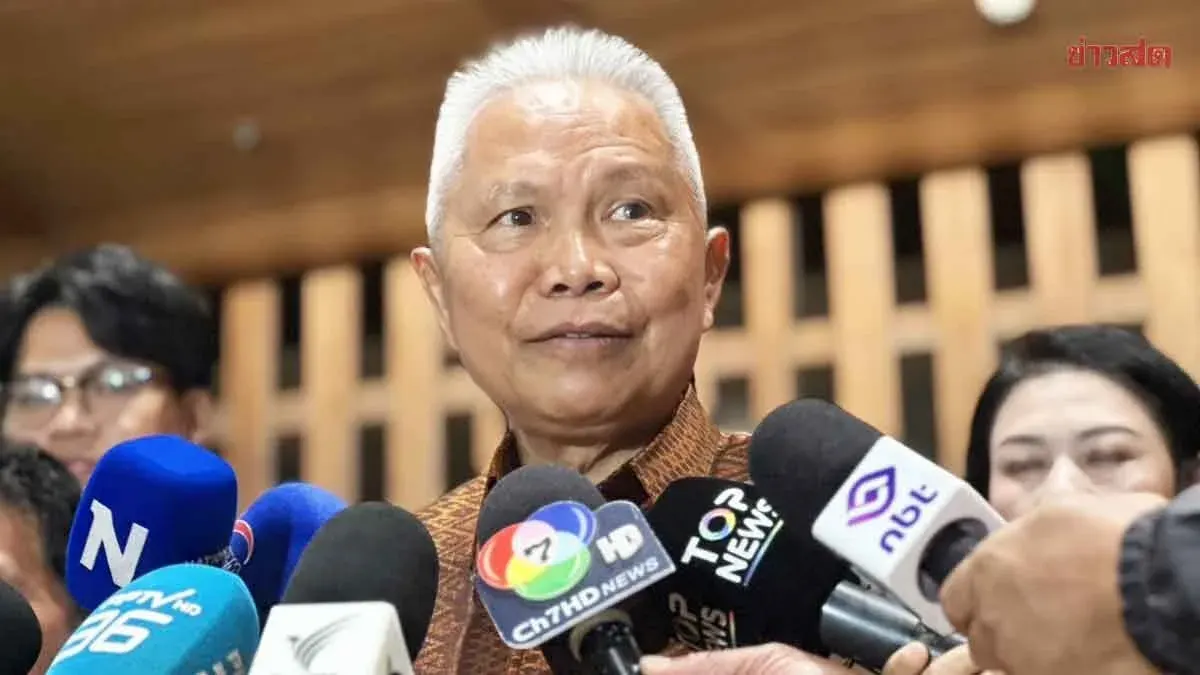
Former Minister Warns Trade Deficit Threatens Thai Growth Target
The user wants a short summary of the article, 1-2 sentences, 120-220 characters, max 240. Must be in English only. No filler. Lead with what happened, then the single most important detail. No quotes, no markdown. The article: Former Assis

Former Assistant Commerce Minister Warong Ramangkul expressed concern over Thailand's trade balance after September 2026 figures showed a deficit of $5.856 billion, marking the 12th consecutive month of deficits since October 2025. The cumulative deficit for the first nine months of 2026 (January-September) reached approximately $43.693 billion, or about 1.4 trillion baht. Warong stated that if Prime Minister Paetongtarn Shinawatra wants to see the Thai economy grow beyond 2.1 percent, the trade deficit must be reduced.
Warong noted that Thailand has not recorded a single monthly trade surplus in the past nine months, with April posting a historic high deficit of $10.021 billion, reflecting a structural trend rather than a temporary issue. He criticized the government for lacking clear measures to address the prolonged deficit after 12 months, whether through boosting export value or managing impacts from trade conditions with the United States, allowing deficit figures to accumulate monthly.
Exports for the first nine months of 2026 totaled $304.589 billion, with September alone reaching about $38.439 billion. However, imports accelerated much faster, reaching approximately $348.282 billion in the same period, resulting in the cumulative deficit exceeding $43.693 billion.
Warong recalled his dissent on February 6, 2026, against Deputy Prime Minister and Commerce Minister Phumtham Wechayachai's remark that exports were "growing but inefficiently," expressing confidence that 2026 would be a "golden year for Thai exports" — which proved accurate. Exports surpassed $300 billion in nine months and expanded continuously, a result of market-opening foundations and trade negotiations laid during former Commerce Minister Phichai Naripthaphan's tenure. Yet export success has been overshadowed by surging imports, preventing Thailand from fully benefiting from this golden year.
"Exports performed well as expected, but high export figures do not reflect a strong Thai economy. We have had consecutive deficits for a full year yet see no serious government action. Money flows out on imports more than it comes in every month, which inevitably affects monetary volume in the economic system," Warong said.
Warong reiterated his earlier call for the government to assess the impact of trade agreements with the United States on macroeconomic stability, particularly if conditions increasing imports from the U.S. cause imports to outpace exports. He urged the government to accelerate two key areas: concluding tariff negotiations with the U.S. to reduce exporter uncertainty, and finalizing the Thailand-European Union Free Trade Agreement (Thailand-EU FTA) to open new markets and enhance Thai product competitiveness.
"The EU is a high-potential market; exports to the EU expanded over 31 percent in July alone. If we close the FTA deal quickly, it will support sustainable export growth and reduce long-term trade deficit problems," Warong said.
However, Warong also voiced concern over the Thailand-United Arab Emirates Free Trade Agreement.