Court Rejects Call for New Concrete Tests in Collapsed Building Case
A criminal court rejected requests for court-supervised concrete testing in the State Audit Office building collapse case, ruling defendants can conduct their own tests, as hearings continue against 23 people including Italian-Thai Developm
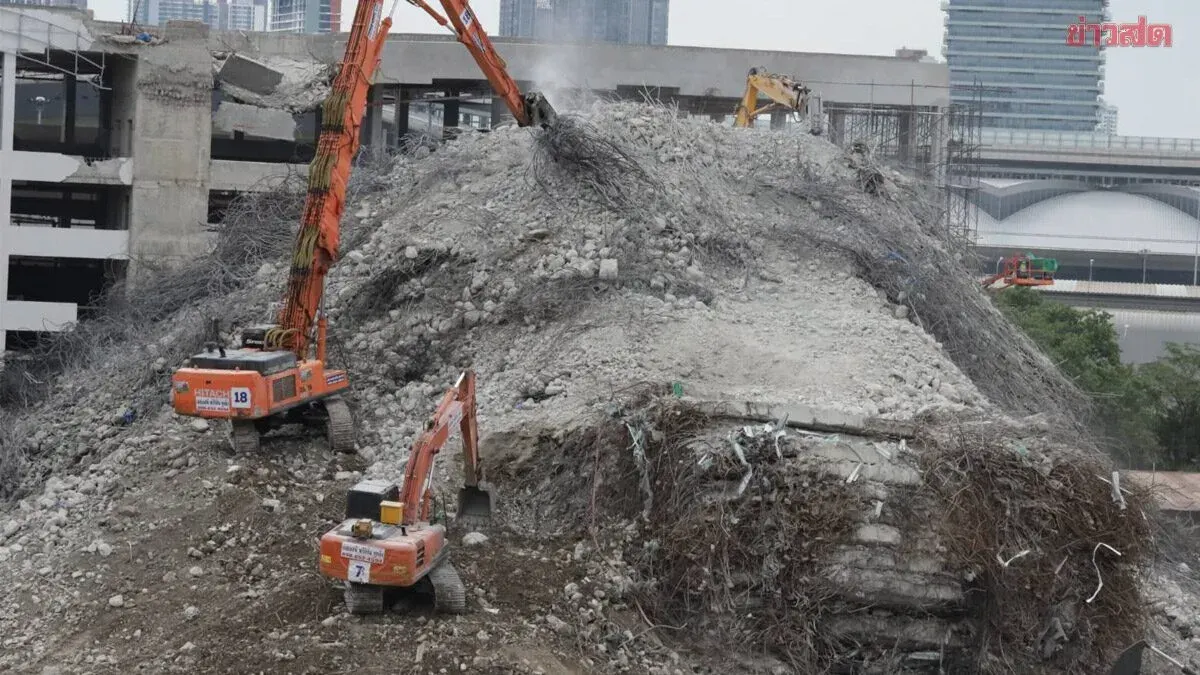
The criminal court rejected a request from two major companies in the collapsed State Audit Office building case asking the court to conduct an on-site inspection and order new concrete testing, ruling that defendants have the authority to arrange testing themselves without court involvement.
On July 22, 2569, the court scheduled examination of plaintiff witnesses in case number Ayo.2201/2568 against Premchai Kanasut and 22 other defendants, charged with professional negligence in building design, control, and construction that violated standards and caused deaths. The defendants include Italian-Thai Development Public Company Limited, led by Premchai Kanasut, and China Railway No. 10 Limited. Premchai was excused from appearing in person due to illness and permitted to testify in camera.
All 23 defendants have denied charges and disputed the concrete testing results that prosecutors claim showed substandard construction materials. During today's hearing, government auditor expert Vichan Jindarat testified, though cross-examination by some defense lawyers remained incomplete.
Regarding the request by Italian-Thai Development and China Railway No. 10 to send concrete samples to Switzerland for new testing with court participation, the court ruled that since the collapsed building remains property of the ITD-CREC joint venture (comprising defendants 16 and 18), the defendants may conduct testing without court authorization. However, the court declined to attend the sample collection process, finding that direct court participation in scientific testing procedures could compromise judicial impartiality in weighing evidence. The court noted that concrete sampling marks the beginning of forensic analysis, and judicial attendance—even for one step—may bias how the court ultimately assesses the testing results.