US Chip Export Controls Have Minimal Impact on Thailand
The Thai Commerce Ministry says new US export controls on advanced AI chips will have minimal direct impact, affecting only 0.7% of Thailand's chip imports from the US. However, the measures also cover chip leasing and cross-border data center services, prompting a broader impact assessment. The ministry is coordinating with US authorities to clarify licensing rules and support affected Thai businesses.
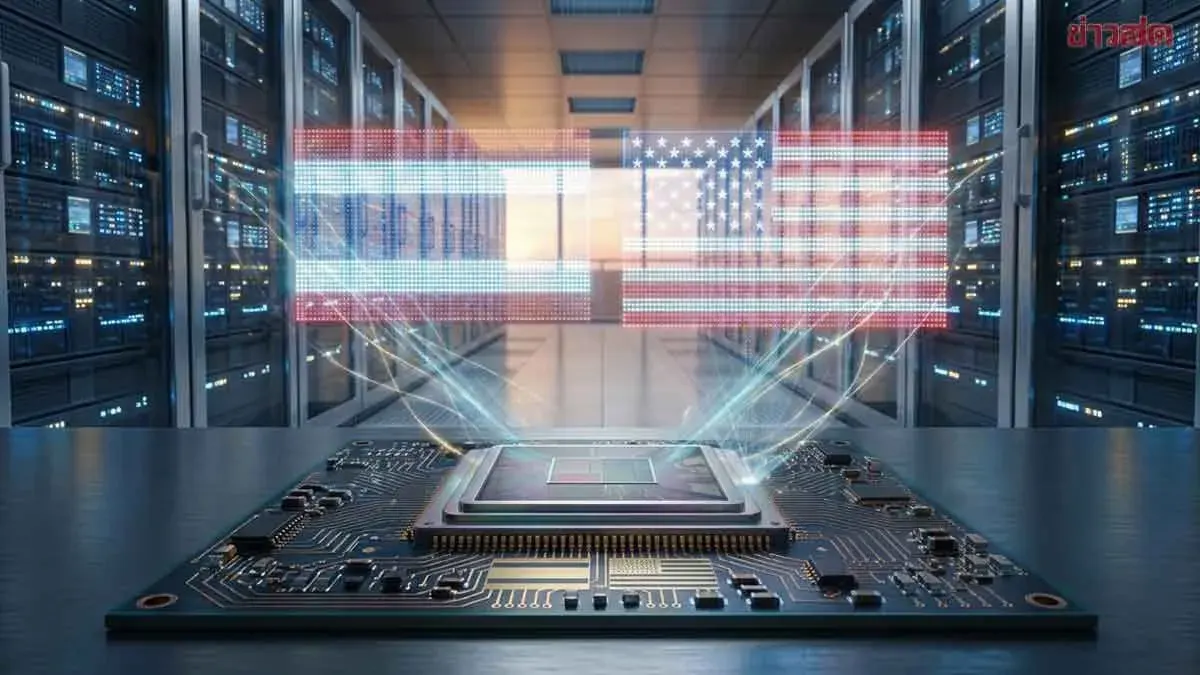
Deputy Prime Minister and Commerce Minister Supachai Sutthamphand disclosed details of new US measures controlling exports of advanced semiconductors and preventing circumvention of restrictions through data center processing power in five third countries: Thailand, Malaysia, Singapore, Indonesia, and Brazil. Importers in these nations must now obtain licenses from the US Bureau of Industry and Security (BIS). The Commerce Ministry has directed the Trade Policy and Strategy Office and relevant agencies to evaluate the impact, as the US announcement specifies products by HS code with additional conditions requiring further review.
Initially, the restrictions cover only advanced chips or high-performance semiconductors primarily used in data centers. While US-based data centers receive an exemption, the same exemption does not apply to facilities in other countries. Thailand's preliminary assessment shows the country imports only about 0.7% of its total chips from the US in the affected categories, suggesting minimal direct impact. However, operators seeking to purchase chips from the US may face additional procedural steps.
A comprehensive reassessment is planned because the measures extend beyond direct chip imports to include chip leasing, processing services, and services provided to third-country customers. These aspects require joint evaluation by trade agencies and the Finance Ministry. "We must monitor the details and assess further impact, especially conditions related to chip usage, processing, and cross-border services, which could affect operators and future investment," Supachai said.
Commerce Ministry spokesperson Kranich Nonjui stated the measures target advanced AI chips used in data centers, AI servers, and high-performance computing systems — not general chips used in automobiles, appliances, or machinery unless they meet control criteria. Key areas Thailand must monitor closely include trade continuity for advanced chip access, potential effects on data center and AI industry investment plans, and compliance costs for operators facing new licensing requirements.
The Commerce Ministry will accelerate coordination with the US to clarify measures, licensing guidelines, and exemptions to assess the scope and impact on Thailand. This includes supporting Thai businesses with information and contingency plans, maintaining trade and investment confidence through inter-agency integration, and collaborating with the US to prevent export control evasion through information exchange and joint inspections of high-risk companies. In the long term, Thailand should prioritize maintaining access to advanced computing technology while upgrading its trade governance system for technology products.