US Imposes 12.5% Tariff on Thai Goods Over Forced Labor Concerns
The US has imposed a 12.5% tariff on Thai goods over forced labor concerns, while Thailand accelerates negotiations on a reciprocal trade agreement aimed at keeping total tariffs below 19%.
Commerce Ministry spokesperson Karanit Nonchuy has detailed ongoing US-Thailand trade negotiations and Section 301 investigations. The US is currently investigating Thailand on two key issues: the absence of forced labor import bans and structural excess production capacity. The forced labor investigation has concluded, resulting in a 12.5% Section 301 tariff on Thai goods, while countries with forced labor prohibitions or reciprocal trade agreements face a 10% rate. Some items have also been granted exemptions.
Nonchuy stated that the Reciprocal Trade Agreement (ART) is a crucial factor in determining US tariff rates. Thailand is accelerating ART negotiations with the US to establish a trade framework reflecting Thailand's status and enabling regional competitiveness. "Thailand's goal is to finalize ART negotiations to maintain total tariff rates within a 19% range or no higher than competing nations," Nonchuy said. This 19% figure represents a framework Thailand previously negotiated; it previously faced 36% reciprocal tariffs under IEEPA before reduction to 19%, but the US later shifted its legal basis and opened Section 301 investigations on forced labor and structural excess capacity.
Regarding the structural excess capacity case, the US is still reviewing its investigation findings. Thailand has been under investigation since March 2025 and has submitted data and clarifications to US authorities. Nonchuy emphasized that current tariff comparisons must account for which specific investigations or measures produced each rate, as countries have different negotiation statuses and commitments with the US. Current rates do not yet reflect structural excess capacity findings. "Claiming Thailand would be severely disadvantaged if tariff rates exceed 12.5% and unable to compete is inaccurate, as both Section 301 investigation cases and each country's status must be fully considered," he said.
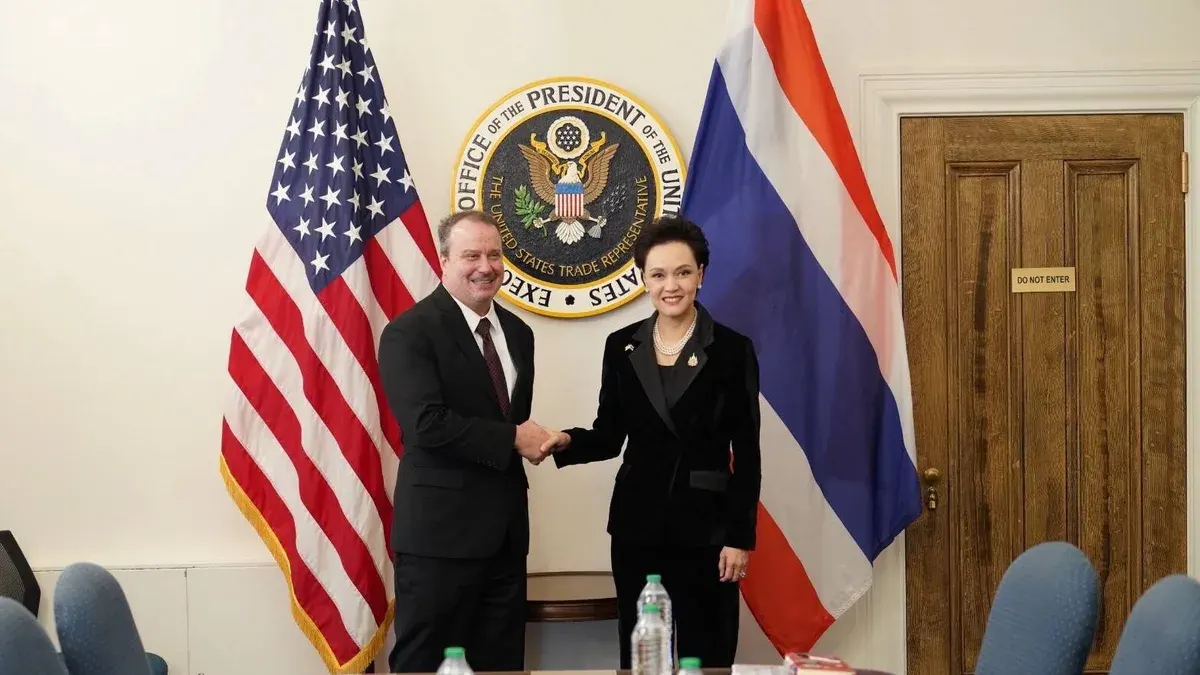
On ART progress, Nonchuy reported that core principles have been agreed; only technical details and treaty language remain to be finalized. Thailand is working to complete negotiations before the US announces its structural excess capacity findings. On September 1, Deputy Prime Minister and Commerce Minister Suphajee Suthummapan discussed the matter with US Trade Representative Jamieson Greer in Washington, DC, with both sides agreeing to expedite technical review of ART details following their substantive consensus agreement.