Deputy Interior Minister Sends Pumps to Ramm Kaeo Flood Zone
Deputy Interior Minister Worasihet Liangprasit announced that four large pumps have been placed in Bangkok’s Ramm Kaeo housing community to drain floodwaters, with water expected to recede in two to three days after assessing conditions in the nearby Prawet Burirom Canal. He dismissed claims that the operation is meant to showcase work on the Klong Chan project, saying it is not the time to argue over credit, and noted that sea‑tide effects are currently weak. The official said many agencies are cooperating and that garbage removal will be sped up to avoid health problems while pumping continues.
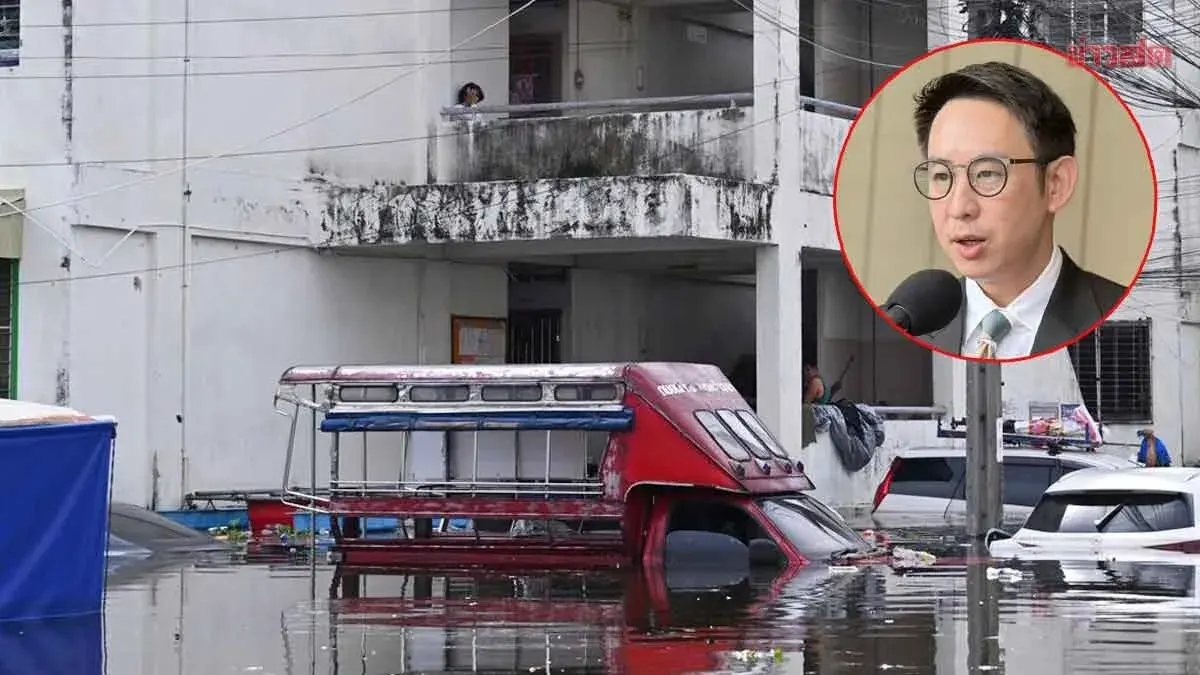
At 10:10 a.m. on October 2, 2069 (2026 CE) at the Department of Disaster Prevention and Mitigation, Deputy Interior Minister Worasihet Liangprasit discussed the acceleration of drainage operations in the Ramm Kaeo housing community. He said that on the evening of October 1, four large pump units were deployed and installed in the area. Officials need to examine the water situation in the Prawet Burirom Canal to see if levels are low enough to allow drainage, which will be assessed this morning. The plan calls for drawing water from the Ramm Kaeo area into a canal, then pushing it onward to the Prawet Burirom Canal, then to Bueng Nong Bon, and through an outlet tunnel into the Chao Phraya River. Because the Ramm Kaeo housing community is large, once the pumps are running, water levels are expected to drop within two to three days, depending on how much the canal recedes. Concerns about seawater inflow are minimal at present, as the tide is currently at the sixth day of the lunar cycle and remains relatively still. When asked whether the central government will need to provide additional large pumps in the future, Worasihet said it is certainly worth considering, but emphasized that local residents have long been accustomed to using such equipment. Regarding where to pump water next after the Ramm Kaeo situation improves, he noted that there are still many smaller areas that need attention, though they are not extensive, and details will be worked out. He added that the average water depth in the community is about waist-high, reaching up to under the chest, and that the flooding has persisted for several days, causing garbage to accumulate and water to begin to stagnate. Consequently, authorities have agreed that the Bangkok Metropolitan Administration should expedite garbage removal while pumping efforts are accelerated to prevent public health issues. When questioned about rumors that flood management in the Klong Chan area is being portrayed as his personal achievement rather than that of Bangkok Governor Chadchart Sittipunt, Worasihet said there is no time to debate who did what or to compare accomplishments. He stressed that everyone is working hard to resolve the situation quickly, noting that discussions had taken place based on the original plan: once the main canal water level drops enough to allow pumping, the Prime Minister had met with the Bangkok Governor and ordered that pumps be installed and operations begin on that day. He said he merely visited the site to observe, playing a minor role in the execution, while all parties—including the cabinet, the military, and the Department of Disaster Prevention and Mitigation—are contributing. He concluded that the matter should not become a subject of argument.