Deputy PM Deploys Rapid Tests to Combat River Toxin Crisis
Deputy Prime Minister Chen Yotsanan visited Chiang Rai's Sai River to address toxic pollution affecting the Kok, Sai, and Mekong rivers. The Ministry of Higher Education is deploying low-cost 'M-Sense' field test kits that deliver results in five minutes, expanding biochar filtration, and coordinating with academics and the Disaster Committee to allocate emergency funding. The effort includes isotope tracing with Naresuan University to identify pollution sources for cross-border negotiations with neighboring countries.
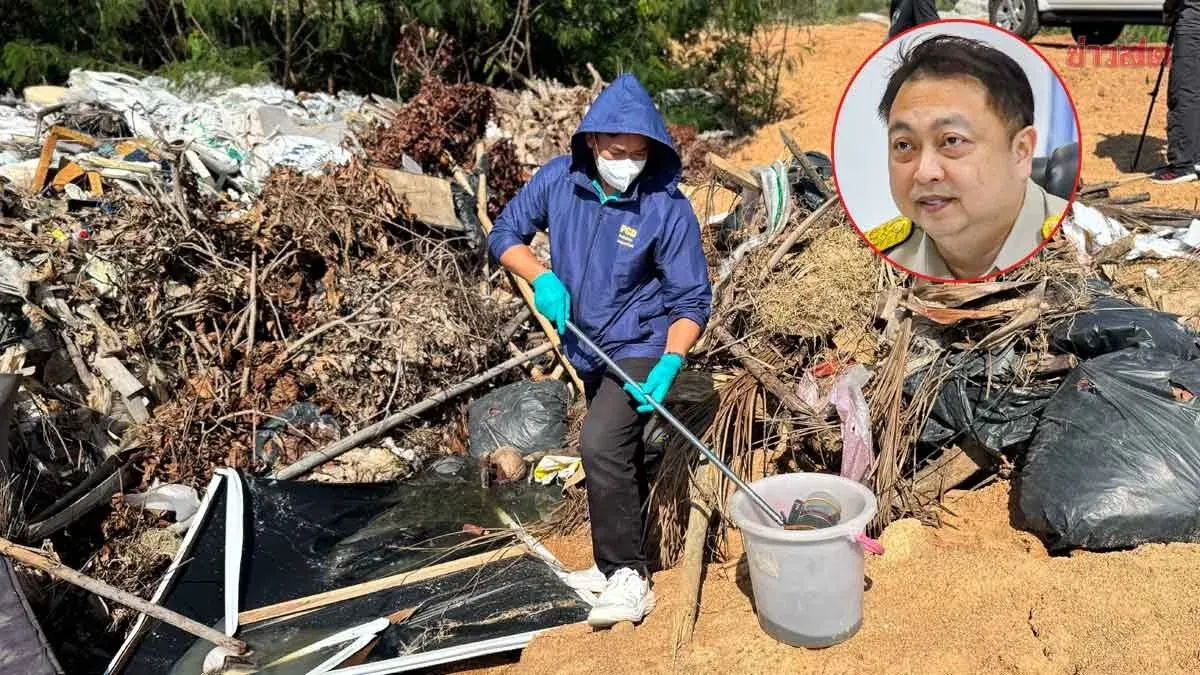
Toxic contamination in the Kok, Sai, and Mekong rivers has persisted, impacting health, agriculture, fisheries, and livelihoods across multiple provinces. Recently, Deputy Prime Minister and Minister of Higher Education, Science, Research and Innovation 'Chen' Yotsanan Wongwattana visited the Sai River in Chiang Rai to hear directly from residents. He stated that although the Ministry is not the lead agency, all parties must collaborate when the public is suffering. The Ministry's role is to provide academic support, using knowledge and technology to equip provinces and relevant agencies with data and tools to tackle the problem. Immediate action includes deploying the 'M-Sense' field test kit from the NANOTEC team at SUT to measure contaminants, delivering results in five minutes at a cost of just 60 baht per test. This enables locals and communities to monitor water quality quickly without waiting for lengthy, expensive lab results. Additionally, the Ministry is pooling analytical instruments from multiple institutes, expanding community water filtration systems using biochar, safely managing filter waste, preparing sediment traps to capture potentially toxic sediment before dredging and removal, and employing plants to naturally absorb pollutants. The Ministry is also coordinating with the Governor and academic teams to prioritize urgent and long-term measures for submission to the Disaster Committee, which the Minister chairs, to allocate budget swiftly. The problem must be solved at its source, not just at the downstream end. The Ministry is therefore preparing to verify contaminants jointly with the Pollution Control Department, using isotope techniques with Naresuan University to pinpoint pollution sources with clear evidence before engaging in negotiations with neighboring countries through both government and private channels, backed by verifiable scientific data. Deputy PM Chen's overall approach pulls together all sectors — academia, budget, on-the-ground management, and international diplomacy — to solve the crisis collectively, not as a single agency's burden. As chair of the Disaster Committee, he must drive concrete results; as Deputy PM and Minister from the ruling Pheu Thai Party, he must coordinate across all parties without partisan division. The public does not want political point-scoring; they want clean, safe rivers and an end to living in fear of toxins.