Deputy PM Presses Laos on Mekong Chemical Pollution From Mining
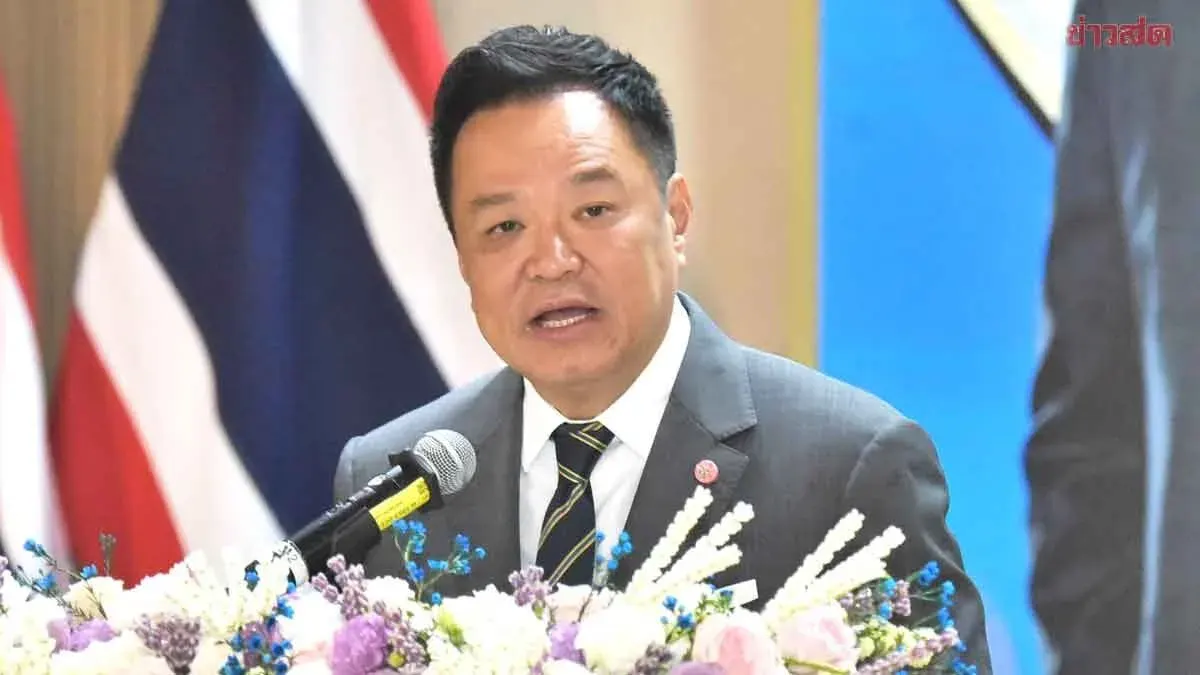
Deputy Prime Minister Songsak Thongsri discussed cross-border Mekong pollution at the MLC meeting in Hanoi, pressing Laos on chemical use in gold and sand dredging that may be contaminating tributaries flowing into Thailand. He also raised concerns over the Sanakham and Pak Beng dams and coordinated with Thai agencies to investigate toxins in the Kok and Sai rivers, emphasizing the need for joint action and investor accountability to protect public health.

Deputy Prime Minister Songsak Thongsri spoke with the Ministry of Natural Resources and Environment's permanent secretary about public fears over toxins in the Kok and Sai rivers. He revealed talks with Laos' Ministry of Agriculture and Cooperatives concerning chemical use in gold and sand dredging, fearing poisons could flow into the Mekong.
On November 23, 2026, at Government House, Deputy PM Songsak Thongsri briefed reporters on the second Mekong-Lancang Cooperation (MLC) water resources ministers' meeting in Hanoi, Vietnam. He said the meeting had two tracks: the Mekong River Commission (MRC) Council with four member countries, and the MLC with all six — Thailand, Myanmar, China, Cambodia, Laos, and Vietnam. Thailand attended as the representative for the Thai side on Mekong issues, which center on joint stewardship to prevent harm and ensure benefits for all basin communities.
Thailand raised concerns about transboundary pollution, asking how the Mekong can be used sustainably without harming any riparian nation — a core Thai worry. Cooperation is essential with all key countries, especially those with mining operations using heavy metals or chemicals that leave residues — whether cyanide or heavy metals — flowing downstream into Thailand. Tests have found levels exceeding standards, so Thailand wants joint monitoring to keep within safe limits.
Asked whether river pollution would be a main agenda item at the upcoming MLC leaders' summit in Kunming, China this December, Songsak said it is one issue among others, including two dams — Sanakham and Pak Beng — where Thailand has requested reviews or relocation. The Sanakham Dam, though on Lao territory, affects the river's hydrology, environment, and people's livelihoods, so Thailand asked for relocation; Laos agreed to study the matter carefully.
On public fears that toxins from the Kok and Sai rivers will reach the Mekong, Songsak said he invited the Ministry of Natural Resources and Environment's permanent secretary for talks this afternoon to track progress. Although Prime Minister Srettha Thavisin and Interior Minister Anutin Charnvirakul assigned Deputy PM and Higher Education, Science, Research and Innovation Minister Yoschanan Wongsawat to oversee the issue, all agencies must coordinate on actions taken and whether a joint fact-finding committee will visit affected sites.
Current efforts focus on impacts to communities, but a lasting solution requires addressing the source — preventing hazardous substances from entering the river. This means negotiating with neighboring countries and concerned parties, and making Thai investors aware of the imperative to protect public health.
Asked if chemicals are being released from Laos into the Mekong basin, Songsak said he has followed the news and held bilateral talks with Laos' Minister of Natural Resources and Environment, expressing concern after reports from Mae Sai District, Chiang Rai, of sand and gold dredging possibly using chemicals that could settle in the Mekong.