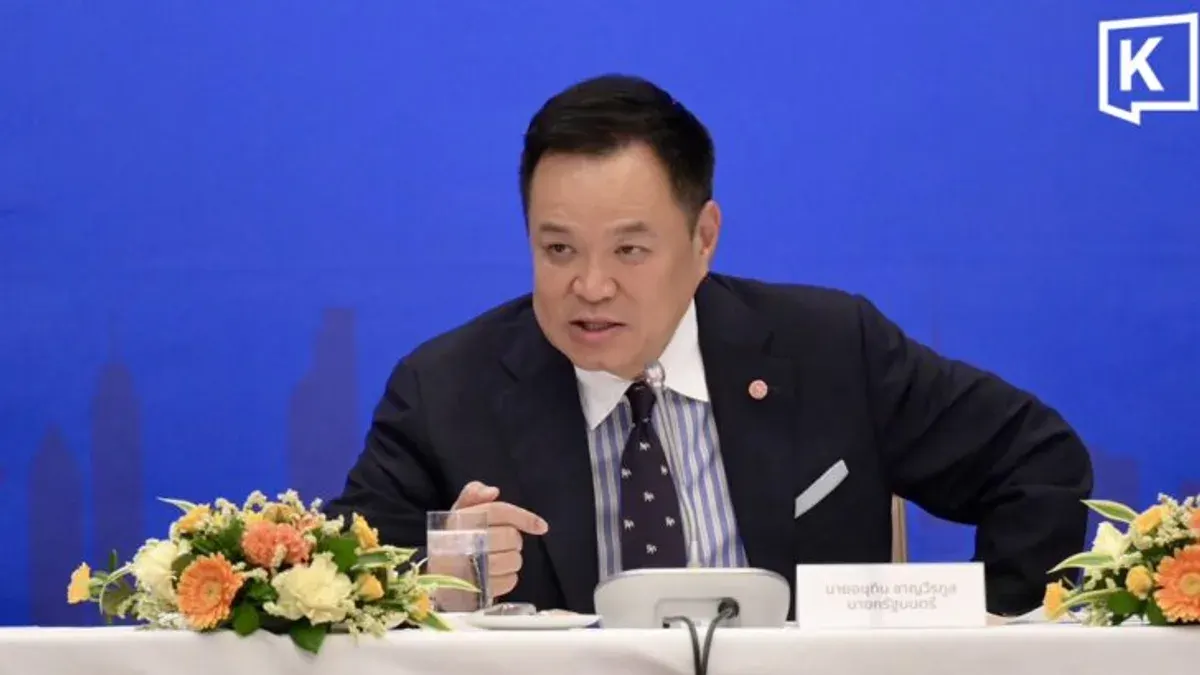
Deputy PM Pushes Regulatory Reform Framework to Results-Driven Government
Deputy PM Yossakorn Vongswat called for Thailand to shift from rule-based to results-driven government, citing regulatory delays and departmental silos as key obstacles to innovation and global competitiveness.

On September 21, 2026, at Pullman Bangkok Hotel Power, Deputy Prime Minister Yossakorn Vongswat, who oversees the Office for National Reform, Strategy, and Reconciliation, delivered a keynote address on the Thailand Regulatory Reform Forum 2026: From Rules to Results.
Vongswat likened Thailand to a high-performance sports car stuck in Bangkok traffic, unable to reach its true potential. He stressed that Thailand does not lack talented people or technology; what it needs is institutional speed to compete globally. The real problem, he said, is that investors and innovators seek places where things move fastest.
Vongswat identified four key friction points slowing government administration: regulatory friction from overlapping and outdated rules; process friction from unnecessarily lengthy procedures; organizational friction from siloed departments lacking central coordination, especially across ministries; and data friction from poor information-sharing between agencies, a critical bottleneck for artificial intelligence and data science development.
Addressing these four areas would reduce innovation friction and enable Thailand to develop its own breakthroughs in pharmaceuticals and advanced technology. The vision requires shifting from rule-focused to results-focused administration through agenda-based and project-based working methods.
Vongswat cited clinical trial approvals as an example: Thailand takes one to three months while neighboring countries need only three weeks. This requires smart regulation that maintains safety and effectiveness without unnecessary delays.
He proposed a 5S working process beginning with genuine understanding of public problems: Scan—identifying bottlenecks domestically and internationally to prepare for geopolitical and technological shifts; Simplify—reducing procedural complexity and removing redundancies; Sandbox—creating pilot test zones that go beyond mere regulatory relaxation.