Diesel Price Cut 0.60 Baht as Global Oil Hits 3-Month Low
Thailand's Oil Fuel Fund Committee has cut retail diesel prices by 0.60 baht per liter effective November 25, following global oil prices dropping to a three-month low. The reduction applies to B7 and B20 diesel blends, while gasoline prices remain unchanged. The move reflects a global supply glut and aims to ease living costs while improving the fund's financial liquidity.
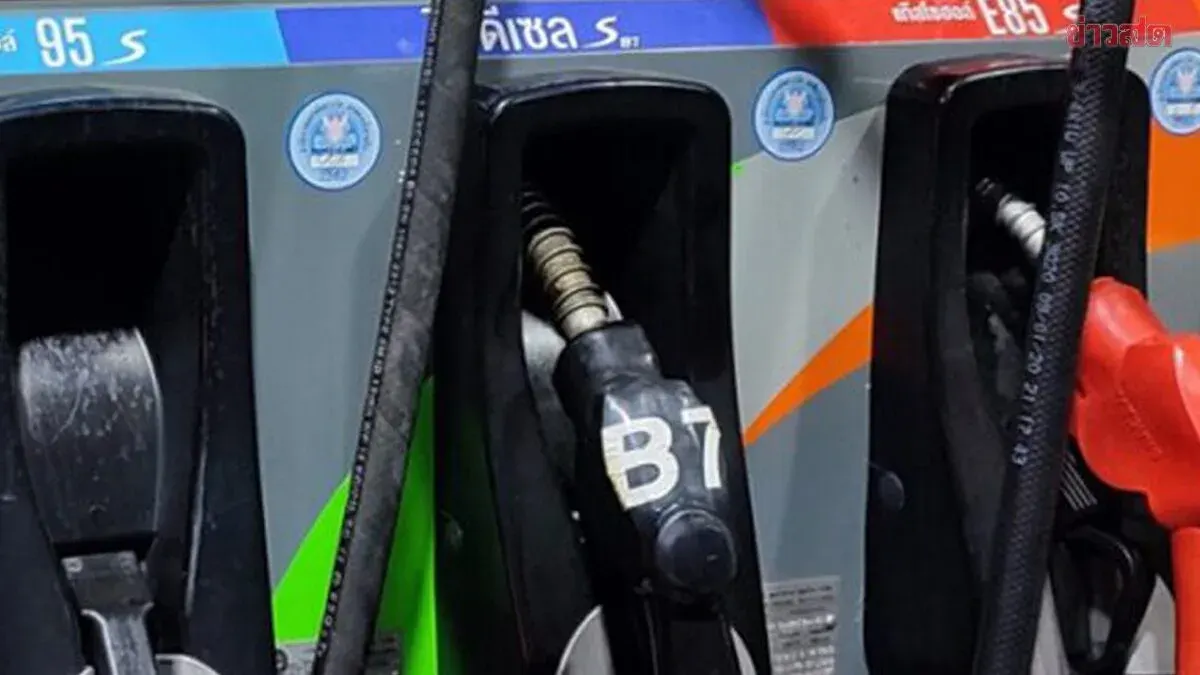
Global oil prices have fallen to their lowest level in three months, prompting Thailand's Oil Fuel Fund Administration Committee to approve a 0.60 baht per liter reduction in retail diesel prices effective November 25, reflecting the decline in world market prices.
The primary cause is rising global crude oil volumes pushing the market into oversupply, driven by recovering Middle East exports and the restart of Libya's pipelines, combined with rising U.S. stockpiles as demand slows. Additionally, markets have eased concerns over Middle East conflict following diplomatic signals between the U.S. and Iran, while selling pressure on risk assets has increased amid global economic worries. The market is now eyeing the OPEC+ meeting on November 29 to see if production cuts will be implemented to prop up prices.
As of November 24, global diesel closed at around $134 per barrel and gasoline at around $93 per barrel, down from $139 and $96 respectively on November 23. Under the new fund rates effective November 25, retail prices are adjusted as follows:
For diesel: High-speed diesel B7 sees its subsidy reduced by 0.29 baht to 0.50 baht per liter, setting the retail price at 39.34 baht per liter. High-speed diesel B20 sees its subsidy reduced by 0.17 baht to 0.62 baht per liter, setting the retail price at 32.90 baht per liter. Gasoline and gasohol retail prices remain unchanged.
Beyond easing living costs for the public, this price reduction helps the Oil Fuel Fund manage its finances with greater liquidity and efficiency. The fund currently collects approximately 38.02 million baht daily, while its estimated status remains negative at 109,481 million baht.
However, even as global and domestic oil prices adjust downward, conserving fuel and using it wisely remains important to help households save costs and ensure the country's long-term energy security.