Digital Technology Reunites 93-Year-Old Widow With Lost Husband
A 93-year-old Chinese widow wept upon seeing a digitally restored photograph of her husband, a soldier who died in the 1953 Korean War battle at Dongshan Island at age 20, nearly seven decades after his death.
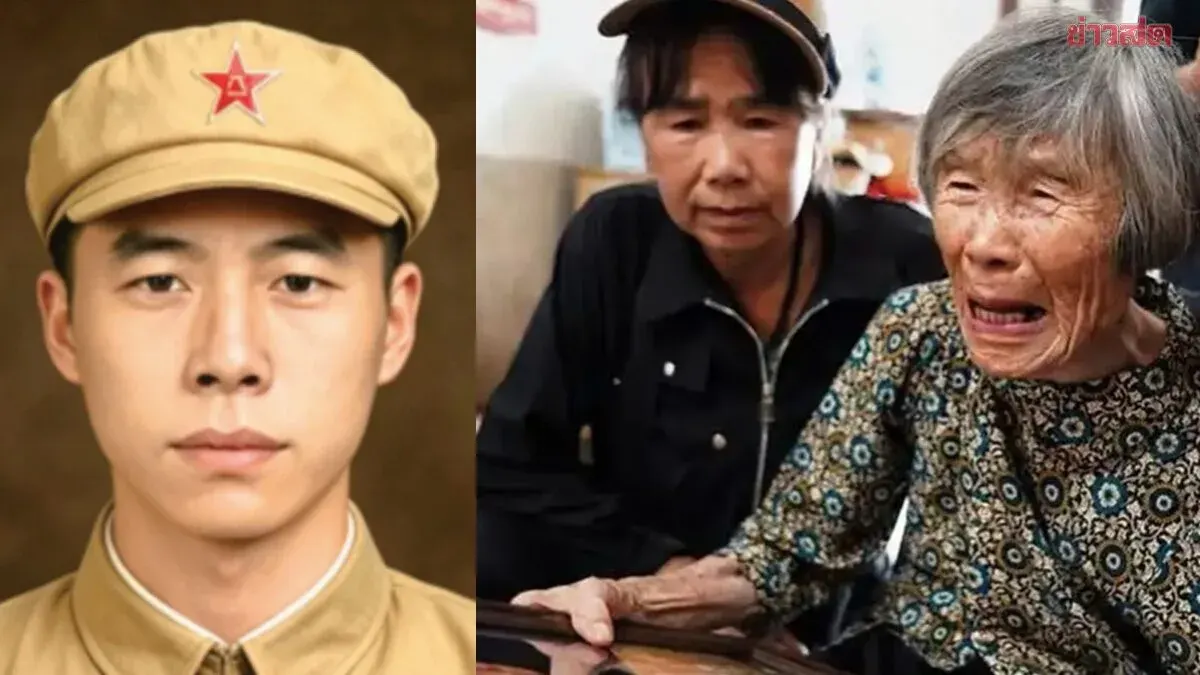
A 93-year-old Chinese widow broke down in tears after seeing a digitally restored photograph of her husband who died in war decades ago, reuniting lost memories and love through digital technology.
Zhao Chuifen from Liuyang lost her young husband Zhang Zhu'xin after he was conscripted in the 1950s. In July 1953, amid escalating Korean War tensions, a major battle erupted on Dongshan Island when Kuomintang forces attacked. The People's Liberation Army was forced to urgently send reinforcements, including soldiers from Liuyang. The battle lasted over 36 hours and resulted in the PLA's victory, but at a heavy cost: over 1,200 soldiers killed or wounded, including Zhang Zhu'xin, who died at just 20 years old—leaving behind no photographs or family memories.
After losing her husband, Zhao grieved deeply, crying every day. She continued caring for his family dutifully before being arranged to remarry his cousin to support the household. Despite having five children in her later life, Zhao never forgot her first love and kept his memory alive. Her family still calls her second husband "Father Zhu'xin" to this day.
In May, volunteers from Nanjing University of Technology, supported by Hunan provincial authorities, launched a project to restore the faces of soldiers who died at Dongshan Island using family information, photographs, and historical documents. On June 24, restored images of four soldiers from Liuyang were returned to their families.
When Zhao received Zhang Zhu'xin's restored image, she collapsed emotionally upon seeing his young face. Holding the photograph, she gazed at her husband's features before overwhelming grief overcame her. She pressed her face to the frame, lit incense, and spent a long time paying respects as her descendants stood nearby, moved by the moment. Her daughter revealed this was only the second time she had seen her mother weep.
For decades, these heroes from Dongshan Island existed only as names inscribed on monuments, making it difficult for many families to pay respects. Now, with their faces restored, they are no longer merely names on a memorial—they have become real people once again.