E20 and B20 Biofuels Cut Fuel Costs Up to 21%
The user wants a short summary of the article about E20 and B20 biofuels cutting fuel costs. The summary must be 1-2 sentences, 120-220 characters, max 240. Output English only, no filler, no quotes, no markdown. Key points: E20 and B20 bio
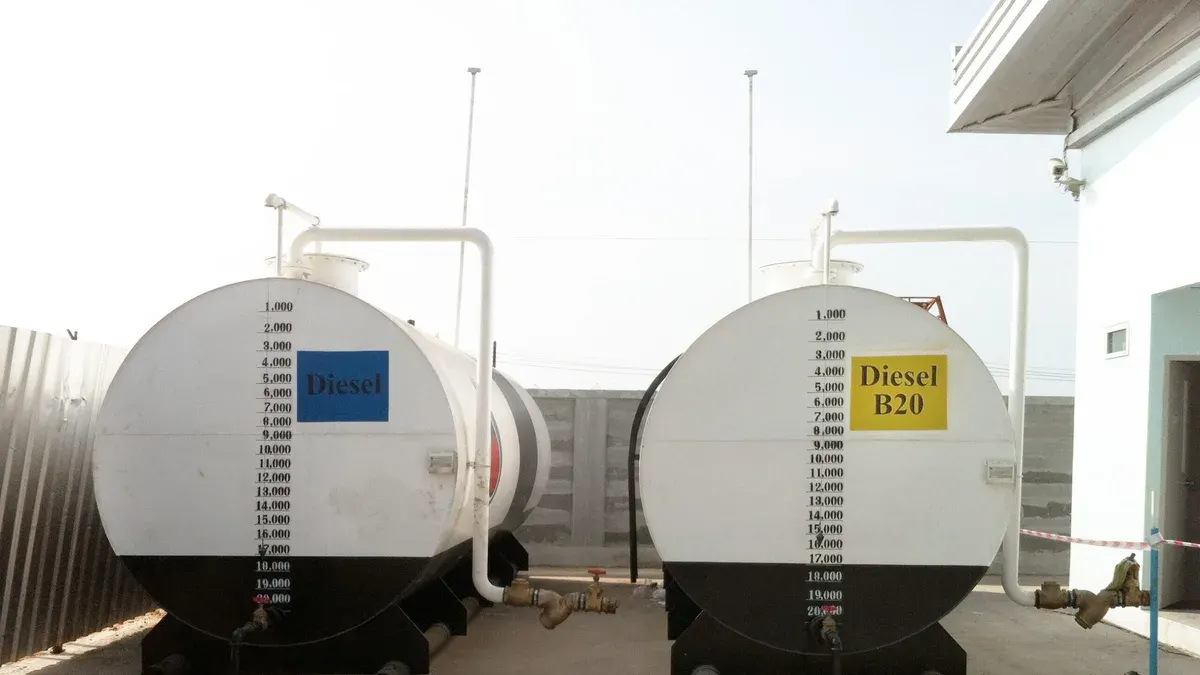
Amid volatile energy prices, choosing the right fuel for both vehicle compatibility and budget has become a priority for drivers. Biofuels like E20 gasohol and B20 diesel are promoted as cheaper alternatives, but many question whether their lower energy content reduces mileage enough to negate the savings. The answer lies in comparing total fuel cost per distance traveled, not just kilometers per liter. Using biofuels also supports domestic agricultural feedstocks and reduces reliance on imported petroleum.
How Much Cheaper Are E20 and B20? The key to comparing value is calculating the fuel cost to travel the same distance. Retail prices on October 28, 2026 show Gasohol 95 at 42.04 baht per liter, while Gasohol E20 costs 33.50 baht per liter — a difference of 8.54 baht, or about 20% cheaper. For diesel, B7 sells at 43.54 baht per liter versus B20 at 33.50 baht per liter, a gap of 10.04 baht, or roughly 23% less. This price gap makes E20 and B20 attractive for cost-conscious drivers, but true value must factor in fuel consumption.
To illustrate, compare Gasohol 95 (E10, 10% ethanol) with E20 (20% ethanol). U.S. Energy Information Administration data shows ethanol has about 33% less energy per volume than gasoline. By blend ratio, E20 has approximately 3.4% less energy per volume than E10. However, this is a theoretical energy estimate, not a real-world fuel economy test for every vehicle model.
Using a hypothetical scenario: a car running on Gasohol 95 achieves 15 km per liter; switching to E20 reduces mileage by 4% to 14.4 km per liter. Over 1,000 km, the Gasohol 95 car uses about 66.67 liters, costing roughly 2,803 baht. The E20 car uses about 69.44 liters, costing roughly 2,326 baht. Despite using slightly more fuel, the E20 driver saves about 477 baht, or 17%, per 1,000 km under these assumptions.
For diesel, U.S. Department of Energy data indicates B20 has 1-2% less energy per volume than pure petroleum diesel — not a direct comparison to B7, which already contains biodiesel. Assuming a vehicle gets 10 km per liter on B7 and mileage drops 2% to 9.8 km per liter on B20, a 1,000 km trip costs about 4,354 baht on B7 versus 3,418 baht on B20 — a saving of roughly 936 baht, or 21%, under the same assumptions.
These figures are illustrative examples of the calculation method, not guaranteed savings for every vehicle, as actual results vary by car model, driving conditions, and maintenance.