Editorial – 400 Billion Baht Emergency Loan
The Thai government will borrow 400 billion baht to address energy price spikes from the Middle East crisis and support vulnerable citizens and energy transition projects. Half the emergency loan will aid low-income earners and small busine
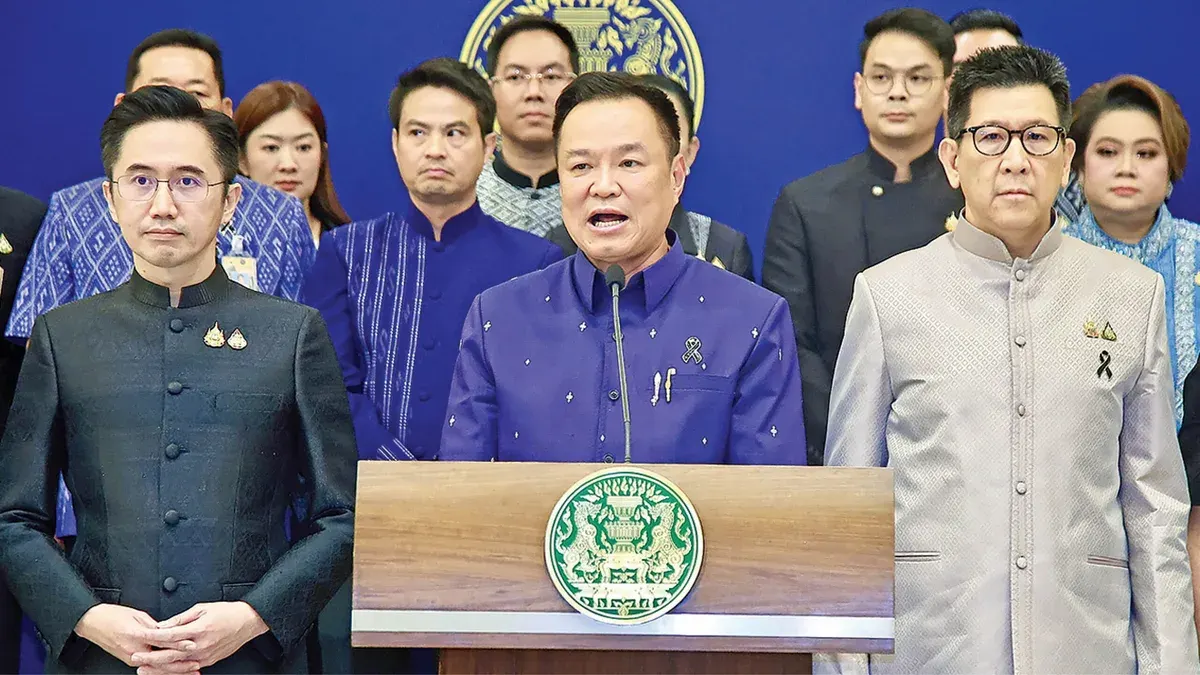
Prime Minister Anuthih Charnweerakul announced the issuance of a decree authorizing the Ministry of Finance to borrow 400 billion baht to address the impact of the Middle East crisis and support the country's energy transition. He noted that the Middle East conflict has severely impacted global energy prices and the economy. The energy crisis has cascaded into rising food prices and increased living costs for citizens.
The Prime Minister characterized this as an unavoidable emergency requiring urgent action to mitigate impacts on the public, sustain economic activity, accelerate energy restructuring, reduce vulnerability, and address the nation's pressing challenges. The government will deploy all available resources to navigate this crisis successfully, he affirmed, stressing that this is not a normal situation that can wait.
Deputy Prime Minister and Finance Minister Ekkhanit Nitithanpraphasat acknowledged that current budgets are insufficient. The 2569 fiscal year budget currently stands at less than 500 million baht, with only 200 million baht remaining in the central reserve. Supplementary budgeting for 2570 would not arrive until October, which is too late.
Of the 400 billion baht loan, 200 billion baht will support low and middle-income citizens, farmers, and small and medium-sized enterprises. The remaining 200 billion baht will fund energy restructuring, facilitating the transition from fossil fuel dependency to renewable and alternative energy sources.
The Middle East conflict and resulting energy crisis have driven up global market prices—an external factor beyond Thailand's control. This has broadly impacted the public, as currently experienced. The government must inject budgetary support to mitigate effects, particularly rising living costs from energy, food, and essential consumer goods.
However, government borrowing will increase public debt, ultimately placing the burden on citizens through various taxes. Therefore, borrowing must be transparent with verifiable oversight, spent efficiently without waste, targeted accurately, and ensure no group is left behind.