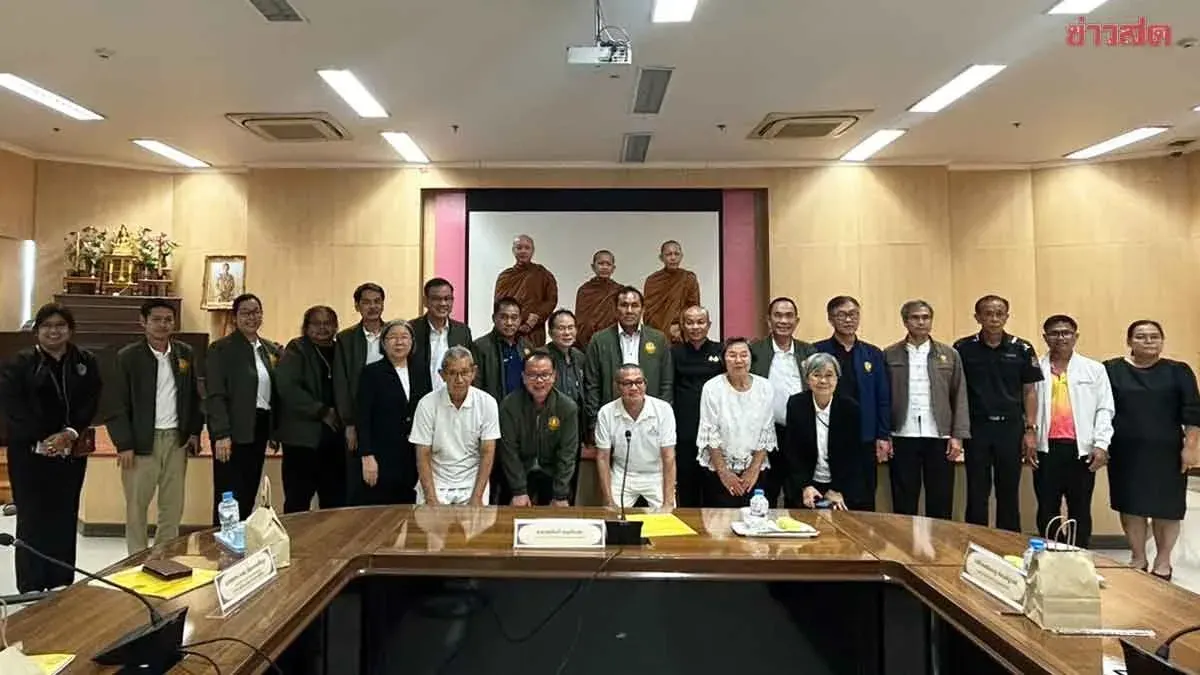
Election Commission Faces Trust Crisis, Survey Shows
Thailand's Election Commission has hit a trust crisis, with only 3.8% public confidence nationwide, as a new survey reveals 51.9% believe it lacks independence from political interference—a problem the high-profile Ung Ing case is bringing
A Borommarajanok Institute survey of 2,000 people nationwide on public confidence in constitutional bodies and views of the Election Commission's performance is more than a poll figure—it is a warning the Commission cannot ignore. Among all constitutional bodies surveyed, the Election Commission received the lowest confidence at just 3.8%, while the Constitutional Court stood at 31.3%. Even more troubling, 27.7% of respondents said they were unsure or had no opinion, reflecting that overall trust in independent bodies remains weak. When focusing specifically on the Commission's work, the results are even starker. Although "electoral management efficiency" ranks as the Commission's strongest area, only 23.7% rated it highly. The Commission's biggest challenge is "independence from political interference," which 51.9% assessed as poor or very poor, followed by "impartiality and fairness in case adjudication" at 50.8%. This represents a more critical problem than election administration itself, because the Commission's role extends beyond organizing polling stations, counting votes, and announcing results—it must make citizens believe all decisions follow the same rules, are not dominated by outside forces, and that no one stands above the law. The current high-profile Ung Ing case is under intense scrutiny from opposition figures, academics, legal scholars, and the public, all calling for the Commission to proceed according to law and, if evidence is sufficient, refer the case to the Supreme Court's Election Division for ruling rather than acting as judge itself. The latest Borommarajanok survey reflects a fundamental mirror: the Commission's crisis today is not merely about efficiency but about public trust. The solution is not a public relations campaign but tangible action demonstrating independence, impartiality, transparency, and full disclosure of case progress and decision reasoning—what the public most wants to see. Society is watching the Ung Ing case not just for its outcome but to see whether the Commission will stand with what is right or remain on the side of public distrust. To restore confidence, the Commission must give the public visibility and ability to verify—especially in critical cases like Ung Ing, which must be referred to the courts alone.