Visit Kham Phang Bang Jak Temple to See Precious Murals
The Kham Phang Bang Jak temple in Bangkok's Thonburi district, believed to date from the Ayutthaya period, features precious murals and well-preserved architectural details from the early Rattanakosin era in its ordination hall.
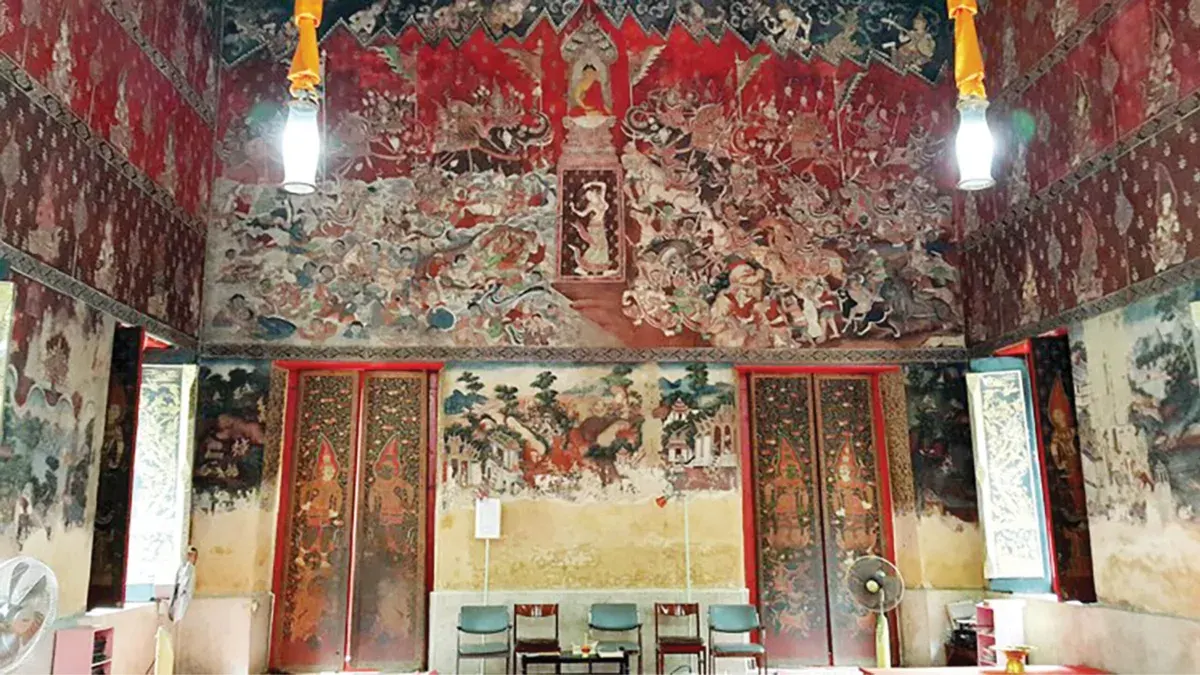
Kham Phang Bang Jak temple is one of the historical, artistic and cultural learning centers in the Klong Bang Luang market area. This small temple in Thonburi is located at 299 Petchkasem Road Soi 20, Pakkhlong subdistrict, Phasi Charoen district, Bangkok, along Klong Bang Luang. The temple's history has no certain documentary evidence, though it is believed to date from the Ayutthaya period. Its original name is unknown, and the current name has been used by local residents for generations. A clear piece of evidence is a round stupa south of the ordination hall with an inscribed stone base indicating it was built to enshrine the ashes of Phra Pisalaphonpanich following his funeral at Chakrapattirajavas temple. Historical records from King Rama V's reign show that Phra Pisalaphonpanich was originally named Chingsue, a Chinese-descent noble holding an important position at the Left Port Authority who lived on the western Chao Phraya bank in Thonburi. The stupa's location suggests he was significant to the temple, possibly funding its restoration. Records from the abbot indicate that King Rama V visited and presented the temple with a ceremonial robe and a pair of decorative jars with royal seals, though the jars were stolen over a decade ago.
Kham Phang Bang Jak is a small temple with well-planned layout that has largely preserved its original condition, including architecture and wall paintings in the ordination hall. Most of the art and architecture visible today was created or restored during the early Rattanakosin period. The Buddhist enclosure has an elegant layout centered on the ordination hall. The ordination hall is a rectangular brick and mortar structure with a high base on lion pedestals, a two-tiered hip roof with three spans covered in orange glazed tiles, with a projecting gable. There are two doors on each of two sides and five windows per side. The gable front is open with honeycomb detailing, a decorative feature derived from the sun shades of Ayutthaya period buildings. The main supporting pillars have twelve-sided octagonal corners with lotus-topped capitals decorated with colored glass in late Ayutthaya art style. The wooden door panels feature botanical motifs and colored glass trim. Under the lattice work are honeycomb decorations, while the sides of the pillars display honeycomb patterns with naga-head designs. Doorways and windows inside now have aluminum frames with decorative stucco work in elegant botanical patterns, though these have deteriorated significantly. Overall, the ordination hall is late Ayutthaya art style, with decorative materials including porches and door panels showing considerable damage.