Wat Bowonniwet: Historic Royal Temple Near Khao San Road
Wat Bowonniwet Ratchavaravihara, a historic first-class royal temple in Bangkok's Bang Lamphu district, attracts visitors with its royal heritage and architecture. Once a residence for Thai kings during their ordinations and home to supreme patriarchs, the temple houses the revered Phra Buddha Chinnasi image and a museum open weekends. Its proximity to Khao San Road makes it a popular cultural stop for tourists.
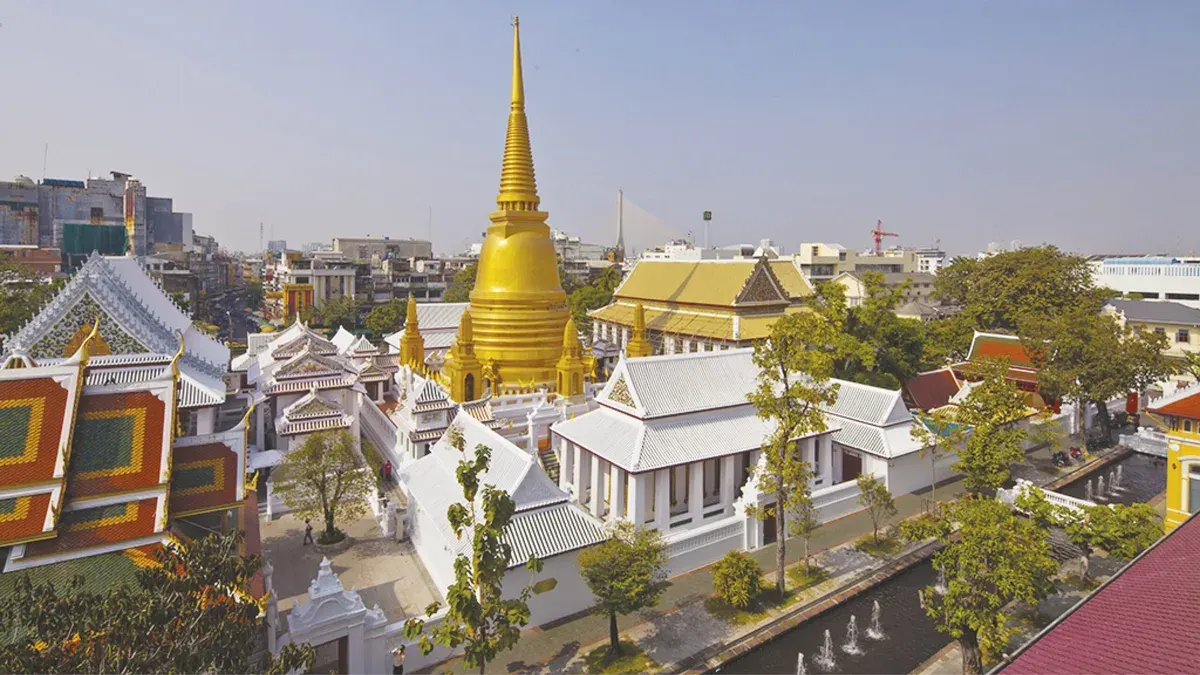
Wat Bowonniwet Ratchavaravihara, commonly called Wat Bowon, is a first-class royal monastery of the Ratchavaravihara type. It sits at the foot of Tanao and Fueang Nakhon Roads in Bang Lamphu, Phra Nakhon District, Bangkok. The temple serves as the spiritual heart of the Bang Lamphu community and sits near the Khao San Road area, which hosts many foreign tourists. Consequently, visitors frequently stop to admire and photograph the temple.
Wat Bowonniwet was formerly the residence of Supreme Patriarch Vasanasangvara (Charan Suvatthano), the 19th Supreme Patriarch of Rattanakosin. In the past, it also housed several Supreme Patriarchs of past reigns and served as the residence for King Bhumibol Adulyadej and King Vajiralongkorn during their monastic ordinations. The temple grounds also contain Wat Bowonniwet School.
The Wat Bowonniwet Museum is located in the Phra Pariyat building within the temple. It opens only on Saturdays and Sundays from 9:00 AM to 5:00 PM with free admission. Volunteer guides are available around 2:00 PM. Exhibits feature the biographies and achievements of the Supreme Patriarchs and abbots of Wat Bowonniwet.
Originally, Wat Bowon was a new temple near Wat Rangsi Sutthawat. The two were later merged into one by Prince Mahasakdi Polsep in the reign of King Rama III, who ordered its reconstruction.
The temple has undergone extensive restoration and construction, becoming one of the most significant temples. Today, many ancient artifacts and art objects remain in good condition for viewing and study.
To reach Wat Bowon, take regular or air-conditioned bus route 516, which passes nearby, or alight at the Government Lottery Office on Ratchadamnoen Road and walk 200-300 meters into Trok Khao San.
Entering the temple, one begins at the beautifully adorned ubosot (ordination hall). The front portico features square columns with lotus-bud capitals surrounding the doors and windows, and the pediments are decorated with stucco reliefs.
This ubosot was renovated in the reign of King Rama IV, who ordered glazed tiles for the roof, colored glazed tiles for the pediments, and commissioned Khrua In Khong to paint murals inside. The exterior was later fully clad in marble.
Inside the ubosot, white marble walls contrast with gold-trimmed doors and windows. The principal Buddha image is Phra Buddha Chinnasi, believed to date from the era of Phaya Lithai of Sukhothai, alongside Phra Buddha Chinnarat in Phitsanulok and Phra Si Satsada.
King Rama IV, during his monastic ordination, ordered Phra Si Satsada and Phra Buddha Chinnasi to be enshrined at Wat Bowonniwet, where they remain today. Visitors can pay respects to the sacred Phra Buddha Chinnasi image. Beyond the Chinese-style pavilion lies Vihara Phra Satsada, a large hall divided into two chambers. The rear houses a reclining Buddha from the Sukhothai period, while murals depict the Buddha's life and Jataka tales on the walls.
The front chamber enshrines Phra Satsada, brought from Wat Sutthasas Thepwararam by command of King Rama IV.
The monastic area contains other notable art, including a replica of the Buddha's Footprint, an ancient Sukhothai-era footprint enshrined in a pavilion beside the ubosot. Looking up from the footprint reveals the Phra Maha...