Holiday Temple Visit: Bangkok's Wat Thepthidaram Features Chinese Art
The user wants a short summary of the article about Wat Thepthidaram in Bangkok. The summary must be in English, 1-2 sentences, 120-220 characters, max 240. No filler, no repeating title, just the key facts. Key points from article: - Wat T
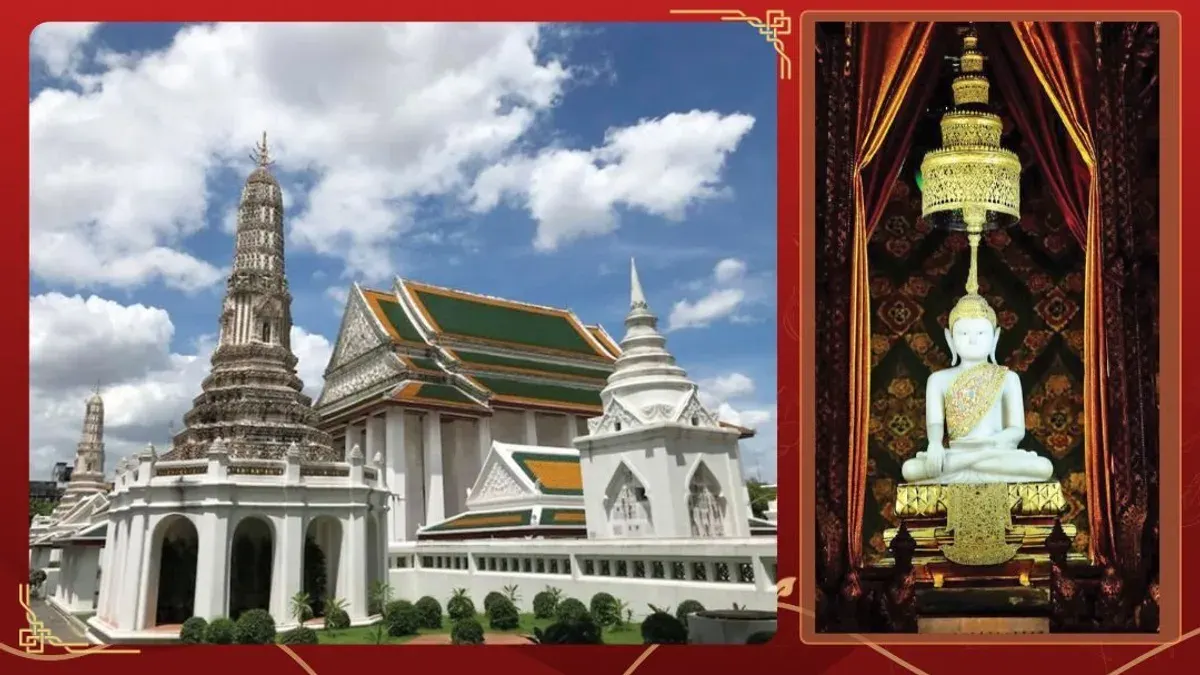
Wat Thepthidaram Worawihan is a royal temple situated on Maha Chai Road, linking to Ratchadamnoen Klang Avenue in Bangkok's Phra Nakhon district. Formerly known as Wat Ban Phraya Kraisuan Luang, King Rama III commissioned its construction in 1836 to honor his cherished daughter, Princess Wilat, the eldest royal daughter of his reign. Princess Wilat, born to Chao Chom Manda Bang, was renowned for her beauty, devotion to her father, and compassion toward the poor. She was later elevated to Krommun Apsornsudathep and contributed her personal wealth to the temple's construction. Upon completion in 1839, King Rama III personally conducted the boundary-stone ceremony and granted the name Wat Thepthidaram.
The temple displays prominent Chinese artistic influence. The ordination hall, assembly hall, and scripture hall stand in a row with matching rooflines lacking traditional Thai ornamental finials, all adorned with Chinese glazed tiles. Stone statues — both human and animal forms — further reflect Chinese craftsmanship; notably, most human figures are female, likely to align with the temple's dedication to a princess. Chinese artisans carved these statues modeling Thai women's poses and attire through their own cultural lens, creating a unique hybrid appearance distinct from the purely Chinese figures found at other temples.
The celebrated poet Sunthorn Phu once observed Buddhist Lent here and composed verses describing the temple's beauty in detail, referring to his quarters as 'Kuti Sunthorn Phu.' An annual commemoration is held on June 26, and a Sunthorn Phu museum now operates in Kuti Khana 7 (east side), open daily from 9:00 AM to 5:00 PM with free admission.
Architectural highlights include the four-directional prang, masterpieces of Rama III-era craftsmanship, with a decorative pedestal supporting the principal Buddha image in the ordination hall. The ordination hall walls feature paintings of rice-sheaf patterns characteristic of the Third Reign, and each prang base bears the Four Guardian Kings. The assembly hall mirrors the ordination hall's design and houses 52 revered bhikkhuni statues. Behind the temple, the monastic quarters have been beautifully arranged with uniquely designed kutis from the Rama III period.
The ordination hall itself exemplifies Rama III art with Chinese influence: its roof lacks the traditional chofah, bai raka, and hang hong finials, while the gables are decorated with Chinese tiles. Inside, the principal image is Phra Phuttha Thewavilas (Luang Pho Khao), a sacred white Buddha statue. Paying respects to this revered image brings auspicious blessings. Phra Phuttha Thewavilas, or Luang Pho Khao, is a highly sacred Buddha image.