Senate Oath-Breaking Case Triggers Crisis of Faith in Thai Justice
The Election Commission's referral of 77 people including 26 senators for oath-breaking has triggered a broader crisis of public confidence in Thailand's justice system, with two-thirds of voters citing political interference as the cause.
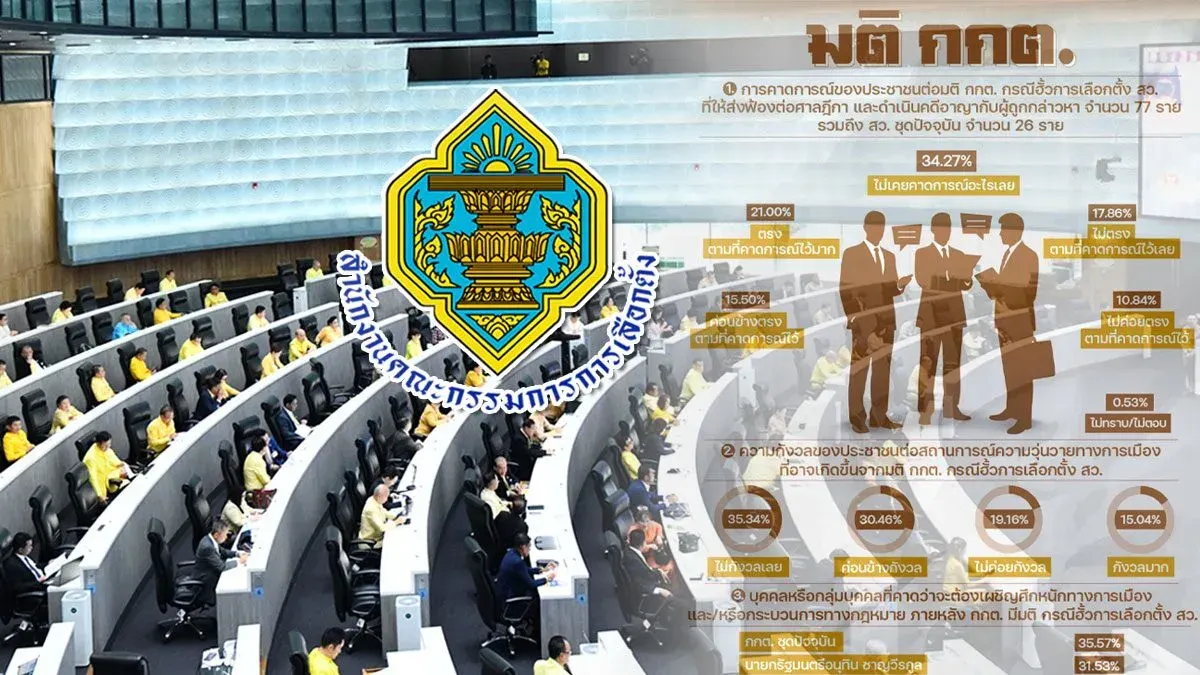
Political turmoil from the senate oath-breaking case shows no sign of easing. After the Election Commission referred 77 accused persons, including 26 current senators, to the Supreme Court's election division, questions have erupted over review standards, handling of related individuals, and the Election Commission's credibility itself.
A Nida Poll survey of voters nationwide asked who faces the heaviest political fallout following the Election Commission's decision on the senate oath-breaking case. 35.57 percent named the Election Commission, followed by Prime Minister Anutin Charnvirakul at 31.53 percent. This reflects that the case has expanded beyond the Election Commission's September 14 ruling into a broader crisis of confidence in independent agencies, directly affecting the prime minister and government.
The opposition led by the Pheu Thai Party has struck while the iron is hot, unveiling a five-pronged strategy. These range from legal action against the Election Commission under Article 157, pushing for evidence from other accused persons beyond the 77 to be heard in court, investigating involved politicians through parliamentary mechanisms, pushing constitutional and legislative reforms on Senate powers, to pursuing an entirely new constitution.
Meanwhile, reserve senators have filed a petition with the Supreme Court's election division requesting review of the Senate selection process and consideration of new evidence, challenging the Election Commission's use of authority. The case clearly has many more chapters ahead.
But more worrying is that the public's loss of confidence extends far beyond the oath-breaking case. A Dusit Poll on "Thai Citizens and Confidence in the Justice Process" asked how much the public trusts the fairness and neutrality of Thailand's justice system given recent political cases. 46.39 percent said they "have little confidence" and 21.1 percent said they "have no confidence at all." Critically, 66.87 percent attributed their declining confidence in the Thai justice system to interference from political influence.
This is a larger challenge than the oath-breaking case itself. When the public begins questioning the justice process, all sides must answer through their actions. Although Prime Minister Anutin boasts that his government has high stability—commanding parliamentary votes, good relations with coalition partners, civil servants, and the military—political stability does not mean freedom from pressure at all times. If confidence in the justice process continues to be questioned by society, the fallout will inevitably reach the government.
The senate oath-breaking battle is far from over. The legal warfare's next scene is what demands close watching.