Experts Reject Sediment Traps for Toxic River Cleanup
Leading water experts and academics are opposing Deputy Prime Minister Yoschanan Wongwasawat's proposal to build sediment traps as a solution for toxic pollution in the Kok, Sai, Ruak, and Mekong rivers. Critics including Niwat 'Teacher Tee' Roi-kaew and Kasetsart University's Assoc. Prof. Sitang Pilaila argue the method is unproven, risky at scale, and fails to address the pollution source, warning it could worsen problems during flash floods.
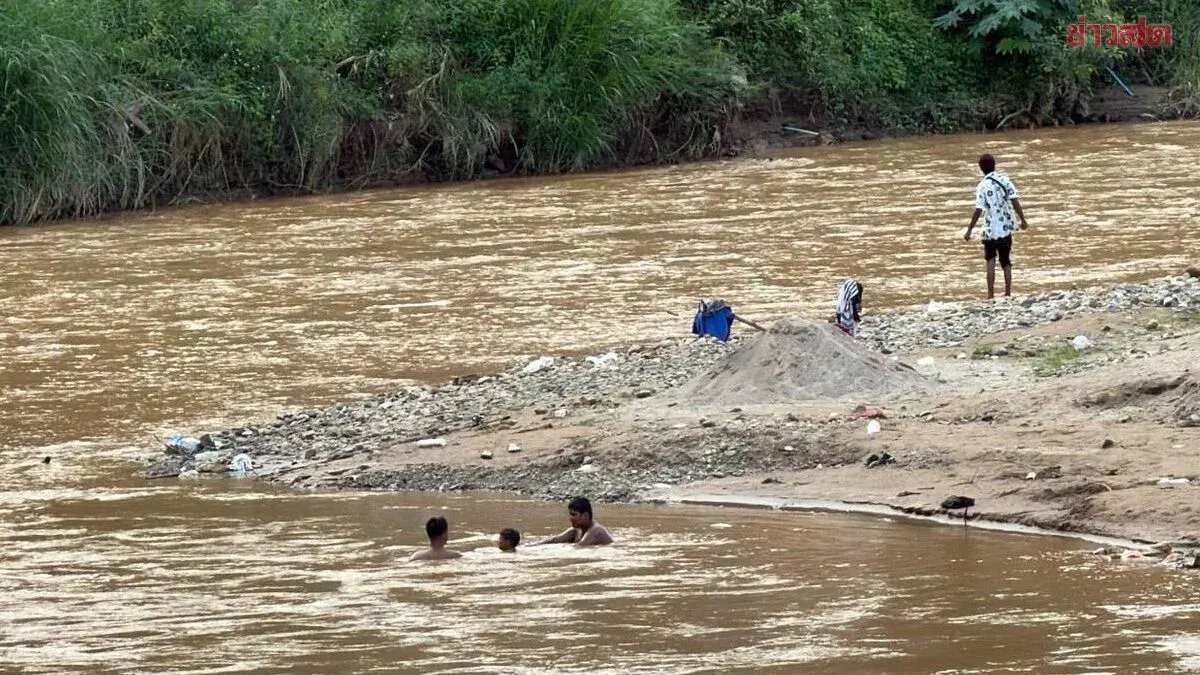
On November 21, 2026, Niwat Roi-kaew, known as 'Teacher Tee' and president of the Rak Chiang Khong Group, gave an interview regarding the case where Professor Dr. Yoschanan Wongwasawat, Deputy Prime Minister and Minister of Higher Education, Science, Research and Innovation, presented six approaches to solve toxic contamination in the Kok, Sai, Ruak, and Mekong rivers. One proposal involved constructing 'sediment traps,' which the public and academics have rejected since last year.
The concept of building sediment traps to address river toxins has been proposed and debated since the early stages but was dismissed by numerous academics, experts, and experienced individuals. They view it not as a genuine solution, and worse, it carries high risk of creating more severe problems than before.
Niwat stated that considering past lessons like the Huay Kliti case, the context is entirely different because the Kok and Sai rivers are much larger than Huay Kliti. During flash floods, sediment traps would lead to entirely negative impacts with virtually no positives. Additionally, a critical challenge remains unanswered: if traps are built and large amounts of sediment accumulate, where will that sediment be disposed of or managed?
'Good intentions to solve the problem are one thing, but those involved must listen because this carries high risk and nothing has been clearly proven to work. Any action must go through a thoroughly refined process proving it can actually work, solve the problem, and not create additional negative impacts. This is a very important matter,' Teacher Tee said.
He added that while most of the six proposals are good approaches, the sediment trap issue must be carefully challenged and reviewed to prevent the solution from becoming a new problem leading to even more frightening negative impacts.
Associate Professor Sitang Pilaila, a water management and water resources engineering expert at Kasetsart University, said the push for sediment traps may stem from underestimating flood and flash flood risks in Chiang Rai. Everything looks good at lab scale, but reality is not that simple. Dredging sediment for management might work during dry season with low water, but Chiang Rai and Mae Sai are already flood-prone in the rainy season — how will that work?
'Reality is not that kind to us. Even if they say they'll do it in phases, at specific points, wherever they do it still takes time because what's been discussed are just models. If implemented in real areas, it's still trial and error, and before it's refined, people don't have that much time to wait. We understand it's better than doing nothing, but don't be complacent because the toxic source must still be addressed at its origin. Government officials saying China doesn't support Chinese investors — that's just diplomatic talk, words with no meaning. They still operate the mines, Thailand still suffers from arsenic, and nothing has been done to those investors,' Assoc. Prof. Sitang said.
Meanwhile, Assistant Professor Dr. Sathian Chanta, a lecturer in Natural Resource and Environmental Management at Rajamangala University of Technology...