Giant Rodent Fossil Named for Princess Found in Krabi
A 35-million-year-old giant rodent fossil discovered in Krabi's Bang Mark lignite mine has been named Yakamys sirindhornae with royal permission honoring Princess Maha Chakri Sirindhorn. The find, published in Scientific Reports, represents the largest known Paleogene rodent and pushes back the timeline for giant rodent evolution by 15–20 million years. The research involved collaboration between Thai, French, and Canadian scientists.

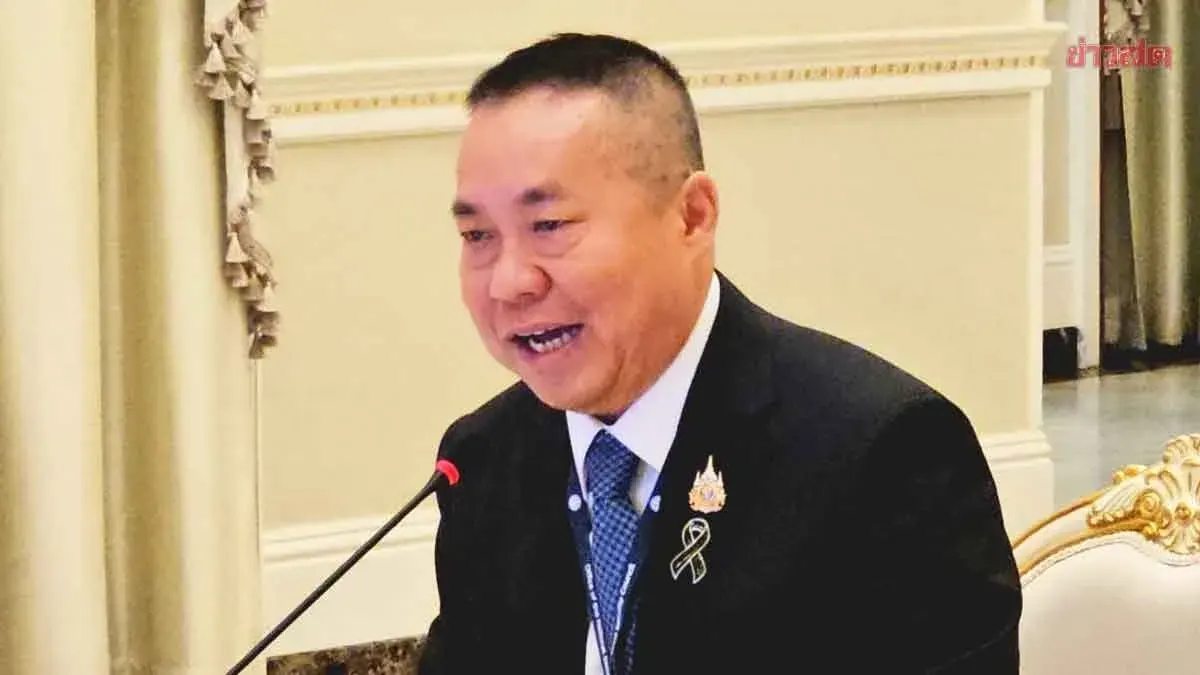
Natural Resources and Environment Minister Suchat Chomklin announced that the Department of Mineral Resources, together with Thai and international researchers, studied a newly discovered genus and species of ancient rodent fossil named "Yakamys sirindhornae," aged approximately 33–35 million years, from the Bang Mark lignite mine in Krabi province. The findings are slated for publication in the international journal Scientific Reports on November 4, 2026, marking a significant discovery that reshapes understanding of giant rodent evolution worldwide.
Suchat emphasized that a key aspect of this discovery is the royal permission granted to use the name "Sirindhorn" as the species epithet sirindhornae, honoring Her Royal Highness Princess Maha Chakri Sirindhorn, a continuous supporter of Thai science, geology, and paleontology. This marks the fifth fossil to receive a royally bestowed name.
The research involved collaboration between the Department of Mineral Resources and researchers from France and Canada, led by Dr. Yaowalak Chaimanee, a mammalian paleontology expert from France's National Center for Scientific Research (CNRS). Using advanced scientific techniques, they analyzed fossilized molars and incisors found in sediment layers of the Bang Mark lignite mine. The creature, dating to the late Eocene, weighed an estimated 30 kilograms, making it the largest known rodent of the Paleogene period. It provides crucial evidence that rodents evolved large body sizes at least 15–20 million years earlier than previously understood. The specimens are preserved at the Department of Mineral Resources.
Suchat added that the discovery reflects the potential of the Department and Thai researchers to build paleontological knowledge alongside international networks, while underscoring Thailand's importance — particularly Krabi's fossil sites — as a globally valuable natural heritage site. The Ministry aims to support the Department in advancing research, conservation, and dissemination of geological and paleontological knowledge to raise awareness of Thailand's geo-heritage and elevate the country's academic achievements on the world stage.