Government Accelerates Arsenic Cleanup, Tests Sediment Traps Protecting Farmland
The Thai government is accelerating measures to address arsenic contamination in the Mae Sai area, including testing sediment traps at Ban Mueang Daeng to protect over 60,000 rai of farmland. Authorities are also deploying community monitoring with NANOTEC testing equipment and inspecting water filtration systems and backup reservoirs. Water quality checks will be completed before irrigation releases on November 25, with full public oversight of the process.

On November 25, 2026, Deputy Government Spokesperson Rattadaros Thongsaluangkra revealed that Deputy Prime Minister and Minister of Higher Education, Science, Research and Innovation Yoschanan Wongwat is tracking measures to tackle arsenic contamination in water sources through three key actions:
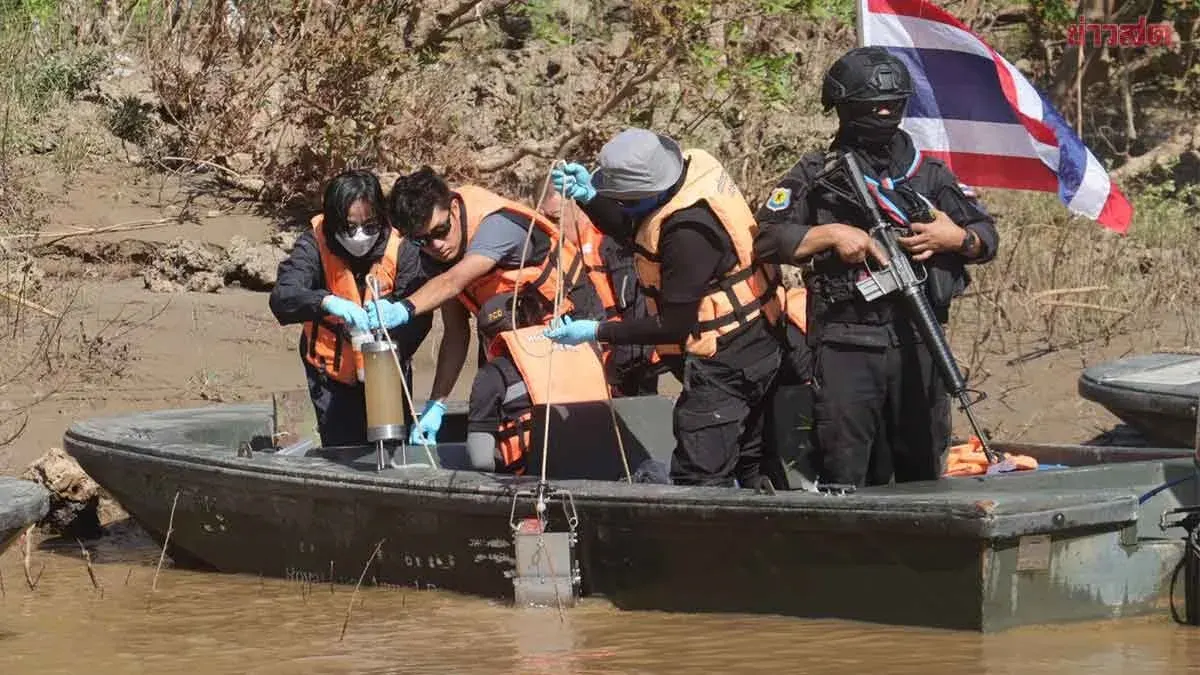
1. Accelerated testing of sediment traps to protect over 60,000 rai of farmland. A research team has begun installing a pilot system at the Ban Mueang Daeng irrigation canal to demonstrate real-time operation, using meters to track sediment volume and a pumping system to remove sediment from the trap for proper disposal. Water quality will be measured both before and after the system for clear comparison before irrigation water is released on November 25. The system is installed in the existing irrigation canal, not as a weir or obstruction in the main river.
2. Opening community participation in monitoring. The government is allowing the public to inspect every stage — from installation and sediment collection to removal and disposal — with clear designation of disposal sites and responsible agencies. NANOTEC water quality testing equipment will be provided to public health agencies and community committees for monitoring, so farmers know which areas can use water directly and which require filtration first.
3. Inspecting water filtration systems and surveying backup water sources. The delegation inspected the Ban Mueang Daeng School water filtration system, developed with the Synchrotron Light Research Institute. Lab results confirm the system can trap arsenic and reduce heavy metals to within safety standards. They also visited the Nong Nam Phu reservoir in Pong Pha subdistrict, which holds approximately 500,000 cubic meters, collecting water samples to assess its suitability as a backup water source.
The Deputy Spokesperson stated the government is urgently addressing both water safety and farmers' livelihoods, using scientific test results as the basis for decisions while opening the process to public oversight to ensure transparency and community safety.