Government Unveils Four Measures to Tackle Cross-Border Mining Pollution
Thailand unveiled four measures to tackle toxic mining pollution from Myanmar and China in northern rivers, including joint inspections, a public risk map, supply chain cuts, and water safety plans.
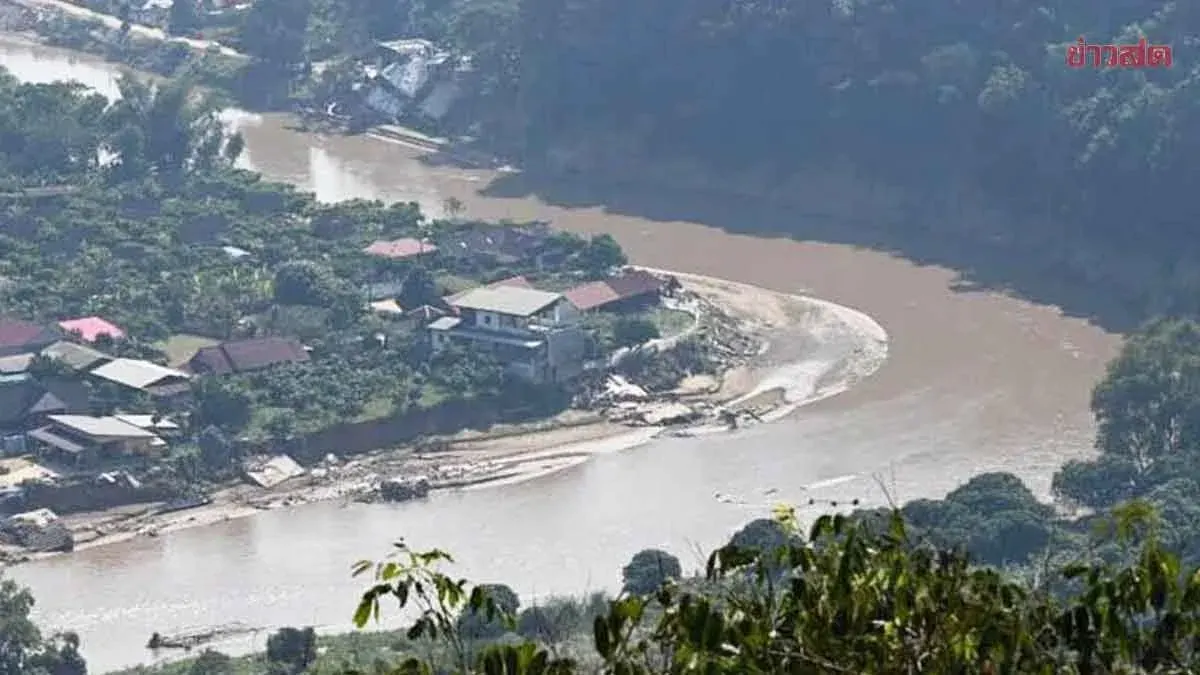
On November 26, 2026, Lieutenant Colonel Phatthararat Thongsaluek, Deputy Spokesperson for the Prime Minister's Office, disclosed progress on resolving toxic contamination in the northern river basins — the Kok, Sai, and Ruak Rivers. The government is advancing four proactive measures to tackle the problem at its source by coordinating with Myanmar, representatives of the Shan State, and the People's Republic of China to jointly inspect contamination sources and establish systematic control measures, ensuring Thailand does not unilaterally bear the impact of cross-border economic activities.
The first measure creates clarity and unlocks area restrictions. On November 27, the government will launch a Risk Map and a One Stop Service data center consolidating scientifically verified water-quality data into a single platform, reducing confusion so the public can clearly see which areas are safe and which remain at risk. Authorities will also propose that the National Environment Board declare a pollution control zone covering approximately 150 kilometers of the Kok River basin to enable systematic budget management and environmental restoration.
The second measure cuts off supply chains and conducts backward inspections. The National Security Council, Ministry of Defence, Ministry of Industry, and Ministry of Commerce are implementing interception measures and preparing to consider banning the export of precursor chemicals used in mining. They are also negotiating with China and pushing for an OECD-aligned international cooperation framework to enforce traceability of rare-earth minerals from source to buyer, pressuring mining operators to accept environmental responsibility.
Lt. Col. Phatthararat noted that recent data clearly links arsenic to mines in Shan State. The government has therefore taken the public's proposal for a "temporary mine closure" into the working committee's consideration.
The third measure involves mine-by-mine inspections in Shan State, covering both state-owned and private operations. Thailand and China will jointly establish a laboratory at Mae Fah Luang University to collect samples and create contamination "fingerprints" for comparison and precise source identification.
The final measure ensures safety and drinking water in affected areas. The Department of Disaster Prevention and Mitigation will expedite clear demarcation of safe and risk zones, prepare compensation guidelines for affected residents, and accelerate construction of sediment traps with continuous dredging systems to show tangible results before water release in late December.
The Deputy Spokesperson emphasized that water in current risk zones can be used for agriculture but not for direct consumption. The government is urgently drilling 10 backup groundwater wells, upgrading community water filtration systems, and distributing rapid water-testing kits to locals for preliminary checks. Since the issue connects to the Mekong and Salween basins, the Mekong-Lancang Cooperation mechanism must be leveraged to drive solutions.
However, the Thai government maintains a clear stance: it will not primarily use Thai budgets to cover costs originating from the source but will push for compensation mechanisms and shared responsibility from polluters so residents can return to normal life and livelihoods as soon as possible.