GULF Powers Ranong Village with Solar Energy
GULF has installed a solar power system in the remote Muslim village of Ban Laem Naew in Ranong Province, providing electricity to the mosque, school, and water filtration system. The project aims to alleviate chronic power shortages, support education, and revive local tourism and homestay businesses. Village head Pichaisak Phakdee said the initiative will restore essential services and improve residents’ quality of life.
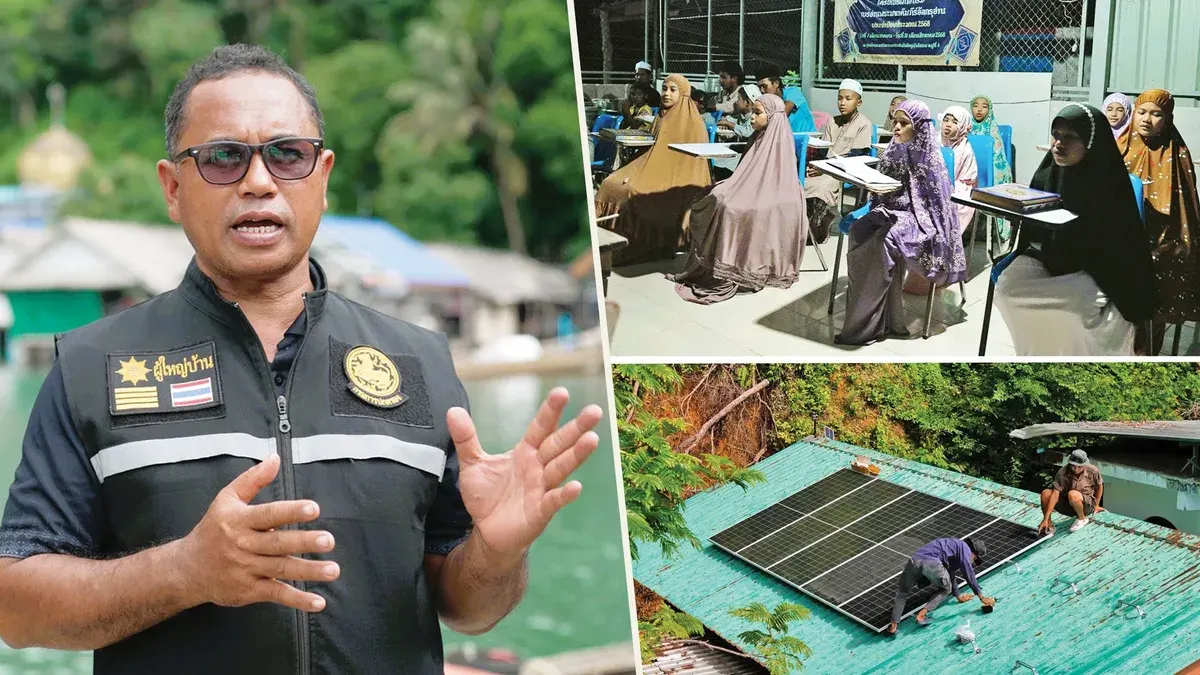
Reaffirming its commitment to building a solid foundation for a sustainable future, Gulf Development Public Company Limited (GULF) is bringing its renewable energy expertise to remote communities, enabling access to electricity utilities. The company supports and installs solar power generation systems at Ban Laem Naew, Nakha Subdistrict, Suk Samran District, Ranong Province, under the 'Green Energy Green Network for THAIs – Clean Energy Connecting Networks for Thais' project, the third site for 2026. This aims to alleviate basic public utility hardships, increase electricity access, promote education, and revive community tourism and homestay businesses.
Village head Pichaisak Phakdee of Moo 6 Ban Laem Naew said the village is a Thai Muslim community with a history of over 300 years, located within the Laem Son National Park. Currently, about 57 households reside there, with a population of 236. The village’s center is the Nurul Islam Mosque, and it also has Ban Laem Naew Elementary School with 38 students. Most residents work in traditional fishing alongside agriculture such as sato plantations and rubber farms.
Because the village is far from the coast, it has long suffered from electricity shortages. At the same time, the Nurul Islam Mosque has experienced problems with its batteries and solar inverter system for over two years, leaving no electricity for the loudspeaker that calls the five daily prayers, as well as insufficient lighting for more than 30 older children and adults who attend evening religious studies. Moreover, the village’s central drinking water filtration system has been inactive for a long time due to lack of electricity to run the water pump.
‘GULF’s support for solar power generation in this case is designed to cover the community’s central area. It will not only provide electricity for the mosque to perform religious duties and broadcast calls to prayer throughout the day, but will also restore the central drinking water filter so villagers can once again obtain clean water, reducing household expenses and providing light for evening study sessions for children,’ Pichaisak said.
Pichaisak added that GULF’s solar support this time also covers residential homes and homestays, allowing the village to fully welcome tourists again without worrying about when to turn lights on or off, helping to generate sustainable income that flows back into the community.