House Clarifies Committee Rules Have Existed Since 2019
The House of Representatives clarified that regulations governing joint committee procedures have been in effect since 2019 but were never previously contested, causing confusion. Officials confirmed the rules do not reduce a committee chair's power to call special meetings, provided a quorum is confirmed, and that the authority to summon documents rests with the full committee, not the chair alone.
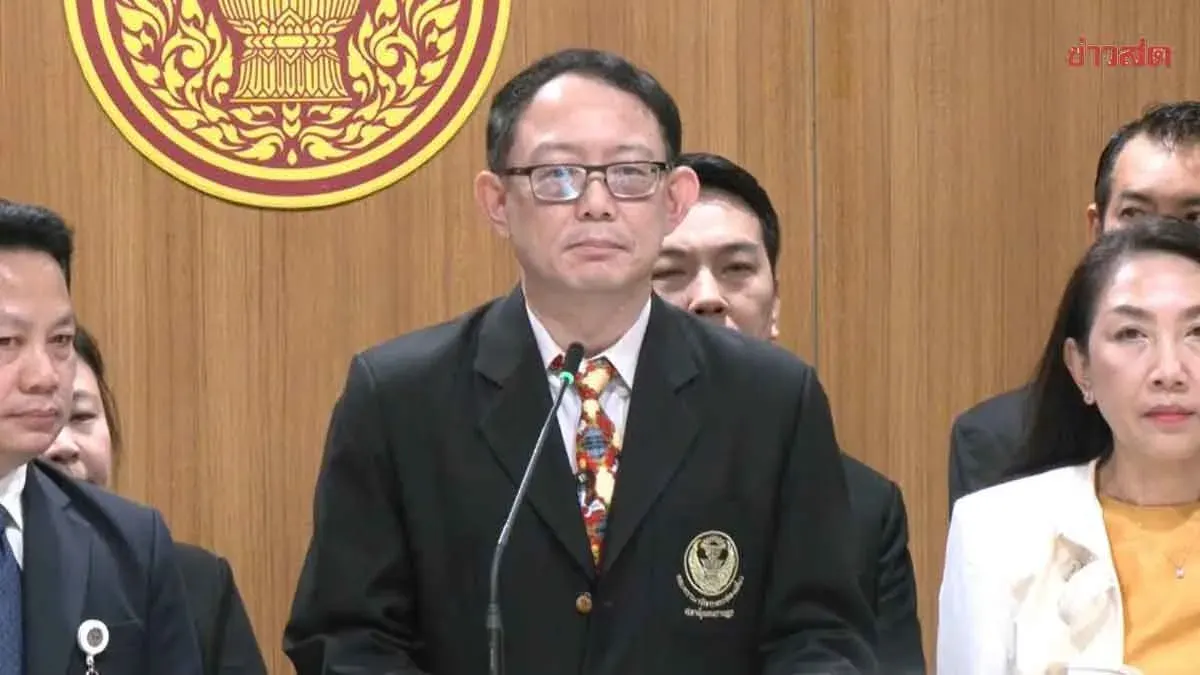
At a press conference on November 4, 2026, at Parliament, Natee Duangwichai, Director of the Committee Secretariat 2, clarified that the procedural guidelines for the House's joint committees are not new but have existed in regulations issued in 2019. The lack of prior objections created a mistaken impression that past practices were correct. The current guidelines fully comply with those regulations; there are no 'new' or 'old' rules, only the single set from 2019.
Regarding a committee chair calling a special meeting, Natee stated this does not strip the chair's rights. The chair may still call a special meeting but must first verify a quorum by polling committee members, similar to how the House Speaker consults whips before scheduling sessions. If multiple committees are involved, the Speaker and relevant committee chairs decide which committee leads or if they meet jointly. No provision diminishes a committee chair's authority.
On agenda-setting, regulations stipulate committee meetings follow House meeting procedures. While the House Speaker sets the House agenda, a committee chair may independently place 'announcements' and 'other matters' on the committee agenda. However, if a committee member requests an item be added, it must first be discussed in 'other matters' so the committee can vote on whether to accept it for consideration, potentially inviting agencies to testify before it is formally scheduled.
Concerning the power to summon documents and persons under Section 129, Natee noted this authority belongs to the committee as a whole, not the chair alone. The Constitutional Court has ruled this power is an invitation or request for cooperation to submit documents or present facts, not a compulsory order. All current procedures remain under the Constitution, regulations, and existing rules; the recent clarification was necessary because the absence of past challenges led to widespread misunderstanding.