House Speaker Clarifies Committee Guidelines, Affirms Rule of Law
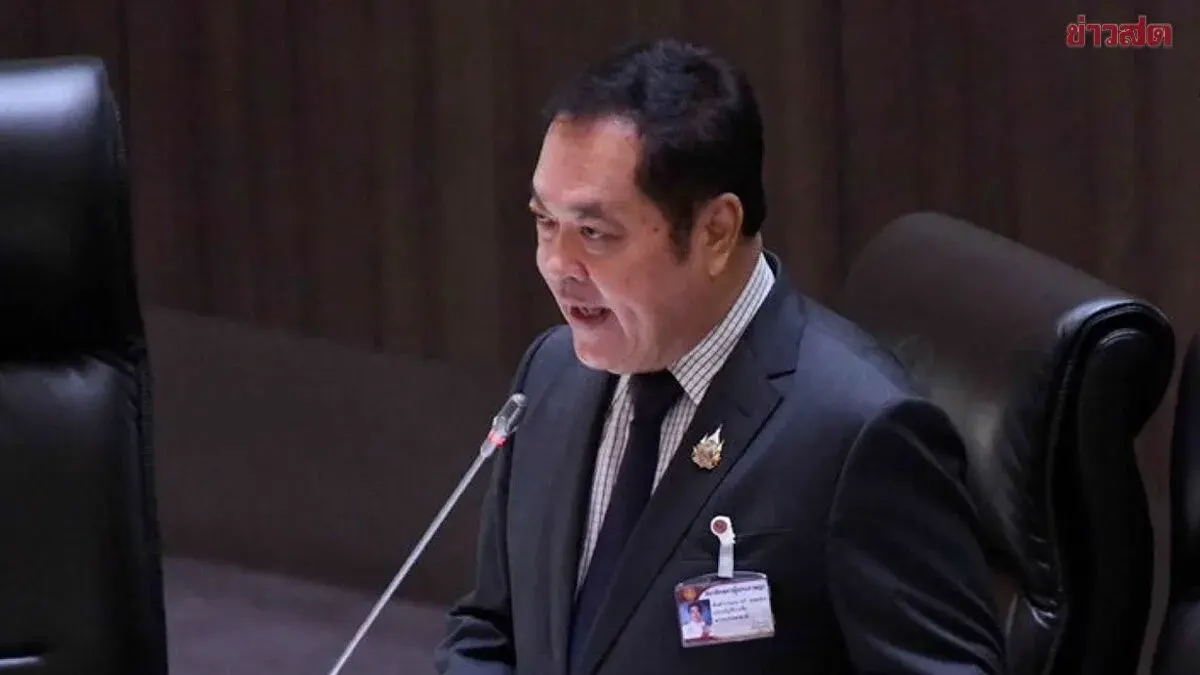
House Speaker Sopon Sarakham issued an open letter defending the working guidelines of parliamentary committees, stating they follow existing regulations and the Constitution, and do not restrict the power to scrutinize the executive. He emphasized that committee powers are collective, not personal, and called for disputes to be resolved through consultation and meeting resolutions.
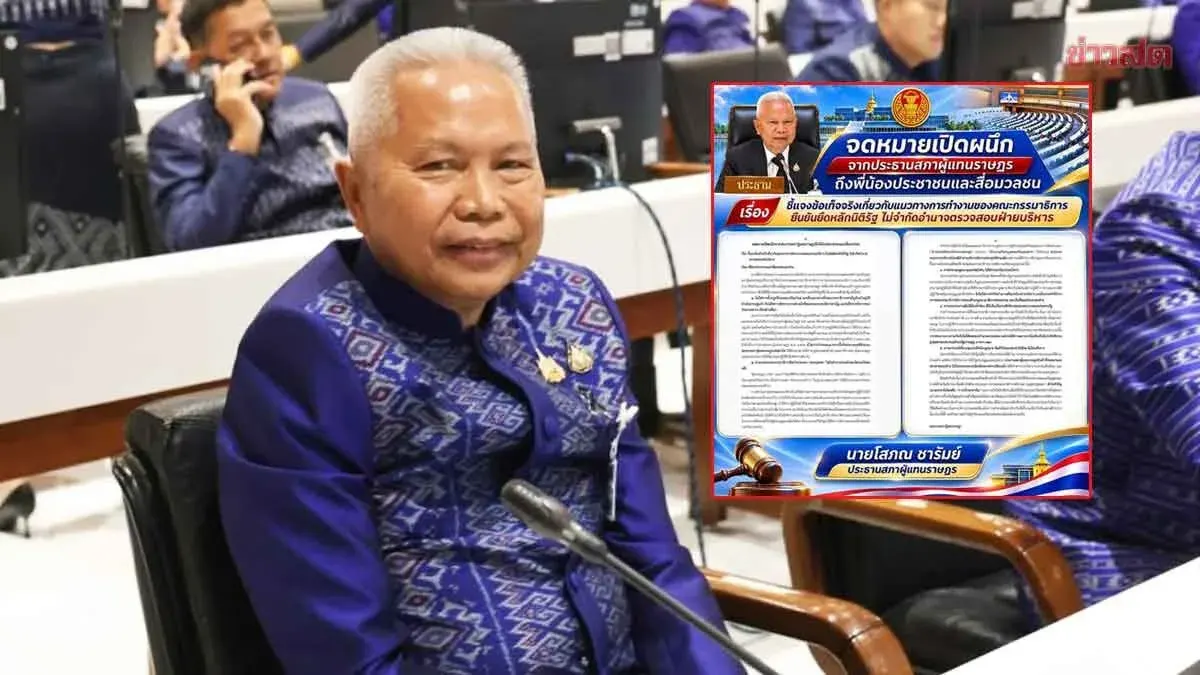
House Speaker Sopon Sarakham posted an open letter on Facebook to clarify the working guidelines of parliamentary committees, insisting they uphold the rule of law and do not limit the power to scrutinize the executive. He stressed the need to protect the dignity and prestige of the National Assembly as a legislative institution.
On November 6, 2026, Mr. Sopon Sarakham, President of the House of Representatives and President of the National Assembly, posted on his Facebook page "Teacher Sopon Sarakham" stating: "The reason I had to write this open letter to all of you is to present the facts of the matter that has been criticized, both intentionally and unintentionally, due to not knowing the truth, causing damage to the image of the National Assembly's work. I must protect the honor and prestige of the Assembly (not myself), which is a national legislative institution."
He also posted an open letter from the Speaker to the public and the media clarifying the facts about the committees' working guidelines, affirming adherence to the rule of law and no limitation on the power to scrutinize the executive. He outlined five key points:
1. It is not a new rule or regulation, but a guideline that most committees have already been following, so it does not obstruct the duties of the committees, nor is it a unilateral order by the Speaker. The circulated guideline is not a new rule set by my personal discretion, but a guideline under the House of Representatives Meeting Regulations B.E. 2562 that most committees already follow normally. The starting point came from a committee member filing a complaint about the performance and exercise of power of a committee. I therefore invited the chairs of all 35 standing committees to a joint meeting on October 21, 2026. The meeting unanimously agreed to adhere to the Constitution of the Kingdom of Thailand B.E. 2560 and the House of Representatives Meeting Regulations B.E. 2562, not to set a new guideline at the discretion of the House Speaker. I then assigned the legal division of the Office of the Secretary-General of the House of Representatives to summarize a middle-ground guideline for all committees to follow in the same direction.
2. The power of the committee is the power of a "collective body", not the personal power of any individual. The Constitution, Section 129, stipulates that the power to investigate facts, study various matters, including summoning persons or documents, is the power of the "committee" as a collective body, not the exclusive power of the committee chair. In the past, most committee chairs performed their duties based on the principle of consultation, respecting the opinions of all members, and operating according to meeting resolutions, which made the committee's work proceed smoothly and with good cooperation from all sides. However, conflicts have recently arisen in some committees, but these conflicts did not arise from the regulations. Rather, they are problems of interpreting the scope of duties and powers as defined in the Constitution and regulations, which can be resolved by joint consideration and consultation of all parties.
Regarding the dispute in the Committee on Legal Affairs, Justice, and Human Rights, it is necessary to separate "meeting management authority" from "authority to summon persons or documents" clearly. The committee chair retains the authority to manage meetings as before, but the use of the authority to summon persons or documents for clarification must go through a committee meeting resolution according to the rule of law guidelines.