Thailand Hosts IMF-World Bank Summit, Boosts Global Confidence
Thailand successfully hosted the IMF–World Bank summit with representatives from 191 countries, receiving praise for its logistics, infrastructure, and economic stability. Prime Minister Anutin Charnvirakul said the event will be leveraged into economic opportunities, income, welfare, and jobs for Thai citizens, and highlighted support for Thailand's upcoming OECD membership. He characterized the expected growth as exponential, driven by business matchings and cooperation agreements stemming from the conference.
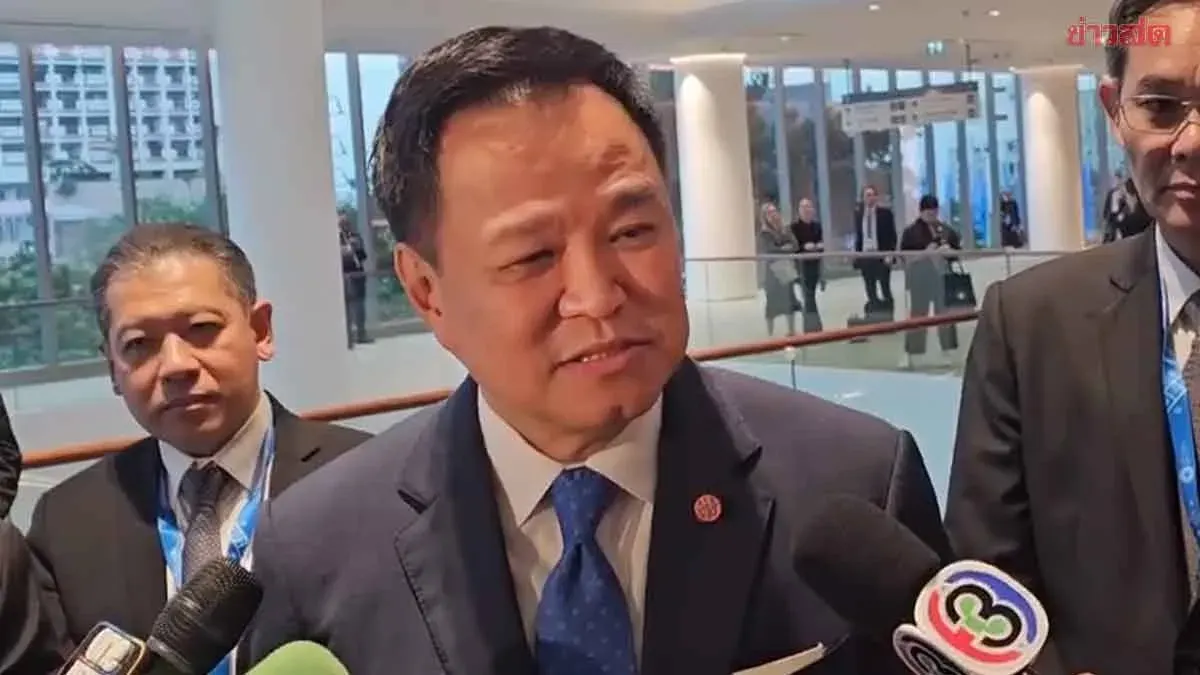
At 5:15 pm on October 16 at the Queen Sirikit National Convention Centre, Anutin Charnvirakul said hosting the global meeting was a crucial opportunity to showcase Thailand's strengths in logistics, infrastructure, and economic stability amid global geopolitical tensions. He stressed that the World Bank and IMF conference proceeded without any notable issues, with all participating nations expressing satisfaction and confidence in Thailand's capabilities. Anutin added that the government will convert this strength into opportunities, revenue, welfare, and jobs for all Thais. In bilateral discussions, he met with senior officials such as Deputy Prime Minister Sihetsak Phongketkaew, Kevin Warsh, and the OECD Secretary-General, who publicly affirmed that Thailand's OECD membership is certain, describing it as a key springboard for the country's international standing. Reflecting on the challenges, Anutin recalled that Finance Minister and Deputy Prime Minister Ekahniti Nitithanprapas had warned him early in his term that hosting the event would be the biggest test, especially as the government was then a minority coalition, but ultimately all sectors cooperated to ensure smooth execution. When asked whether the event was cost‑effective, Anutin replied that the value lies not in profit‑and‑loss calculations but in the business matchings and memoranda of understanding generated, which enhance Thailand's economic credibility and create a new foundation for growth. He described the anticipated growth as 'exponential'—a leap‑frog, or power‑law expansion—rather than a simple incremental increase.