Interior Ministry Sets 7-Day Deadline in Chinese Nominee Business Case
Thai authorities set a seven-day deadline to investigate Chinese-owned businesses using Thai nominees in Bangkok's Huay Khwang area, with the Deputy Interior Minister vowing legal action against anyone involved in the scheme.
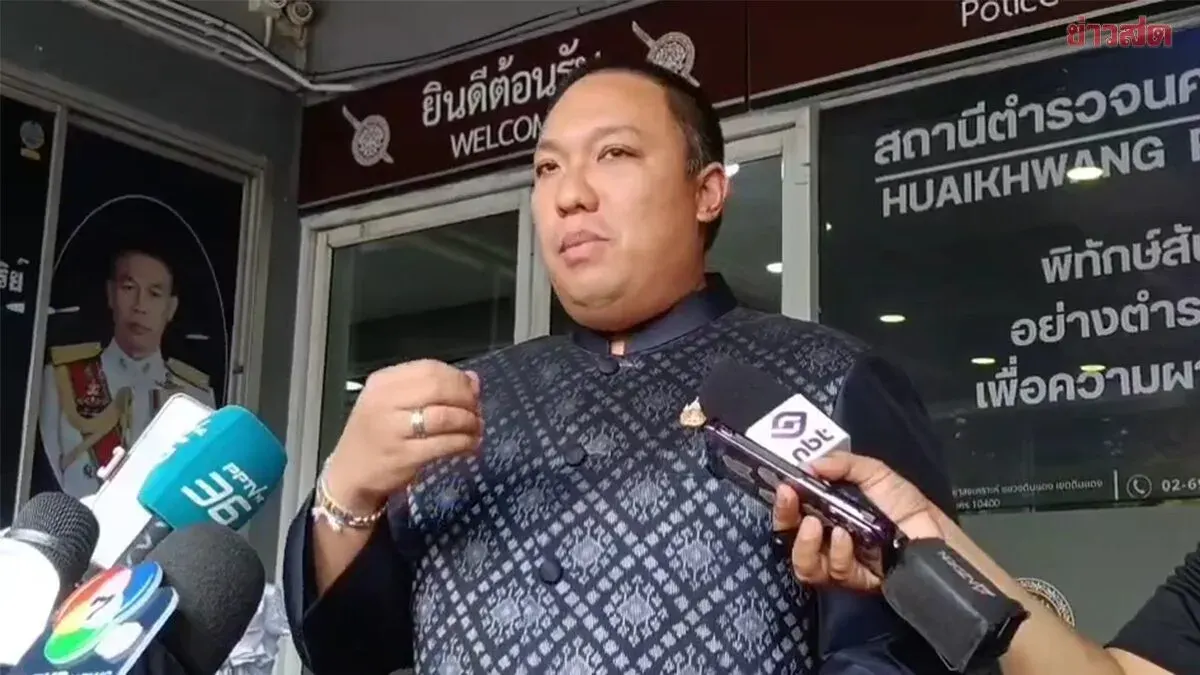
The Interior Ministry has set a seven-day deadline for progress in investigating nominee-held Chinese capital businesses in the Huay Khwang area. Deputy Interior Minister Palpeer Suwannchuay insisted that anyone found to be involved will face full legal action, and visited the Huay Khwang police station to give additional testimony.
The case began when the Interior Ministry inspected hotel operators using nominee structures in Huay Khwang. A man named "Poh," who claims to be a local business manager, then sought clearance from Deputy Interior Minister Palpeer Suwannchuay on August 9.
On August 11 at 12:45 p.m., Palpeer arrived at Huay Khwang police station to provide additional clarification on the fieldwork conducted with multiple agencies including the Department of Local Administration, Ministry of Commerce, Ministry of Labor, the Special Cases Investigation Bureau, and local police. During the inspection, "Poh" called Palpeer, who then played the recorded conversation for all agencies present to determine which departments were mentioned and whether his own ministry was implicated. The conversation reportedly detailed payment arrangements—whether monthly or only when problems occurred.
Palpeer stated that the inspections found the hotels were not registered with the Ministry of Commerce, foreign workers were not reported to the Ministry of Labor, and the entire Huay Khwang area likely has similar violations. The ministry received complaints from citizens and members of parliament from the People's Party, prompting the investigation to protect Thai business operators who pay taxes legally and prevent foreigners from unfairly competing or illegally holding land.
When asked why the ministry only recently began investigating nominee business operations that have existed for years, Palpeer explained that he had only served as Deputy Interior Minister for three months and was unaware of previous officials' actions, preferring not to "air dirty laundry."
However, upon taking office, he felt compelled to act. When "Poh's" phone call mentioned units connected to the National Police Office, Palpeer informed Deputy National Police Commander Samran Nualma to conduct an internal investigation.
Palpeer noted that Chinese and foreign capital typically operates through cooperating government officials, lawyers, and accounting firms. While Thai nationals and private companies—accounting and law firms—facilitate foreign investment, he stopped short of confirming whether government officials were involved, but vowed that if evidence surfaces, legal action would follow.
The fieldwork will not stop at Huay Khwang. Palpeer aims to map the entire network of accounting firms, law firms, and real estate companies involved, and promised zero tolerance for any officials implicated.
For foreign business operators who obtained Thai citizenship, investigations will also examine money flows to determine if grey money or scammer funds are involved; such assets can be seized immediately. However, for non-Thai citizens conducting illegal business and transferring money abroad, enforcement is difficult unless they hold Thai nationality.