Irrigation Department Drains Central Floods, Prepares for Southern Heavy Rains
The Royal Irrigation Department is draining floods in six central provinces while bracing for heavy rain across five southern provinces from November 9 to 13.
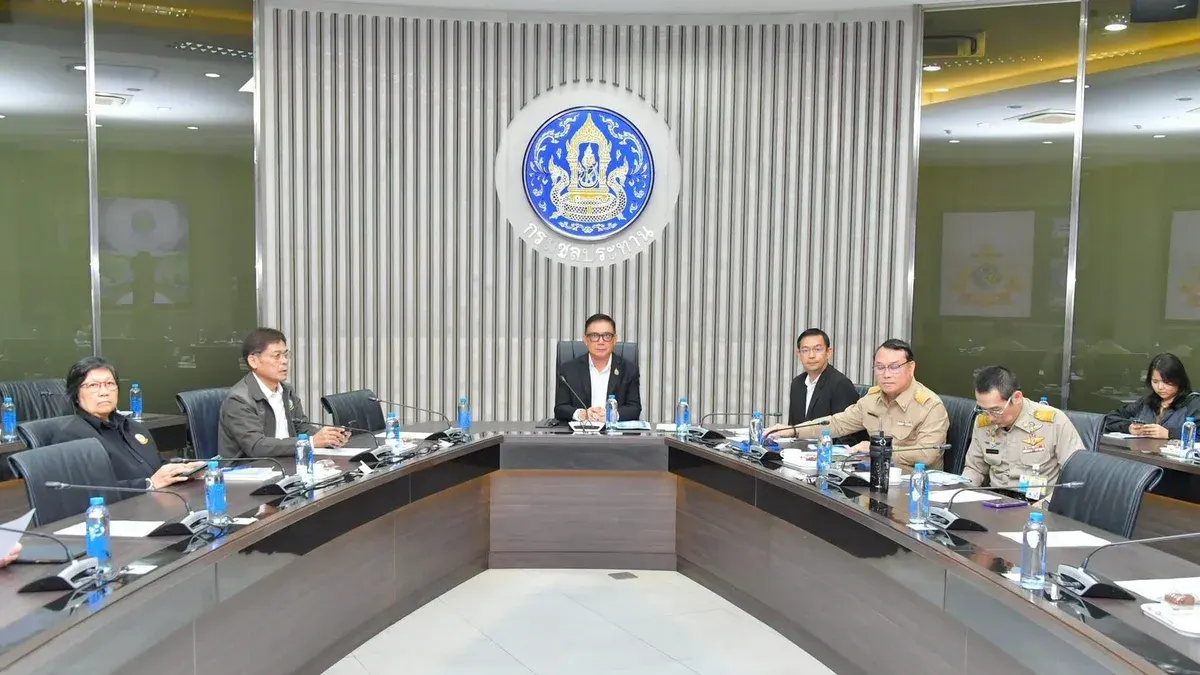
On November 9, 2026, Warapoj Petchnarathat, Deputy Director-General of the Royal Irrigation Department (RID), chaired a meeting of the water situation monitoring and analysis working group with relevant agencies including the Meteorological Department, Hydro-Informatics Institute, and EGAT. The meeting was broadcast via video conference to 17 regional irrigation offices and the Mechanical Engineering Bureau at the Smart Water Operation Center (SWOC) in Sam Sen to closely monitor water conditions and plan area-specific water management.
The RID's Smart Water Operation Center reported that recent rainfall in many areas has increased water volumes in several river basins, particularly the Chao Phraya basin where flow through Nakhon Sawan province has risen. The RID continues close monitoring and is managing drainage through the Chao Phraya Dam appropriate to inflow volumes, while utilizing both east and west bank irrigation systems to drain lower areas, prioritizing impact on riverside communities.
Meanwhile, flooding in many areas is receding, but six provinces remain affected: Nakhon Nayok, Nakhon Pathom, Chachoengsao, Prachinburi, Phra Nakhon Si Ayutthaya, and Suphan Buri, covering 25 districts. The RID continues deploying pumps, machinery, and personnel continuously, especially in low-lying areas with persistent deep flooding and slow drainage, coordinating with local agencies to expedite drainage and relieve residents.
Southern Thailand must brace for heavy rain from November 9-13. The Meteorological Department forecasts heavy to very heavy rain in many areas, especially Nakhon Si Thammarat, Phatthalung, Songkhla, Chumphon, and Surat Thani. The RID has ordered local units to prepare fully, including inspecting drainage systems, floodgates, pumps, and machinery, and stationing staff at risk points to monitor rainfall and water levels continuously for immediate response if emergencies arise.
Regarding nationwide reservoir status as of November 8, 2026, large and medium reservoirs hold approximately 63 billion cubic meters, or 83% of capacity, with usable water around 39 billion cubic meters (76%). Although overall water levels are relatively high, this is about 4.9 billion cubic meters less than the same period last year. The RID must manage water carefully to ensure sufficient reserves for the dry season.
The RID has also drafted the 2026/27 dry season water management plan, prioritizing allocation for domestic consumption, ecosystem maintenance, agriculture, and industry. It will closely monitor reservoir levels to align usage with available reserves and meet public water needs comprehensively.
The RID continues its water management operations: accelerating drainage in remaining flood-hit areas, preparing for heavy southern rains, and safeguarding water reserves for the dry season.