Karen Weaver Turns Tradition Into Modern Design
Karen weaver Janchai Puped transforms traditional cotton textiles into modern designs that work for today's lifestyle, helping sustain his village's craft heritage and community livelihoods in Chiang Mai's Ban Lai Kaew Village.
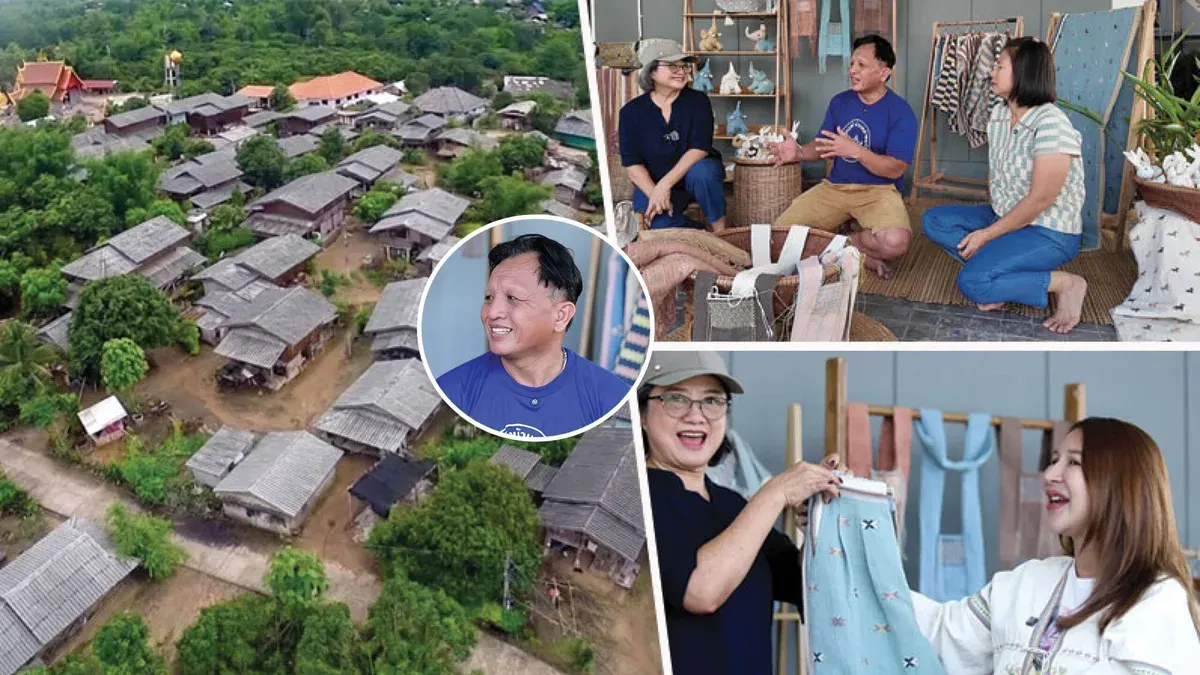
Every Saturday and Sunday morning at a small weaving stall, customers pause to gently feel the cotton fabric before striking up conversations with the vendor. The stories of the village are shared through the cloth and the smiles passed between seller and buyer.
Ban Lai Kaew Village, Doi Tao, Chiang Mai
"I know our Karen people have something special in our hands, but how do we make it fit the market? We have excellent skills, our own identity, a heritage to pass down, and we want to create work for the community," said Janchai Puped, known in natural weaving circles as Tui Doi Tao.
As a young man in the 1990s, Tui Doi Tao left the village to work and gain experience elsewhere, but his pride in his ethnicity and appreciation for the fine weaving craft never left him. He began trading woven cloth in 1994. The path was not easy, facing constant obstacles, but his belief in the value of the community's handiwork kept the fabrics from Ban Lai Kaew village shining regularly.
As a cloth merchant, Tui does not speak of weaving as merely a product, but rather tells the stories of the "people" behind the fabric—the weavers, cotton farmers, dyers, and youth. Buyers become friends of the community. This strength is rare and is what makes Ban Lai Kaew weaving shine. The elders remain motivated to dye cotton cloth and pass their knowledge to their children and grandchildren without tiring.
Tui's family is itself a weaving family. Though as a son he does not weave like his sisters, he excels at natural dyeing and has skill in pattern design and color selection. His wife is skilled in weaving, dyeing, and pattern design, and their children grew up in a craft atmosphere, absorbing the love and knowledge around them. Tui's path is bright not just for his own family, but the word "family" extends to all the weaving families of Ban Lai Kaew village.
When his daughters were young, they grew up beside their mother's loom, learning to weave and dye. As they matured and chose their own paths, they went out to gain outside experience. One day, Chachaya Puped, his eldest daughter, returned home and filled in the modern and marketing side of the business.
Chachaya explained: "Father only knew customers in his craft circle, but when we came back we adapted the old designs into new ones that fit daily life and work. The old designs are beautiful, but I thought they were hard to wear, difficult for work and social outings. We turned them into skirts with modern patterns that suit today, so you can wear them to any event. I think it's perfect."
Tui concludes: "We know it works, that there's a livelihood for villagers. It's not just us alone as one family. Without weavers, without dyers, without sewers—without the many lives behind the scenes—we couldn't have reached this point."