Legendary Phetchaburi Monk's Amulets Said to Stop Bombs, Disease
This article profiles Luang Por Daeng Ratoh (Phra Kru Yanwilat), the legendary abbot of Wat Khao Bandai It in Phetchaburi who lived from 1879 to 1974. Renowned for his meditation mastery and sacred amulets, his yantra cloths reportedly protected cattle from a 1930s epidemic and villagers from WWII bombings. His first-generation 'Ratoh coins,' minted in 1973 with Treasury Department designs, remain among Thailand's most sought-after Buddhist amulets, and his preserved body continues to draw devotees.
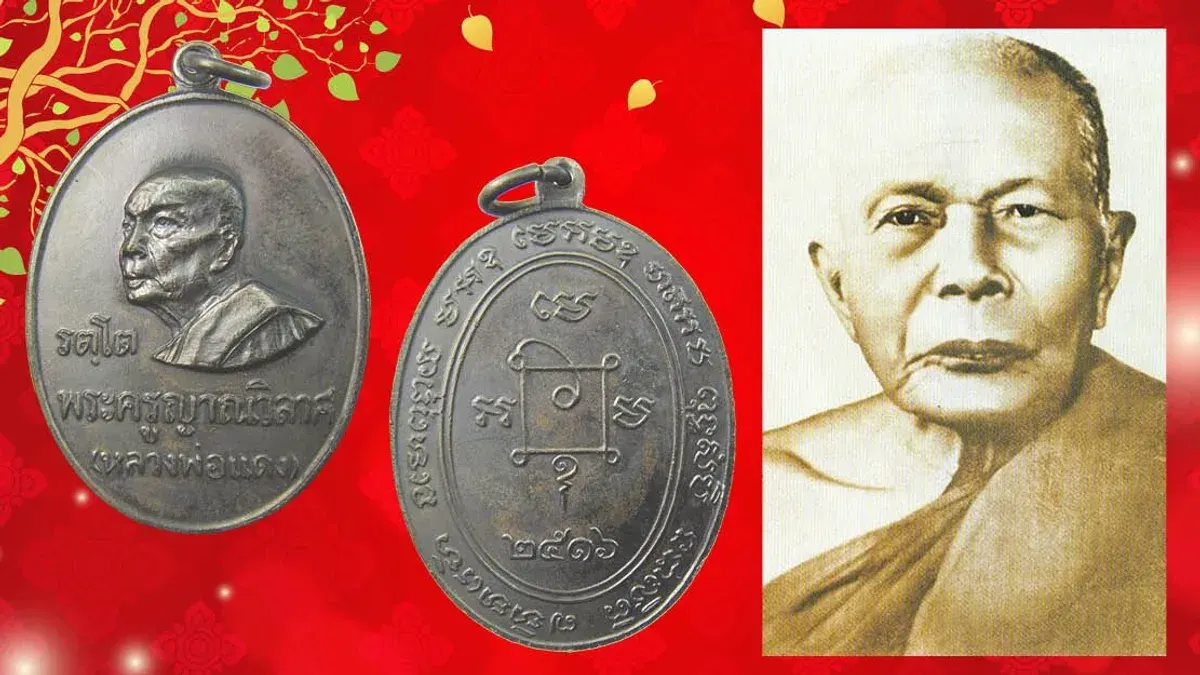
Luang Por Daeng Ratoh, also known as Phra Kru Yanwilat of Wat Khao Bandai It in Mueang Phetchaburi, was a renowned monk revered far beyond his home province. Born into the Onsaeng family at Ban Sam Ruean, Moo 4, Bang Chak, Mueang Phetchaburi, on Wednesday, the second waning moon of the eleventh month in BE 2422 (1879), to father Nai Paen and mother Nang Num Onsaeng.
At age 22, he ordained at Wat Khao Bandai It in Rai Som, Mueang Phetchaburi, with Phra Kru Yanawisut of Wat Kaen Lek as preceptor, receiving the name 'Ratoh.' He was strict in monastic discipline and respectful to his teachers. Luang Por Plian taught him Vipassana meditation and kammatthana methods, transmitting esoteric knowledge without reservation. This brought him great joy in study and deepening realization of the Dhamma; he never considered disrobing and became the most senior exemplary monk.
When Luang Por Plian passed away, Luang Por Daeng assumed the abbotship of Wat Khao Bandai It from BE 2461 (1918) onward. Despite heavy administrative duties, he maintained daily meditation practice in caves seeking liberation, never boasting of any attainment. The sacred power of his yantra numerals and blown mantras became widely evidenced through protective miracles.
Stories tell that during BE 2477-2480 (1934-1937), a severe foot-and-mouth epidemic killed cattle across the region. With no veterinarians available, villagers sought Luang Por Daeng's help. He inscribed yantra designs on small square cloths for villagers to tie at cattle pens. Pens marked with his yantra cloths suffered no losses. Word spread, and villagers from surrounding subdistricts flocked daily for his yantra.
Later, during World War II (the Greater East Asia War), Phetchaburi town endured daily bombings that destroyed the railway station, river bridge, homes, and schools. Government offices closed, schools shut, and civil servants stopped working. Yet remarkably, households possessing Luang Por Daeng's yantra cloths or coins reportedly suffered no harm.
On December 5, BE 2502 (1959), he received the royal ecclesiastical title Phra Kru Yannawilat. Known for kindness, constant good humor, and never speaking harshly — especially forbidding insults to parents, which he taught destroys merit — he passed away peacefully on January 16, BE 2517 (1974) at age 96, with 74 rains retreats.
Before his final breath, he instructed Phra Palat Bun Song Thammapalo, then deputy abbot: "When I stop breathing, do not cremate me. Keep my body in the prayer hall. Place a first-generation blessed coin in my mouth along with a gold leaf pellet — this I can take with me. Apply turmeric to my body until it turns golden like gold." Phra Palat Bun Song honored every wish.
To this day, his body remains an object of deep reverence for Phetchaburi residents and devotees everywhere. Over the years, disciples have produced many types of sacred amulets on various occasions, widely sought after. After the first coin series proved popular, a second portrait coin series became equally famous: the 'Ratoh Coin' bearing his monastic name. Minted in BE 2516 (1973) by his close disciples using designs from the Treasury Department's engravers with modern techniques, the production run was...