Marine Department Spotlights Sea Turtle Rescue at Rayong Center
Marine department officials showcased the Rare Marine Animal Rescue Center in Rayong, which treats hundreds of stranded sea turtles each year along Thailand’s eastern Gulf coast. While many turtles recover and are released, others suffer permanent disabilities that prevent their return to the wild. The center’s limited staff and facilities face growing pressure during the monsoon season as strandings increase.
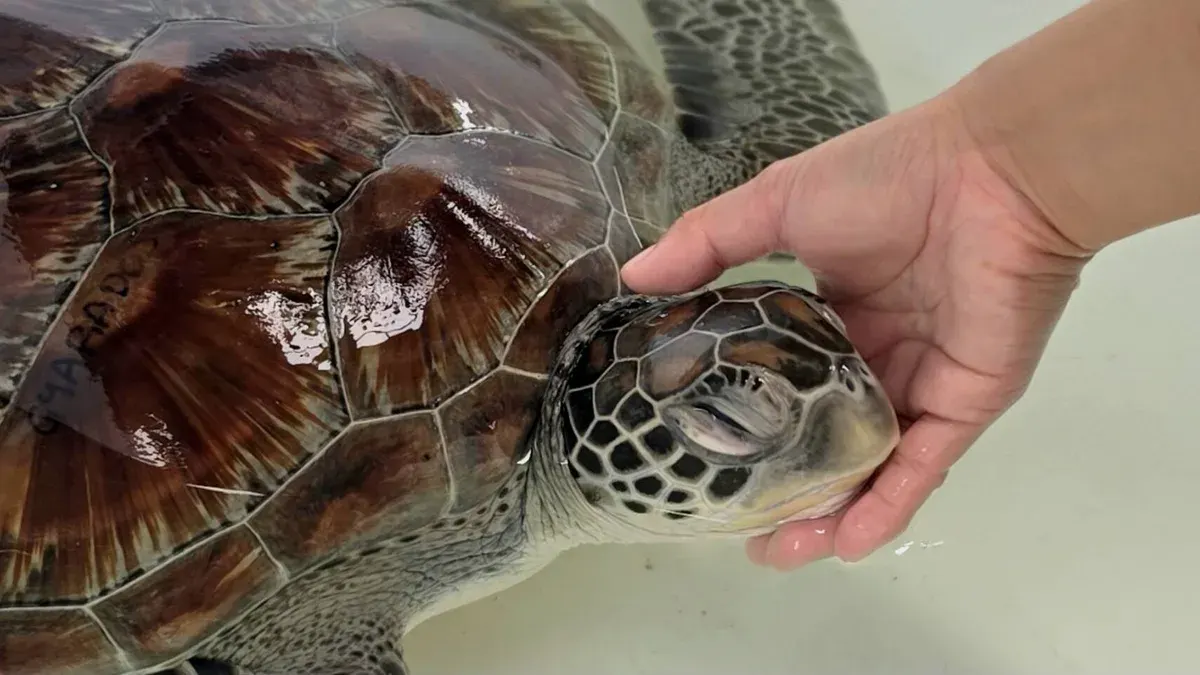
When a stranded sea turtle is reported, staff bring it in for assessment; if alive, veterinarians conduct preliminary diagnosis through X-rays, blood tests and ultrasounds, then treat with medication, feeding and physiotherapy. Most strandings result from natural illness, with human activities such as marine debris, fishing gear and boat accidents playing a secondary role. Sick turtles tend to float at the surface to avoid drowning, which increases their chances of ingesting plastic mixed with algae, becoming entangled in nets or fishing gear, or inhaling water leading to pneumonia. Hawksbill turtles are especially prone to entanglement due to their ridged shells catching on nets, including discarded ghost nets. Health can be gauged by the number of barnacles on the shell; a light covering is normal, but heavy barnacle growth signals weakness, slower swimming and reduced self‑cleaning behavior. During the eastern monsoon season, strandings rise sharply, often filling the center’s limited tanks and straining its five‑person staff. Large turtles confined to small spaces may develop repetitive swimming, refuse food or become stressed, requiring constant stress assessments. Diets are tailored to each species: green turtles mainly eat seaweed and seagrass, while hawksbills, with their beak‑like mouths, prefer sponges, soft coral and other reef‑dwelling organisms. The center primarily supplies yellow‑stripe fish, but turtles that refuse it are offered squid or shrimp, which raises costs.