Koh Mun Nai Turtle Keeper Marks 40 Years of Conservation
For four decades, Kriangsak Ditsawut has cared for sea turtles on Koh Mun Nai in Rayong, nurturing hatchlings and releasing over 300 each year. His work follows a royal initiative by Queen Sirikit and faces challenges from aging breeders, staffing limits, and plastic pollution. Despite the emotional difficulty of letting go, he continues the conservation effort to give the turtles a better chance at survival.
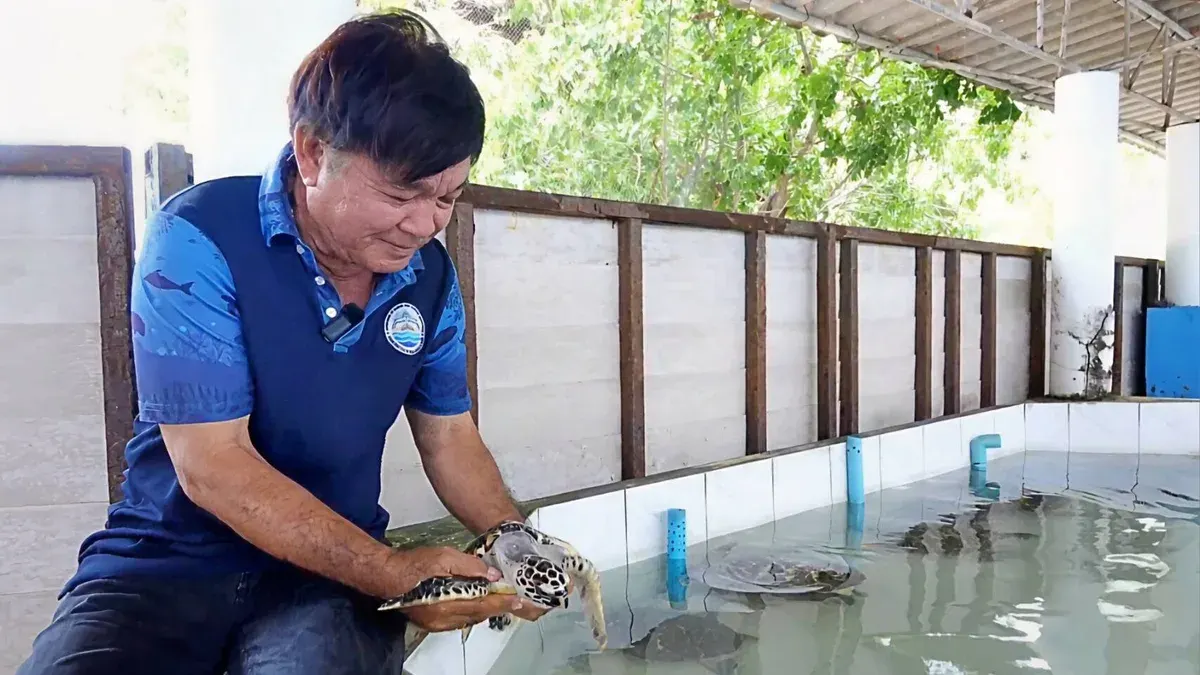
The Marine Department disclosed the story of the 'turtle keeper', the bond behind conservation and rehabilitation of sea turtles at Koh Mun Nai in Rayong Province. On the island’s approximately 131 rai area, a man has been nursing and conserving sea turtle breeds for 40 years. He is Kriangsak Ditsawut, nicknamed Pi Gai, a worker in turtle nursery who manages the breeding system and records the turtles’ growth.
He said, 'I have worked here for 40 years. Even though I have been retired for several years, we still want to look after and raise the sea turtles to release them back to their natural home, and we aim to provide the best care. Each year more than 300 turtles are released.'
His dedication comes from the bond formed through doing work he loves and following the royal initiative of Her Majesty Queen Sirikit, the Queen Mother, who granted the island for turtle conservation and rehabilitation starting August 11, 1979, which led to the establishment of the Eastern Gulf of Thailand Marine and Coastal Resources Research Center.
'The bond is strong, and when it is time to release them, I only attend the ceremony; I do not personally release them because I feel attached and cannot bear to see them go. It is hard to let go, but we must release them as it is nature; they cannot stay with us forever,' Kriangsak said. He added that sometimes after release the turtles swim around the area for one or two days; if they do not truly return to the sea, they are brought back to be kept for the next release.
The mission of the sea turtle keepers on Koh Mun Nai begins with collecting natural turtle eggs from the vicinity of Ko Kraem in Chonburi Province, an important nesting ground for sea turtles in the Gulf of Thailand, including hawksbill and green turtles, which lay 10–20 nests per month. The eggs are incubated and the hatchlings raised from birth. Previously they could raise up to 700 turtles per year, but now staffing limits have reduced that to about 300. Moreover, the breeding turtles kept are over 20 years old and can no longer reproduce, so every egg must rely on natural nesting.
Each day he feeds the hatchlings finely shredded yellowfin tuna meat; as they grow older, he provides chopped yellowfin tuna pieces once a day. The nursery pools require careful control of water level and density, as well as cleanliness—seawater is pumped in and changed daily for the turtles, especially the small hawksbills that need extra attention because they tend to stay still, may fall ill, and sometimes bite each other, causing wounds.
The life of sea turtles is fraught with danger: eggs are vulnerable to monitor lizards, hatchlings may be snatched by birds as they crawl to the sea, and they face larger predators in the water. If left in the wild, their survival odds are very low.
Therefore the center must nurse them until they are one year old before releasing them back to nature. An even greater threat is plastic, because sea turtles mistake floating plastic bags for jellyfish, their natural prey. When stranded turtles are examined, plastic bags, straws, and bottle caps are often found in their stomachs. Such debris regularly washes ashore on Koh Mun Nai.
Hatching rates vary greatly each year. Although 10–20 nests may be laid per month, some nests fail to produce any hatchlings, while others achieve up to 80% success. Incubation temperature also influences the sex of the hatchlings: higher temperatures tend to produce females, while cooler temperatures yield a mix of males and females.