Mon Community Preserves Century-Old Flower Offering Ritual
The user wants a short summary of the article about the Mon community preserving a century-old flower offering ritual. Let me analyze the key points: 1. Thai-Raman (Mon) residents of Chedi Riw subdistrict in Ban Phaeo district, Samut Sakhon
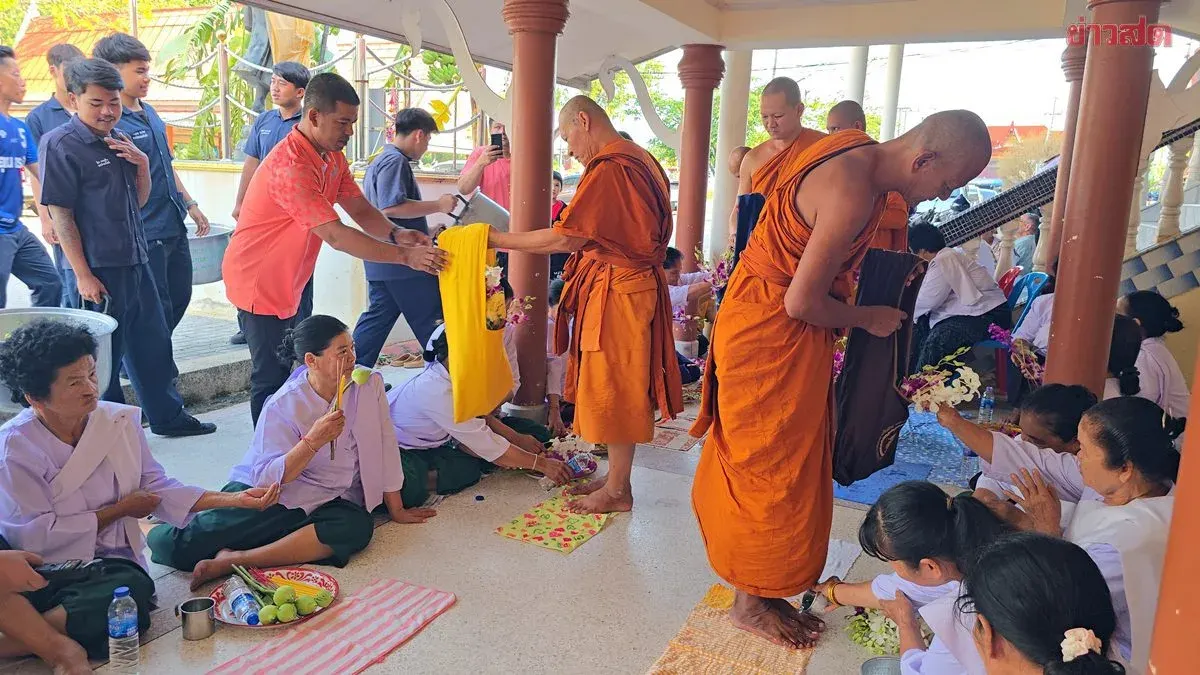
Thai-Raman residents of Chedi Riw subdistrict in Ban Phaeo district joined Wat Chedi Riw to maintain the traditional "flower alms offering and foot washing" ceremony on Ok Phansa day, a practice upheld for over 100 years.
At 4:00 PM on October 26, 2026, marking the end of Buddhist Lent, Thai-Raman people — known locally as the Mon of Chedi Riw — together with the temple's monks held the Buddhist merit-making event at Wat Chedi Riw in Ban Phaeo, Samut Sakhon province. The ceremony was presided over by Phra Khru Sangkharak, the temple's abbot, on the ecclesiastical side, and by Miss Pharadi Phueak Sopa, the Ban Phaeo district chief, on the lay side, along with Pol. Lt. Col. Serithakan Chan Duang, superintendent of Ban Phaeo Provincial Police Station. Government agencies, local administration, teachers, students, and numerous Thai-Raman residents from Chedi Riw and nearby areas attended.
The Mon community's flower alms offering and foot washing ritual is considered a cultural heritage reflecting the bond between Buddhism and the community's way of life. The event has been held annually for over a century, serving as a vital identity marker that demonstrates ethnic identity, unity, and collective effort to preserve ancestral customs.
The activity also provides an opportunity for the public to make merit, express reverence for Buddhism, and instill in children and youth an appreciation for their cultural roots, ensuring traditions passed down from ancestors endure amid social change.
In the morning, locals visit the temple to offer alms and listen to the Mahachat sermon. In the afternoon, they prepare scented water and various flowers for the flower alms offering and foot washing ceremony. Monks walk in procession from the sala to the ubosot, while laypeople pour scented water over the monks' feet, lay cloth for them to walk on, and place flowers into the alms bowls each monk carries until all are filled. The abbot then leads the sangha in performing the Pavarana ceremony marking the end of the rains retreat according to monastic discipline.
According to Thai-Raman belief, washing the monks' feet shows respect and reverence, akin to paying homage to the Buddha upon his return from heaven after teaching his mother. It is believed that performing this merit with faithful intent brings great blessings, auspiciousness, and absolution of sins according to inherited beliefs.
Thus, preserving the flower alms offering and foot washing tradition is not merely maintaining an ancient rite but keeping cultural heritage alive in contemporary society. The temple, households, and government agencies work together as a vital force to ensure the Mon of Chedi Riw's century-old tradition remains a source of local pride and a cultural legacy that future generations can learn and sustainably continue.