MP Demands Review of Thousands of Toxic Factory Licenses in Eastern Thailand
MP Niramas Pimbanjit urges retroactive audit of thousands of toxic factory licenses in Eastern Thailand tied to the 2016 NCPO order that relaxed zoning, despite Parliament's 2

MP Niramas Pimbanjit points to NCPO Order 4/2016, which unlocked city planning rules and opened the door to foreign waste capital. Even though Parliament voted to revoke it, thousands of toxic factories in the Eastern region remain. She urges the government to review all licenses and insists polluters must pay.
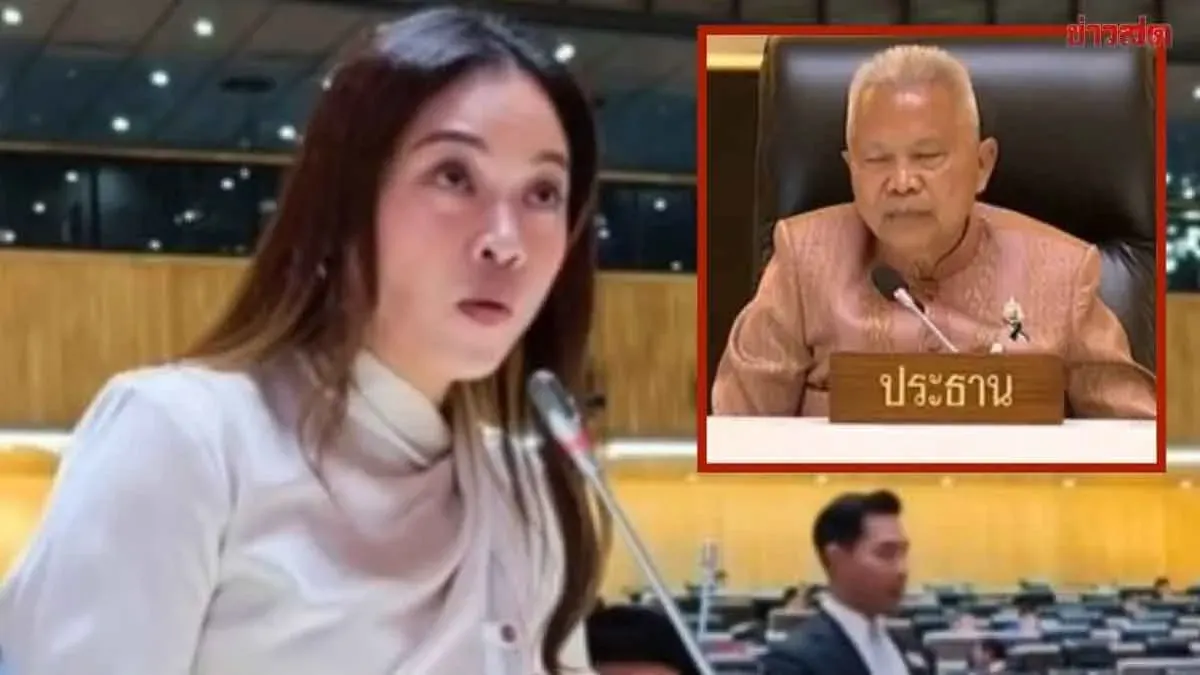
November 4, 2026 – MP Niramas Pimbanjit of Chonburi from the People's Party addressed the environmental crisis and industrial pollution in the Eastern region. She said locals currently face recurring industrial waste warehouse fires, wastewater problems, and continuous chemical odor leaks. Just last October, chemical waste from a factory in Sri Maha Phot District, Prachinburi Province, leaked again amid flooding, leading to orders suspending operations and shutting down several factories.
MP Niramas said chasing and closing factories case by case only treats symptoms, not the structural root: why Thailand has so many waste sorting and recycling factories, and why they were allowed to set up in the middle of agricultural areas, along public water sources, and right next to people's homes.
She identified the starting point as a past policy decision. On January 20, 2016, the NCPO chief used Section 44 powers to issue NCPO Order 4/2016, exempting certain businesses — especially waste treatment and disposal factories — from city planning enforcement. Combined with NCPO Order 9/2016, which allowed certain projects to operate before Environmental Impact Assessment (EIA) approval, these two orders effectively left the country's door wide open.
This coincided with China's 2018 National Sword policy banning scrap and plastic waste imports. Recycling capital and operators formerly based in China sought new production bases, and Thailand — having just relaxed city planning rules — became a primary target.
MP Niramas said data clearly shows many recycling factories established in Thailand during 2017–2018 had Chinese capital behind them to evade stricter environmental laws at home. Thailand's plastic scrap imports surged roughly eightfold in 2018. Electronic waste also flooded in massively, while Thai government import bans were enforced very late — e-waste banned only in September 2020 and a total ban on plastic scrap imports only took effect on January 1, 2025 — allowing these capital groups to establish and expand factory networks extensively.
She noted that even though Parliament voted on July 23, 2025, to revoke NCPO Order 4/2016 effective immediately upon Royal Gazette publication — closing a damaging door left open for over nine and a half years — shutting the door doesn't make the thousands of factories and the toxins accumulated in soil and water disappear.
Solving the problem requires proactive measures: 1. The government must audit and review every license issued under Order 4/2016 retroactively, especially factories sited in violation of original city planning principles. 2. Inspect actual operations to verify they match licensed categories, and disclose licensing pathways for public transparency. 3. Enforce the polluter pays principle.