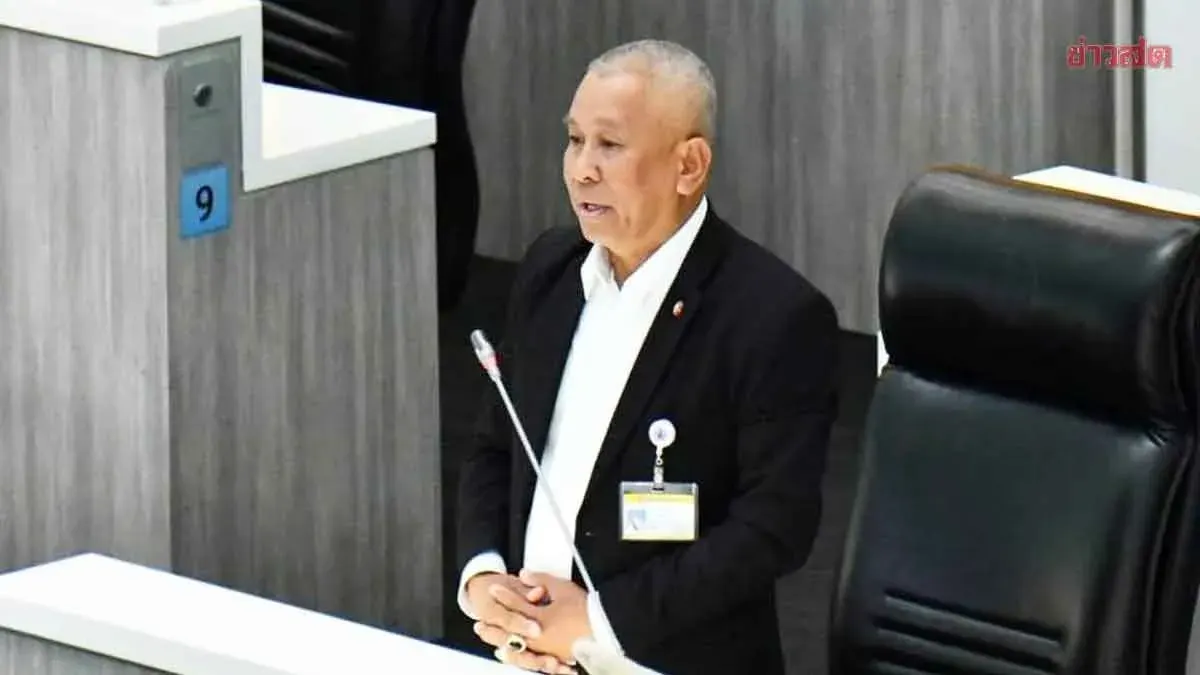
Prime Minister Aneurin Chanyaweerakul opened the third APEC Business Advisory Council meeting in Bangkok, emphasizing public-private collaboration and launching the Thailand FastPass initiative to streamline business procedures and boost re
Prime Minister Aneurin Chanyaweerakul opened the third APEC Business Advisory Council (ABAC) meeting on July 7, 2025, at the Avani+ Riverside Bangkok Hotel, highlighting the importance of public-private collaboration in advancing trade and investment while promoting the Thailand FastPass initiative to reduce business barriers and foster sustainable economic growth in the Asia-Pacific region.
The Prime Minister welcomed participants from APEC member economies and emphasized that ABAC serves as a crucial mechanism translating real business experiences into government policy. He stressed that the private sector understands which measures are practically implementable, prompting the government to actively solicit private sector input. In recent months, the administration has held continuous consultations with senior business executives and leaders, asking a simple question: "What obstacles make investment, business expansion, or job creation more difficult?" Often, the answer involves removing unnecessary steps and barriers rather than implementing additional incentives.
The Prime Minister acknowledged that the current business environment faces increasing complexity, compounded by geopolitical uncertainties affecting business decisions. He noted that neither government nor business can succeed alone—the private sector cannot reach full potential without a favorable investment climate, and the government cannot create growth without business participation. This interdependence makes public-private cooperation essential for sustainable development.
A key government policy is positioning Thailand as a destination for quality investment through the Thailand FastPass project, which streamlines procedures, eliminates redundancy, improves interagency coordination, and enables quality projects to proceed faster, more transparently, and with greater predictability.
Regionally, supply chain resilience requires trust, clear and transparent regulations, efficient logistics, and cooperation among economies to maintain open markets even during challenging periods. The government therefore supports high-quality free trade agreements (FTAs), as long-term investment depends on confidence built through clear rules, fair competition, and improved market access. FTAs are not merely legal documents but mechanisms that give businesses confidence to invest, produce, and expand in specific locations.
In closing, the Prime Minister stated that APEC's strength lies in connecting government policy with actual business experience—more important than ever before. He reaffirmed that business voices hold value and the government must listen continuously, while committing to implement ABAC recommendations concretely and collaboratively to create an investment-friendly environment.