Nong Nooch Garden Expands Rare Plant Conservation With 23 Coco de Mer Trees
Nong Nooch Tropical Botanical Garden in Pattaya planted 23 rare Coco de Mer trees on Saturday, bringing its collection to 58 mature specimens worth approximately 29 million baht combined. The world's largest-seeded palms, endemic to the Sey
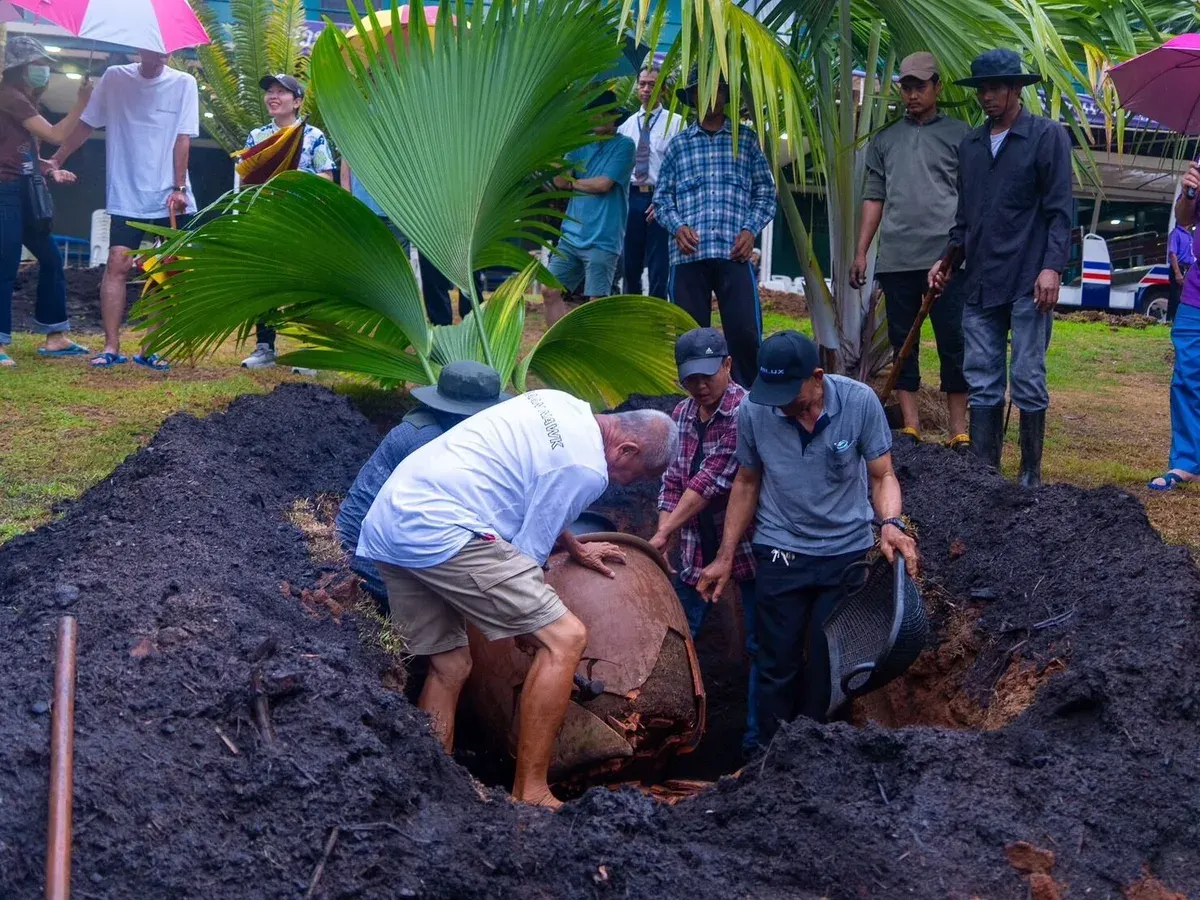
On Saturday, July 4, 2026, at 9:00 AM at the Boy Scout camp area of Nong Nooch Tropical Botanical Garden in Pattaya, garden president Kampol Tansatja joined students from St. Stephen's Stanley College in Hong Kong to plant an additional 23 Coco de Mer trees (Lodoicea maldivica). This represents one of the largest simultaneous plantings of this rare species at the botanical garden and marks a significant step forward in the garden's global rare plant conservation initiatives.
The planting brings Nong Nooch's total Coco de Mer collection to 58 mature trees—increased from the previous 35—along with an additional 25 seedlings. Each mature tree is valued at approximately 500,000 baht, making this one of Thailand's most significant Coco de Mer collections and an invaluable off-site genetic conservation facility (Ex Situ Conservation).
Kampol stated that today's planting represents working for the future, as conserving rare plant species requires continuous effort and patience spanning decades. Nong Nooch is committed to fulfilling its role as a botanical garden that collects, conserves, studies, and disseminates knowledge about plant genetics, ensuring that valuable natural resources are passed on to future generations.
The Coco de Mer, or double coconut (Lodoicea maldivica), is an extremely rare palm endemic to a few small islands in the Seychelles archipelago in the Indian Ocean. It produces the world's largest seeds and is considered one of the most valuable plants in botany due to its scarcity and strict protection status. Historically, sailors would discover the fruits floating in the ocean without ever finding the source tree, leading to the belief that the trees grew beneath the sea—hence the French name "Coco de Mer," or "sea coconut." This mystery made the Coco de Mer fruit even more precious and rare than gemstones.