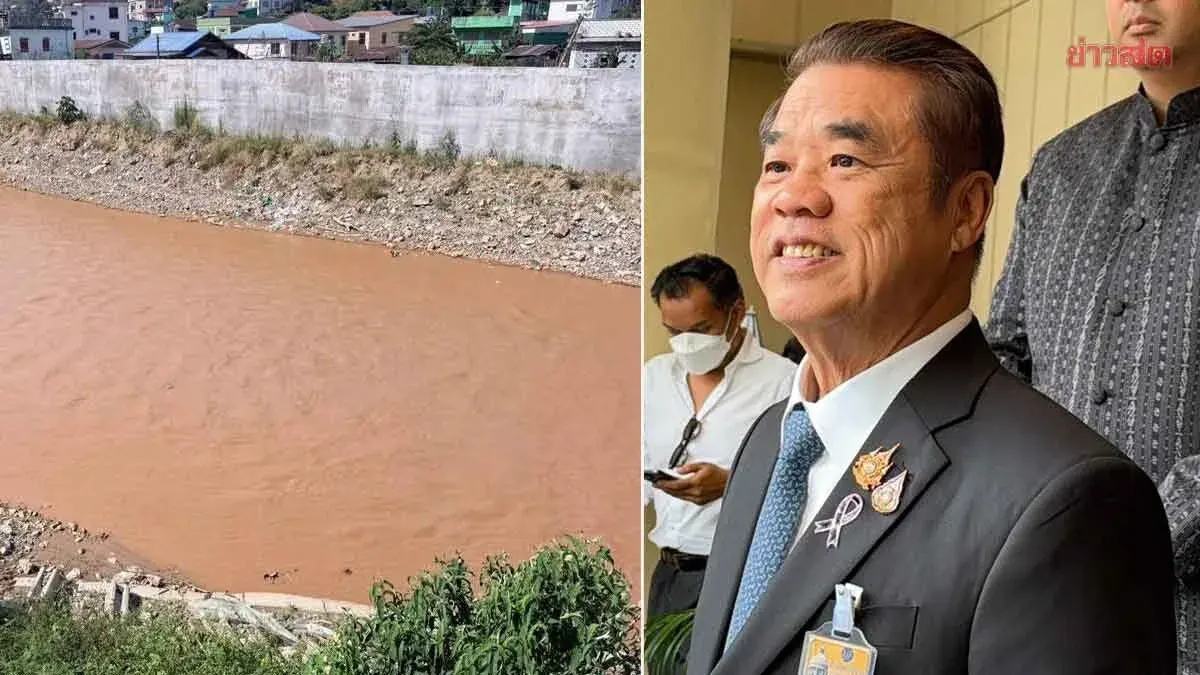
NSC Chief Admits Mining Toxin Cleanup Tough, Pushes Tripartite Talks
Thailand's National Security Council chief Gen. Chaiyapruk Didyasarin admitted that cleaning up toxic pollution from cross-border mining in Myanmar and China will be difficult, but stressed that three-way talks are underway and a task force will investigate sources. He urged urgent action to relieve border communities suffering from contaminated water and food, warning that without cooperation from all three parties — including local authorities controlling the territory — progress will be limited.
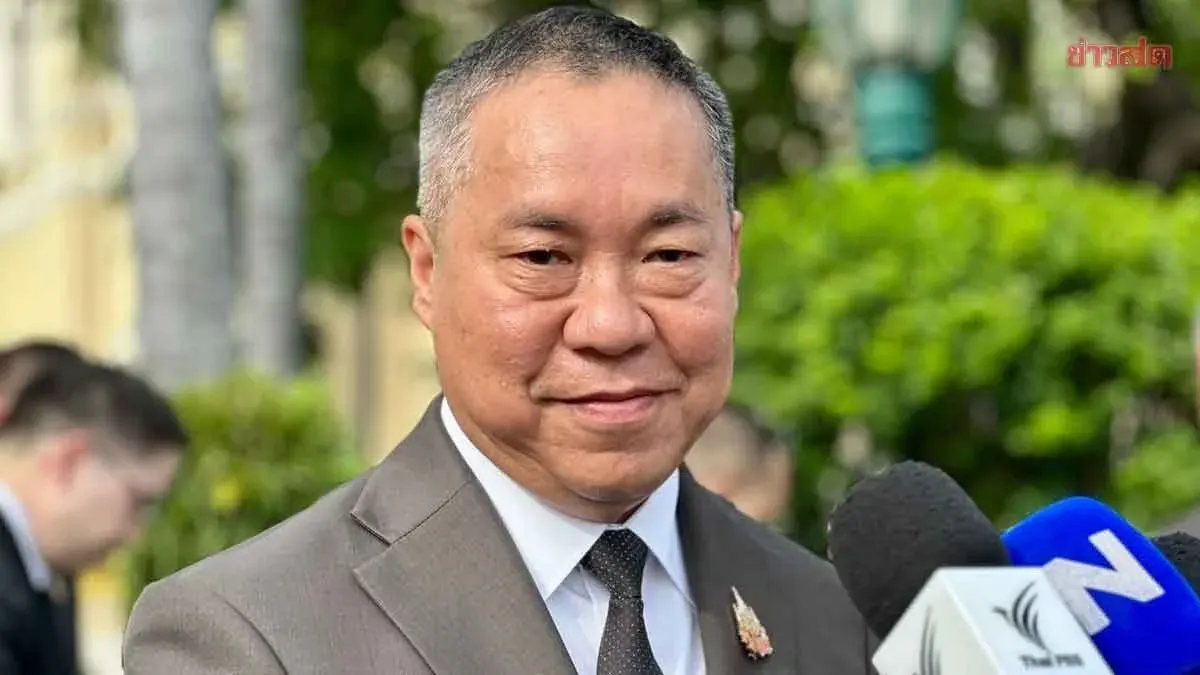
National Security Council Secretary-General Gen. Chaiyapruk Didyasarin acknowledged that resolving toxic contamination from mining operations in neighboring countries will not be easy, stressing the need for three-party cooperation and urgent measures to relieve public suffering.
At 09:45 on November 17, 2026, at Government House, Gen. Chaiyapruk gave an interview before the cabinet meeting regarding contamination from mining in neighboring nations. He said he had discussed the issue with Chinese officials during a recent visit to China, while the Prime Minister has already spoken with China's premier, and the Deputy Prime Minister and Foreign Minister have talked with Myanmar. This constitutes three-way dialogue. A task force will now be deployed to find solutions, examine root causes — including industrial plants — and determine how to fix the problem as quickly as possible. He affirmed that policy-level efforts are being accelerated to resolve the issue promptly.
Asked whether local authorities can engage directly with the Shan State authorities on the mining sources, the NSC Secretary said dialogue is possible, but compliance is uncertain and additional pressure measures may be needed. A proposal for Thai companies to stop accepting ores from Myanmar for export is one measure, but may be insufficient. Information indicates mining operations have wastewater treatment systems that fall below standards, and there are many more mineral factories; even if large plants are addressed, smaller ones remain. Therefore, a sufficiently large mechanism is needed to manage the major mines.
Regarding reports of another large mine, Gen. Chaiyapruk said data is still unavailable; the priority is fixing the specific sites currently causing problems. During the Chinese Premier's visit to Thailand, Deputy Prime Minister Anutin Charnvirakul also requested cooperation. This is a matter of national interest, and China has agreed to examine the details and cooperate. What Thailand can do is accelerate corrective measures because the public cannot wait, nor can the state. We will do our utmost.
"We stand ready to enter, inspect, and coordinate if the other side is ready, because we understand the people's suffering. Military families also live in the border area; everyone is suffering," Gen. Chaiyapruk said.
Asked when the government will frame a solution for food-security concerns over toxins in food and drinking water, he said monitoring is continuous, awaiting clarity from Myanmar and China on when they will allow joint remediation. Without three-party cooperation — including those controlling the territory — progress is difficult.
Pressed on whether Thailand would have to bear the burden alone if both sides refuse cooperation, the NSC Secretary said other measures would then be pursued. He reiterated that the root causes must be identified first before targeted fixes can be applied; speaking prematurely would create a broad, unclear picture and fail to reassure the public.
Asked again whether the problem involves factories paying minority groups and the Myanmar government, making access for inspection difficult, the NSC Secretary replied: "It is not an easy matter, but it must be done."