Opposition Files No-Confidence Debate Against PM and 18 Ministers
Thailand’s opposition has filed a no‑confidence debate motion under Article 151 of the constitution targeting the prime minister and 18 ministers. Government officials have dismissed the move as ‘entertainment democracy,’ urging instead that the ruling side prepare evidence and answer questions rather than belittle the oversight process. The debate will test both the government’s accountability and the opposition’s responsibility to substantiate its claims with facts.
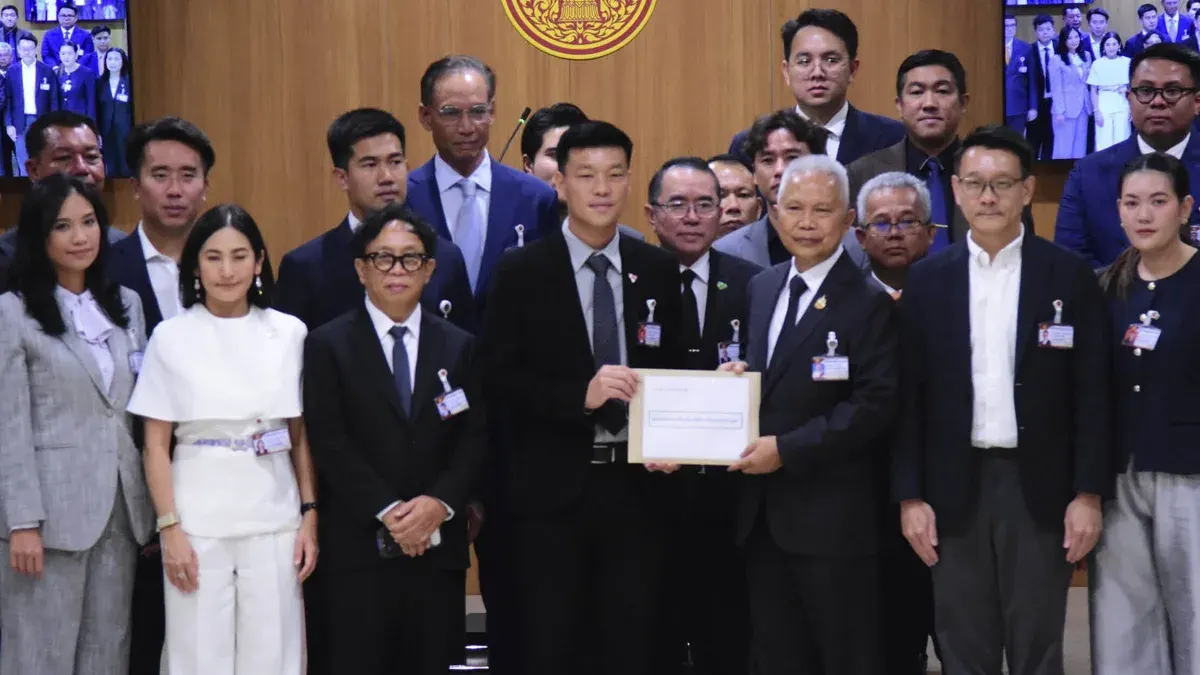
The opposition has filed a no-confidence debate motion under Article 151 of the constitution targeting the prime minister and 18 ministers. This is an important check on the government and a test of parliamentary politics to see whether the government and opposition can meet public expectations. However, government politicians have tried to belittle the motion by calling it 'entertainment democracy' or portraying it as an opposition stunt to create hype, even though filing the motion is a constitutional right and a key mechanism for checking executive power. If the government is confident in its honesty, transparency, and lack of serious shortcomings, it should prepare information, evidence, and clarifications rather than responding with contempt toward those conducting the oversight. Showing a belittling attitude only makes society wonder whether the government is all talk but shaky. The heart of Article 151 is not political fun but opening space for MPs to scrutinize the administration of ministers and decide whether to continue trusting them to govern the country. This is a basic democratic principle that the government must respect regardless of the weight of the opposition’s accusations. The issues raised by the opposition—promises, integrity, profit‑seeking, power‑concentration, favoritism toward allies, etc.—must be proven with facts, not pre‑judged from accusations or excuses from either side. At the same time, the opposition must take responsibility for its role; the debate should not be filled with rhetoric, sarcasm, or baseless allegations. Every point needs supporting data, showing damage, those involved, and possible remedies, so the public can assess which allegations have merit and how the government should be held accountable. Another matter is setting the debate date; it should be agreed clearly, not using procedural tactics to stall or limit oversight until substance is lost. This debate is not decided merely by the number of votes but also by public confidence in both government and opposition. The government must answer questions; the opposition must prove its allegations; both sides must accept the same rules. In a democracy, checking the government is not entertainment but a duty of parliament and a right of the people to know what those in power are doing and how they use power—whether they deserve to continue governing the country.